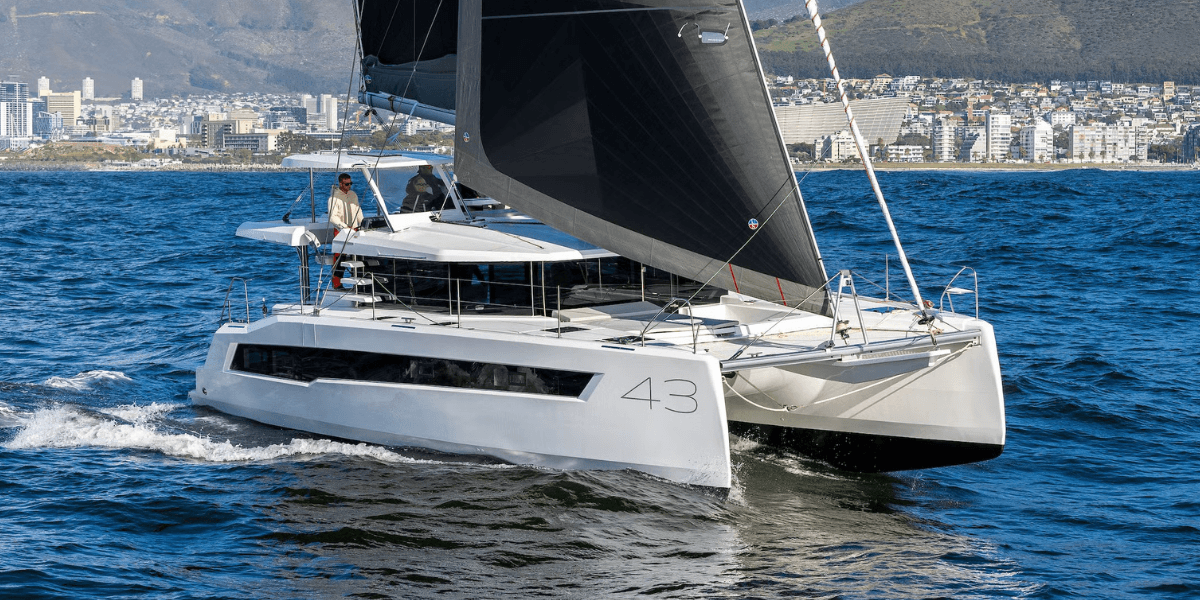
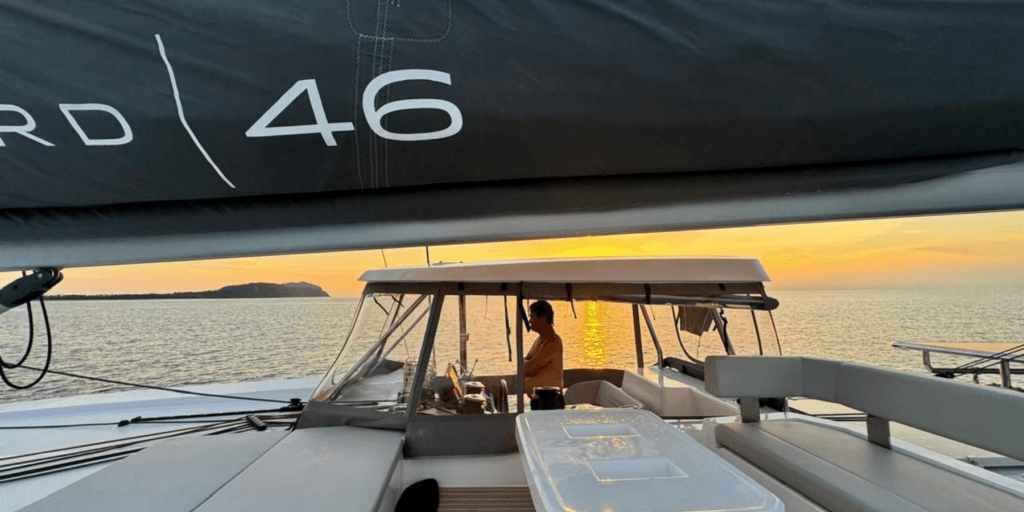
Vision 484 takes a simpler path to cruising catamaran design
The Vision 484 bets that less boatwork can beat more gadgets, pairing a three-cabin layout with ocean-ready cruising simplicity and early build slots at US$1.25 million.
A simpler catamaran is the point
The Vision 484 arrives with a contrarian pitch in a market that often rewards bigger screens, more systems and more shiny distractions. Vision Yachts is not selling this boat as a gadget-heavy statement piece. It is presenting it as the next evolution of the range, a three-cabin cruising catamaran built around smart, ocean-ready design, easier handling and a lighter mental load for the owner.
That is the story here: simplicity is not a compromise, it is the product. For shorthanded cruising, that matters because every choice that trims complexity also trims workload, maintenance and the learning curve. A boat that is easier to understand is easier to run, easier to trust and, if the design is disciplined, easier to live with after the launch-day excitement fades.
What Vision says the 484 is built to do
Vision’s own description of the 484 is clear. It is launching in 2026 as the next step in the company’s catamaran range, with increased volume, extended cruising capability and more liveability. The builder also says it will have expanded living space, higher bridgedeck clearance and increased payload, which are not cosmetic upgrades but practical ones that affect how the boat carries gear, handles load and performs offshore.
The three-cabin layout is another clue to the intended brief. This is not being framed as a sprawling floating condo or a stripped-back expedition platform. It sits in that useful middle ground for owners who want genuine cruising comfort without the baggage of over-complication, and that balance is exactly where many serious multihull buyers spend their time looking.
The design choices that reduce owner workload
Several published details point to the same low-friction philosophy. The Vision 484 is listed at 14.75 m LOA, 8.00 m beam and 1.25 m draft, dimensions that place it firmly in the modern cruising-cat sweet spot while keeping the hull shape and platform manageable. Third-party listings also describe it as a CE Design Category A ocean catamaran built in fiberglass or GRP, which reinforces the idea that this is meant for real passage-making rather than dockside theater.

The power package is similarly straightforward: twin 40 hp Nanni engines. That kind of setup signals practical marina handling, modest mechanical complexity and a propulsion arrangement that most cruising owners will understand quickly. In a catamaran built for long-range use, the value of that simplicity is obvious. Fewer surprises in the machinery spaces mean fewer surprises when the boat is loaded, moving or being brought home in less than ideal conditions.
The numbers matter, but the shape of the brief matters more
One detail worth watching is displacement, because even the public figures tell you something about how the boat is being positioned. Third-party listings place the Vision 484 at about 17 tonnes full load, while another technical source lists 12.70 tonnes, so the published numbers vary by source. That variation is exactly why buyers should treat early spec sheets carefully and look at the complete package rather than any single figure in isolation.
Even with that caution, the broad message is consistent. The boat is being pitched as a serious cruising platform with enough volume and payload to support extended use, not as a minimal boat that asks the owner to travel light all the time. In practice, that means more tolerance for real cruising habits, from stores and spares to the extra gear that accumulates once a catamaran stops being a weekend toy and starts becoming a home.
Production is already moving, not just theorised
This is not just a render and a promise. Vision’s February 2026 newsletter said production of the Vision 484 was in full swing, with Hull #1 and Hull #2 making progress toward an end-of-2026 launch. That detail matters because it changes the story from concept language to build-stage credibility.
The company’s spring 2026 pricing page adds another layer of concreteness. Early pre-launch build slots are listed at US$1.25 million, rising to a post-launch price of US$1.5 million. For buyers watching the 48-foot cruising-cat segment, that puts the 484 squarely into a competitive bracket where design philosophy, build confidence and owner usability can matter as much as the headline spec.
Why Vision’s track record gives the 484 extra weight
The 484 also lands with some brand momentum behind it. Vision says the Vision 444 won Cruising World’s 2024 Boat of the Year award for Best Cruising Catamaran under 50 ft, and the Vision 444 ES was a 2025 finalist in the same category. That matters because the 484 is being framed as the larger-format continuation of an already recognized line rather than a one-off leap into a new idea.
Vision also describes itself as a South Africa-based builder in Knysna, Western Cape, and uses the line “built by sailors, for sailors.” That positioning fits the 484’s whole message. This is not a boat trying to impress by stacking on more systems than the owner will ever fully use; it is trying to earn trust through practical decisions that support real cruising.
Who the Vision 484 suits best
The best fit for this catamaran is the owner who wants confidence more than spectacle. If you cruise shorthanded, value a manageable learning curve and prefer a boat that should age gracefully because it was not overloaded with unnecessary complication from the start, the 484 makes sense on paper and in principle.
It should also appeal to buyers who want a liveable ocean-capable cat without drifting into the extremes at either end of the market. The Vision 484 is neither bare-bones nor bloated, and that is its strongest argument. In a segment crowded with ever more elaborate systems, the smarter answer may simply be a boat that keeps the sailor in control.
This article was produced by Prism’s automated news system from verified source data, official records, and press releases, then run through automated quality and moderation checks before publishing. The system is built and supervised by the people who set the standards it runs under. Read our full AI policy.
Did this article answer your question?