Why bridgedeck clearance matters for offshore catamaran comfort
The difference between a quiet passage and a slamming cat often starts under the salon floor. Bridgedeck clearance decides how the boat behaves once it’s loaded and offshore.
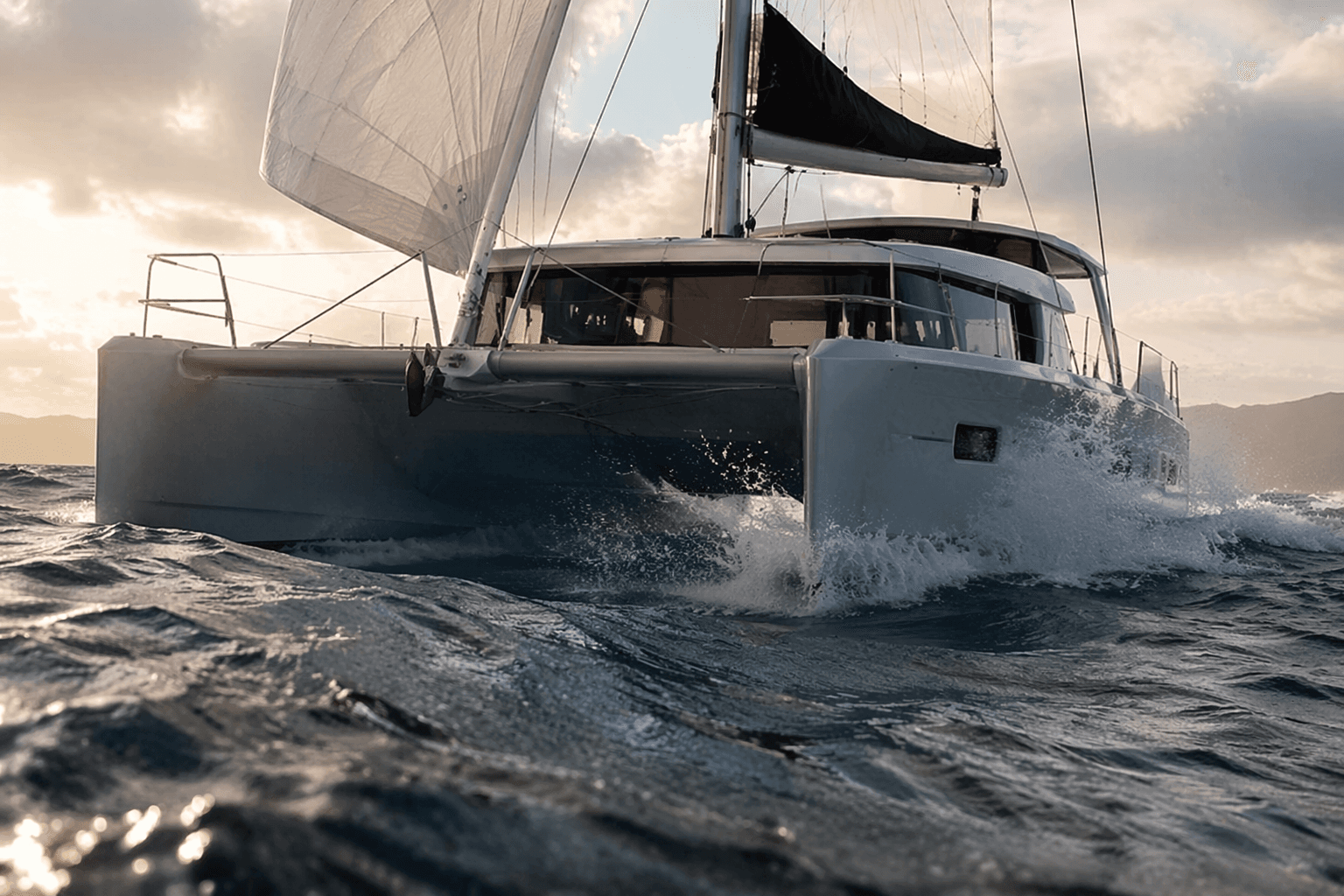
The St Francis 50 has 33½ inches, or 85 cm, of space under the bridgedeck, a fairly standard figure for a 50-footer. That number governs how cleanly waves can pass between the hulls, how hard the boat slams in head seas, and how much speed you keep when the load comes on and the sea turns messy.
What bridgedeck clearance really tells you
Bridgedeck clearance is easy to miss because it is easy to see. It is one of the first numbers worth checking because it is crucial to seaworthiness and crew comfort, and even an inexperienced sailor can judge it at a glance. That makes it different from a lot of yacht specs that only make sense after a sea trial or a deep dive into the build sheet.
The physics are simple enough to use at the dock. Ocean waves need room to pass between the hulls, and each bow throws a bow wave that can meet the other under the bridgedeck. When the space is too tight, that meeting point turns into impact loads, and the result is pounding.
Why the number matters once you leave the dock
Pounding is not just an annoyance. Inadequate bridgedeck clearance brings crew fatigue, wear and tear on the structure, and a sharp drop in speed. Catamaran Guru puts the drop at around 8 to 10 knots down to roughly 5 knots during pounding episodes, which is a real hit to average passage speed as well as comfort underway.
Why you have to judge it at cruising load
The common mistake is to look at clearance before the boat is fully provisioned. A catamaran that looks generous at the dock can lose useful clearance once tanks, stores, gear, and cruising weight are aboard, and that changes the way it behaves offshore. The right comparison is at loaded cruising displacement, not in brochure-light condition.
That is also where the trade-off becomes obvious. Raising the bridgedeck helps seaworthiness and reduces pounding, but builders often give something back in other areas. Interior headroom can be tighter, the profile may lose some visual grace, and windage can rise.
What the real-world numbers look like
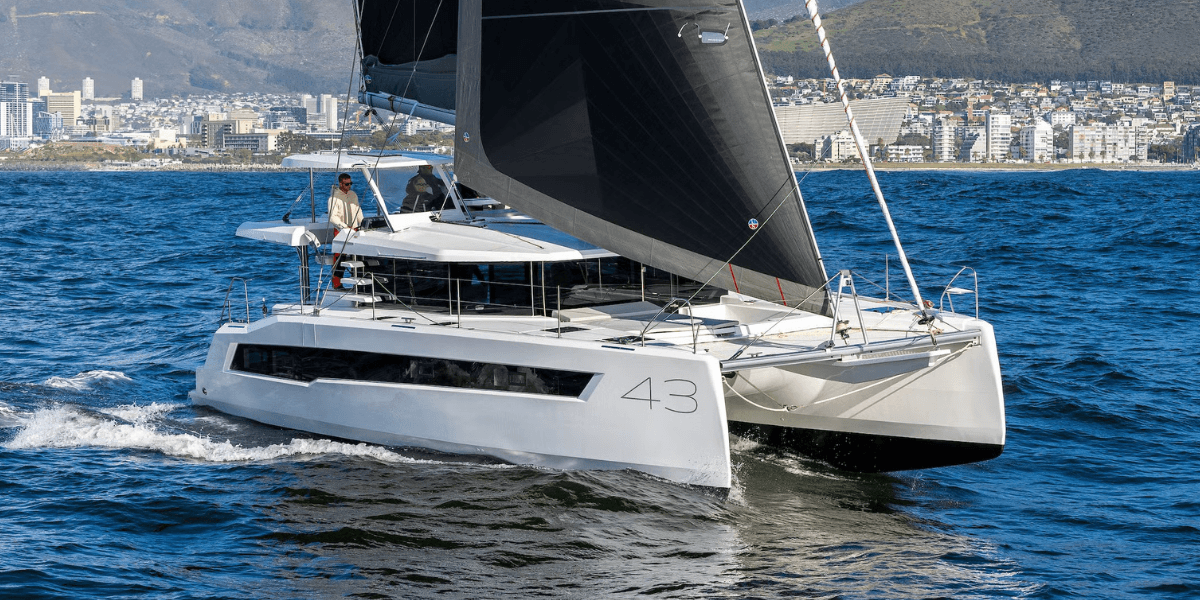
The Nautitech 44 carries 80 cm of clearance, with the builder and naval architects favoring sea-keeping. Other modern cats push the number further. Multihulls World put the Leopard 50 at 1 meter of bridgedeck clearance, a generous figure for sea-keeping. Its Balance 502 test measured bridgedeck clearance ranging from 932 mm to 827 mm, which shows how even contemporary designs can vary meaningfully within the same class.
High bridgedeck clearance has long separated performance cruising cats from more sedate cruising designs, alongside low superstructures, narrow hulls, and lightweight composite construction. SAIL Magazine tied the Nautitech 44 Open’s higher clearance to reduced pounding into head seas.
How to compare boats like an owner, not a brochure reader
The best way to use bridgedeck clearance is to make it part of the whole package. Clearance alone does not tell the full story, because hull shape, intended cruising grounds, and loading all shape what you will feel underway. A cat built for fast coastal hops will not be judged the same way as a serious offshore cruiser crossing rougher water for days at a time.
A useful rule of thumb is bridgedeck clearance around 5% to 6% of the catamaran’s LOA, a benchmark Catamaran Guru uses for quick comparisons. That is not a universal standard, but it gives you a quick reference point when you are comparing boats of different lengths. An older Boat Design Net discussion put it more bluntly: anything under 3 feet would not be well suited for offshore use.
When you go aboard, focus on the things that change the number from theory into lived experience:
- Measure the boat as it will actually cruise, not as it sits empty at the dock.
- Look at the hull shape and ask whether the design is trying to favor performance cruising or a more sedate ride.
- Check how much headroom, profile height, and windage the builder gave up to gain clearance.
- Sea trial the boat in head seas, because that is where a low bridgedeck announces itself fastest.
- Pay attention to speed when the boat starts to slam, since the difference between 8 to 10 knots and about 5 knots is the difference between a passage that holds together and one that drags on.
This article was produced by Prism’s automated news system from verified source data, official records, and press releases, then run through automated quality and moderation checks before publishing. The system is built and supervised by the people who set the standards it runs under. Read our full AI policy.
Did this article answer your question?