Why catamarans use twin rudders and different steering systems
Twin rudders change everything from marina handling to helm feel, and a good sea trial shows the difference between normal cat behavior and sloppy setup.
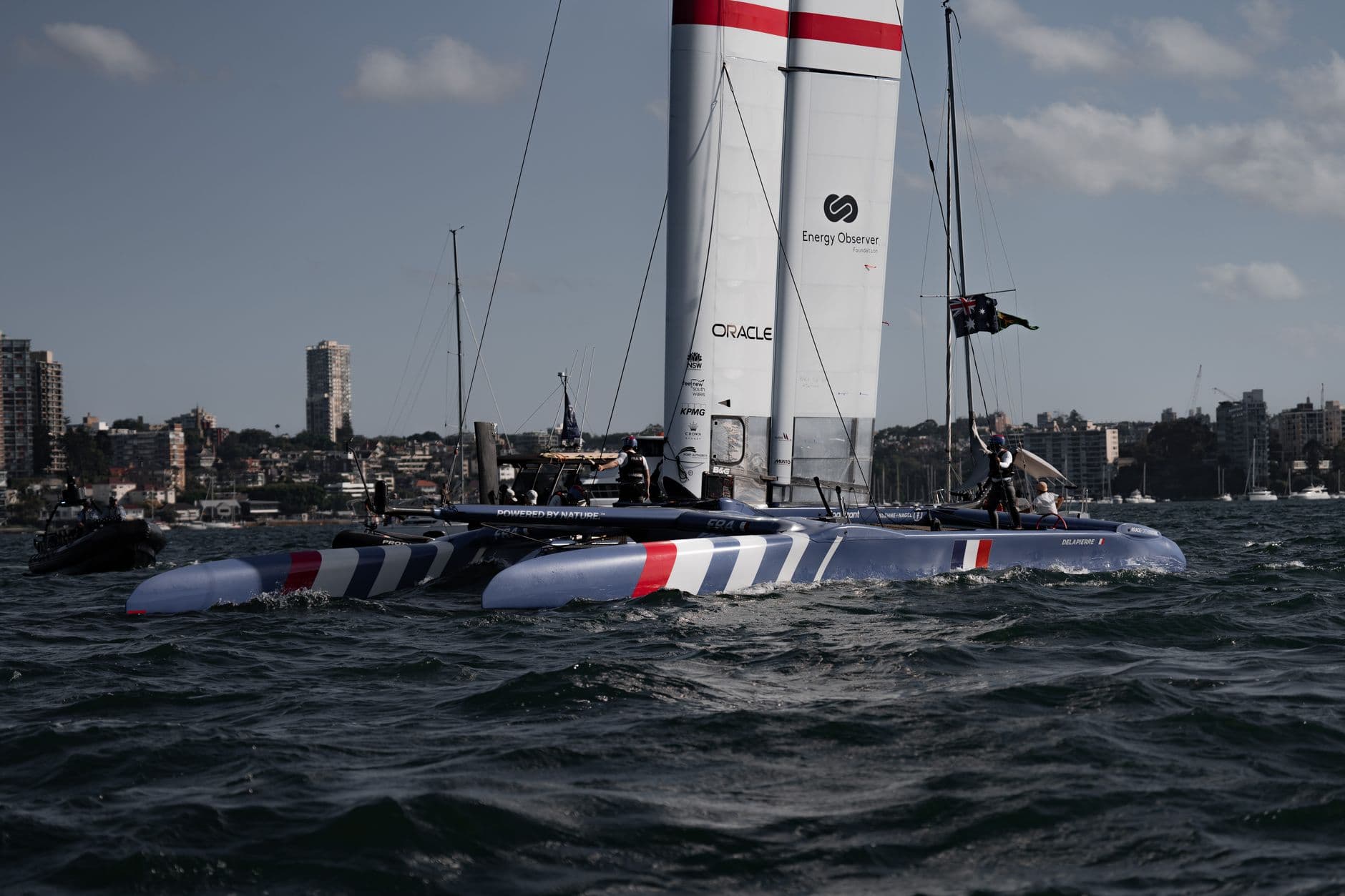
The first time you bring a cat alongside or back it out of a tight berth, the steering architecture takes over. The wide beam, the two hulls, and the steering system shape how the boat responds in reverse, under power, and when the sails load up, so a sea trial tells you far more than a brochure ever will.
Why catamarans lean on twin rudders
Modern catamarans often carry one rudder on each hull because that arrangement keeps the boat controllable as it heels and gives proper authority over a wide stern. That is the core catamaran difference a monohull sailor feels immediately: the helm does not rely on a single blade buried on the centerline, but on two foils working in a broader, more separated flow.
Catamaran Concepts calls this travelling steerage, a reminder that multihull steering has evolved through design tradeoffs rather than a single universal recipe. The result is a steering package that affects not only how the boat turns, but how the cockpit is arranged, how the crew moves, and how much confidence the person at the wheel has in tight spaces.
What the helm should feel like on a sea trial
At speed, a well-sorted twin-rudder cat should feel alive but not nervous. The helm ought to answer promptly, with the rudders holding bite as the boat loads up, rather than rounding out or going vague the way an undersized or poorly matched single system might. That directness is one reason modern cats can feel so planted, especially when the load shifts to the leeward hull.
The real test comes when you change gears and slow down. Modern Sailing’s docking guide focuses on that low-speed moment. Under engine power, dual rudders do not handle like a single-rudder sailboat, because prop wash, twin engines, hull spacing, and helm feedback all interact differently. If you are used to monohull habits, that is the moment to watch closely, because the boat is telling you how the steering geometry works, not how much you wish it worked like your last yacht.
The main steering systems you will see
Several steering architectures can appear on catamarans, and Jefa Steering names the main ones. Cable steering is the simplest and lightest of the lot, and it is usually the least expensive, but that simplicity comes with a condition: cable tension has to be checked regularly if you want the system to stay safe and precise.
Push-pull rod steering goes a step further toward immediacy. It is very light and close to a direct connection between the rudders, using idler or tiller shafts to reduce the sense of delay between wheel movement and rudder response. On a sea trial, this tends to feel cleaner and more connected than cable, especially when you make small corrections while docking or trimming course.
Transmission steering is the most direct and strongest mechanical option when a straight rudder-to-pedestal link through rack and pinion is not possible. The system runs on ball bearings, which keeps friction very low and makes helm control highly responsive. If a cat feels unusually smooth and confident through the wheel, this is often the kind of engineering doing the work behind the scenes.
Why the cockpit layout and traveler arrangement matter
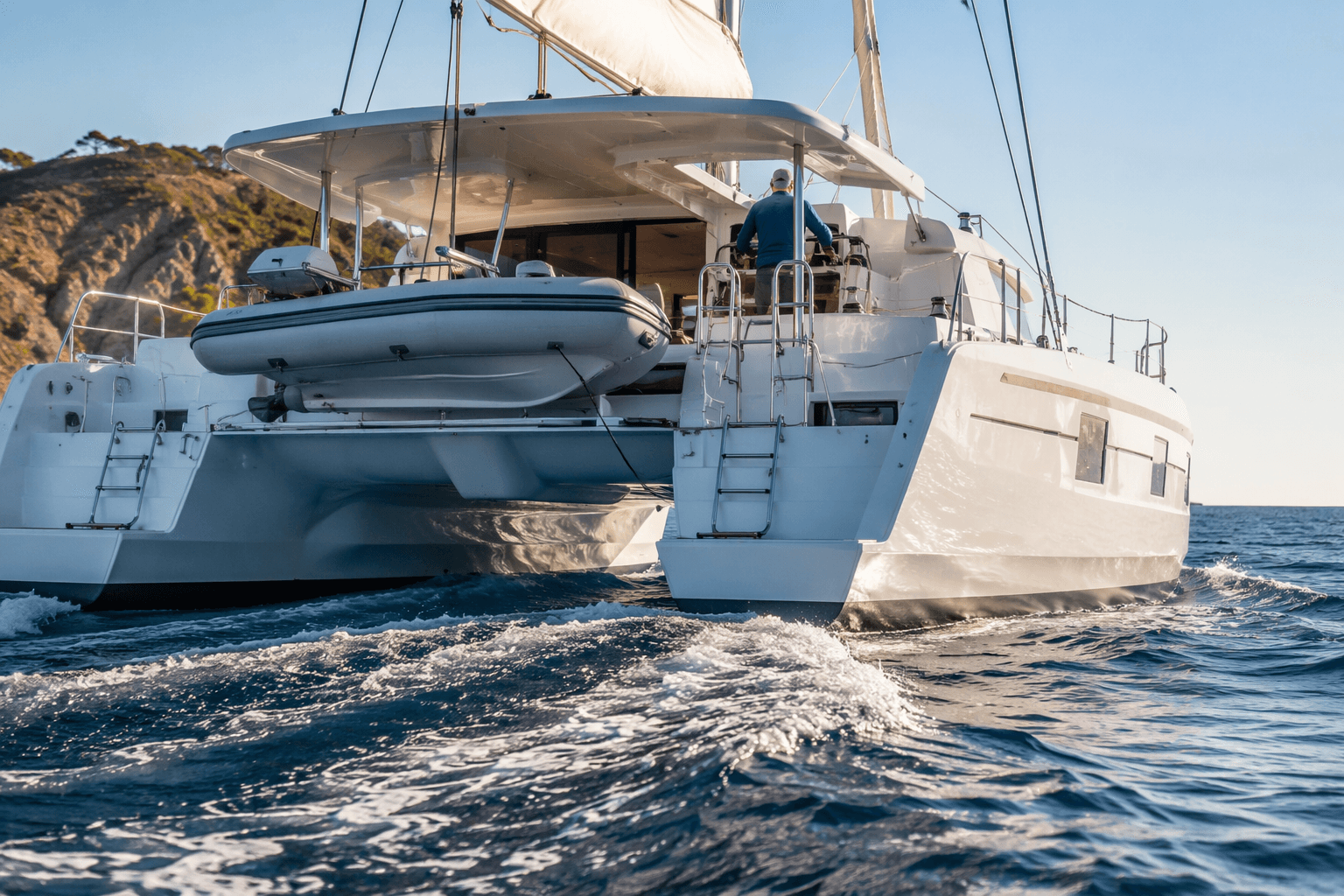
Twin-rudder, twin-wheel cats often use a space-saving traveller arrangement with backlash-free steering. That is not just a technical flourish, because the steering system helps shape the whole cockpit: open sightlines, twin helm stations, and clean sail-handling ergonomics all depend on how the hardware is packaged.
This is where catamaran steering becomes a deck-plan issue as much as a handling issue. A well-conceived layout lets the helmsman keep eyes on sails, instruments, and crew without wandering across the boat, while a clumsy one forces compromises that show up every time you tack, bear away, or back into a berth.
What is normal, and what should make you look twice
Some twin-rudder quirks are simply cat traits. A catamaran may need a different touch in reverse, a little more patience while the hulls and prop wash settle, and a more deliberate approach to low-speed turns than you are used to on a monohull. That is normal, especially on boats set up for performance and wide-open cockpit layouts.
What is not normal is slop, stickiness, or inconsistent feedback side to side. If the wheel feels loose, if one tack loads the helm differently from the other without a clear reason, or if the response feels damped and reluctant instead of direct, that can point to cable tension that needs attention, excess friction, or a poor steering match. Jefa’s maintenance guidance calls for rudder-system maintenance every third year, a useful reminder that a cat’s steering confidence depends on upkeep as well as design.
The debate is bigger than comfort at the wheel
This architecture is not a new fad. SAIL Magazine traces twin-rudder raceboats back to the mid-1980s; the layout has become increasingly popular on cruising boats over the last 10 years or so. In 2011, Humphreys Yacht Design said it had already been a proponent of twin rudders for well over a decade, with experience ranging from Open 60s and Volvo 70s to moderately heavy cruising yachts.
Design-focused builders such as Balance Catamarans treat twin-rudder architecture as a deliberate performance solution, while Attainable Adventure Cruising has argued hard against twin rudders for high latitudes or maybe cruising, pointing to complexity and vulnerability.
This article was produced by Prism’s automated news system from verified source data, official records, and press releases, then run through automated quality and moderation checks before publishing. The system is built and supervised by the people who set the standards it runs under. Read our full AI policy.
Did this article answer your question?