£5 coffee spotlights global supply chain and inflation pressures
A £5 cup now carries the cost of green coffee, freight and rent, while ICO data show prices still elevated despite a February dip.
A £5 flat white in London now reads less like a café indulgence and more like the final line of a global invoice. By the time green coffee is bought, freight booked, beans roasted, machines powered, staff paid and rent covered, one drink has absorbed shocks from nearly every part of the supply chain.
The clearest market signal still comes from the International Coffee Organization, whose Coffee Market Report is its flagship reference for price movements and supply-demand balances. The ICO said its Composite Indicator Price averaged 267.57 US cents/lb in February 2026, down 9.9% from January after improved supply expectations, including stronger Brazil production forecasts and a projected global surplus for coffee year 2025/26. The organization’s specialized reports page showed monthly coffee market files through April 2026 and was updated on 19 May 2026, a reminder that the market has kept moving even as the latest numbers landed.

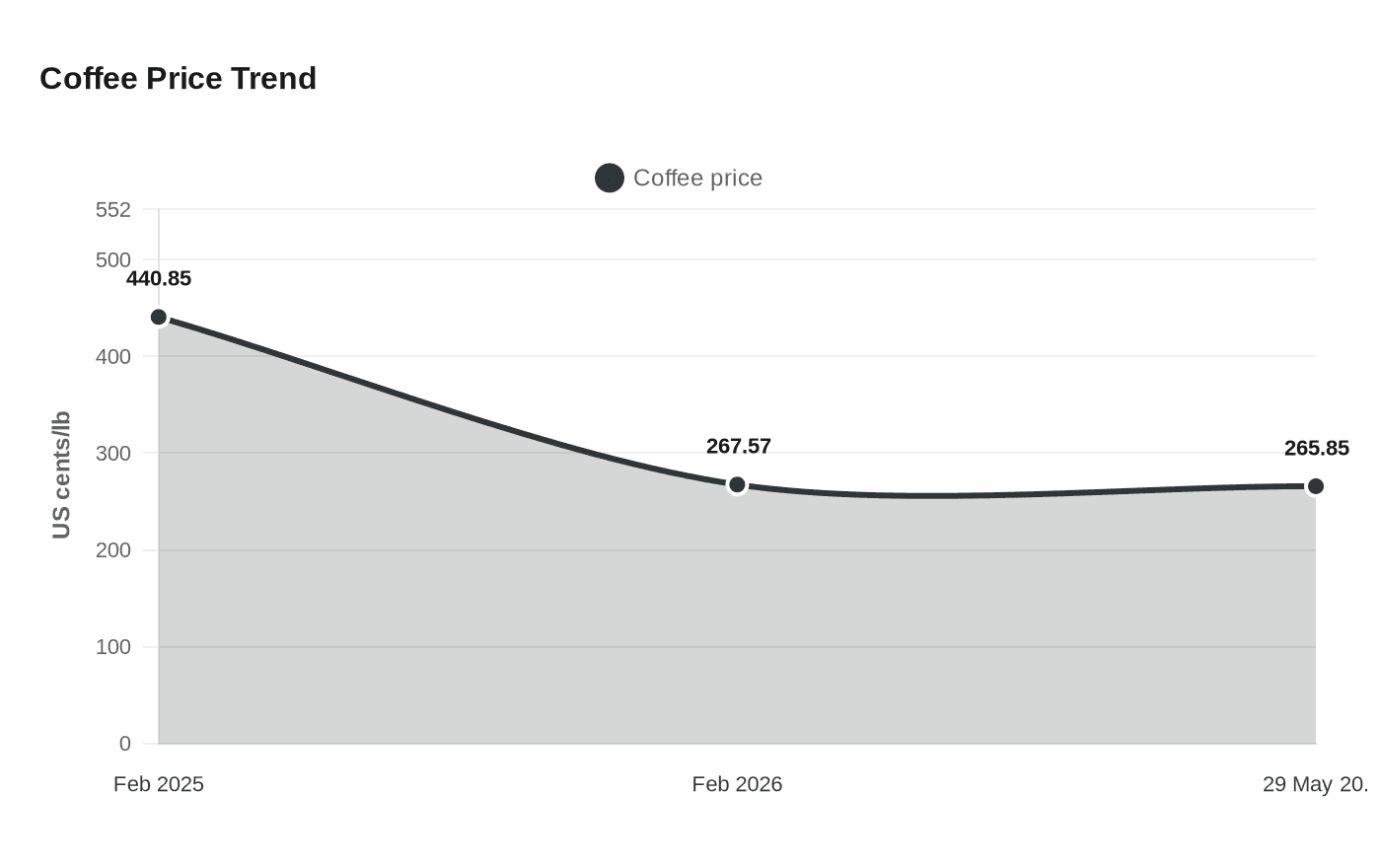
That easing has not brought prices back to old norms. Trading Economics said coffee reached an all-time high of 440.85 in February 2025 and was still about 265.85 US cents/lb on 29 May 2026. In the UK, United Baristas said cup prices had risen more than 20% since the covid lockdowns, while trade commentary in 2025 had already placed some chains and independents around £5 or more for certain drinks, especially larger or specialty beverages. The price series itself is now being watched closely on both sides of the Atlantic: the Office for National Statistics updated its RPI data for Coffee: pure, instant, per 100g on 20 May 2026, and the U.S. Bureau of Labor Statistics coffee CPI series runs through April 2026 via FRED.
That is what makes the £5 cup such a clean snapshot of the market. The sticker price is not just about beans in a sack, but about freight rates, energy bills, payroll, lease costs and the margin a cafe needs to stay open when everything upstream gets more expensive. A drink that once felt like a small, local purchase now carries the imprint of Brazil’s crop forecasts, global surplus expectations and a commodity market that is still far from calm.
For coffee drinkers, the £5 line is no longer a curiosity tucked into the most expensive parts of town. It is the visible endpoint of a supply chain where a futures move can land, almost immediately, on a menu board.
This article was produced by Prism’s automated news system from verified source data, official records, and press releases, then run through automated quality and moderation checks before publishing. The system is built and supervised by the people who set the standards it runs under. Read our full AI policy.
Know something we missed? Have a correction or additional information?
Submit a Tip