Brazil coffee crop forecast hits record 66.2 million bags in 2026
Brazil’s 2026 coffee crop forecast points to 66.2 million bags, a record that could ease prices only after the new supply reaches roasters and shelves.
%3Astrip_icc()%2Fi.s3.glbimg.com%2Fv1%2FAUTH_37554604729d4b2f9f3eb9ad8a691345%2Finternal_photos%2Fbs%2F2025%2Fv%2FH%2FMok15ySjOBLF4fxCIGDw%2Fcafe.png&w=1920&q=75)
If Brazil really brings in a record coffee crop, the first test is not whether the headline looks big. It is when that extra coffee finally shows up in the supermarket aisle and in green offers to roasters. Brazil’s crop agency, Conab, said on Feb. 5 that the 2026 harvest was estimated at 66.2 million 60-kilogram bags of processed coffee, up 17.1% from the prior year and above the country’s old record of 63.1 million bags from 2020.
Conab’s numbers point to a broad rebound rather than a single lucky patch. The agency said the gain is being driven by a positive biennial cycle, a 4.1% increase in area in production, and better productivity. Its agro portal lists coffee area in production at 1,935,196.7 hectares, output at 66,186.32 thousand bags, and productivity at 34 bags per hectare. In plain terms, Brazil is not just expecting more coffee, it is expecting more coffee per hectare.
Minas Gerais is expected to carry the biggest load. Local reporting put the state at 32.4 million bags, about 25.9% above the previous season. That matters because Minas Gerais is Brazil’s main arabica engine, and Conab projected arabica output at 44.1 million bags, up 23.3%. Robusta, often called conilon in Brazil, was pegged at 22.1 million bags. For roasters, that split matters: arabica sets the tone for much of the specialty and mainstream market, while robusta helps shape blends and lower-cost supply.
The bigger question for buyers is whether this crop actually relieves pressure or just patches a market that has been tight for years. Brazil, the world’s largest coffee producer, exported a record 50.443 million bags to 116 countries in 2024, and export earnings also hit a record in the 2024/25 crop year even as later volumes fell. That is a reminder that a large crop does not automatically mean cheap coffee, especially when prices have already been elevated.
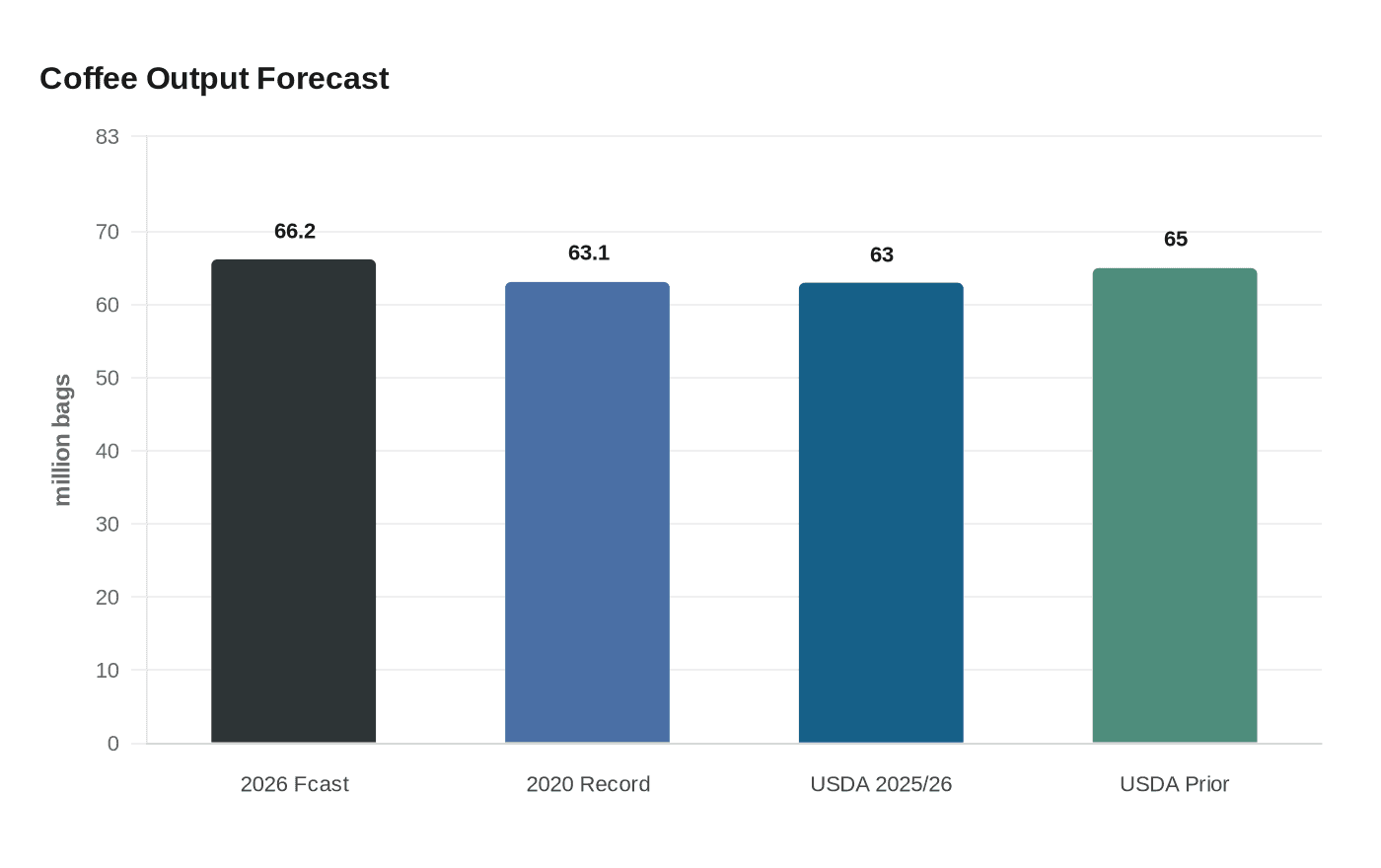
The 2026 forecast also lands after a weaker outlook for 2025/26, when the USDA Foreign Agricultural Service estimated Brazil’s production at 63 million bags, below its earlier 65 million bag projection. That gap is why the 66.2 million bag call matters so much. If the crop lands as forecast, it should do more than set a record. It should start rebuilding the supply cushion that buyers and home roasters have been missing.
This article was produced by Prism’s automated news system from verified source data, official records, and press releases, then run through automated quality and moderation checks before publishing. The system is built and supervised by the people who set the standards it runs under. Read our full AI policy.
Did this article answer your question?