Brazilian study links managed bees to higher coffee yields, quality
Managed stingless bees lifted yields 67% near hives, and a separate bee trial added 2.43 points to cup scores. The big question now is scale.
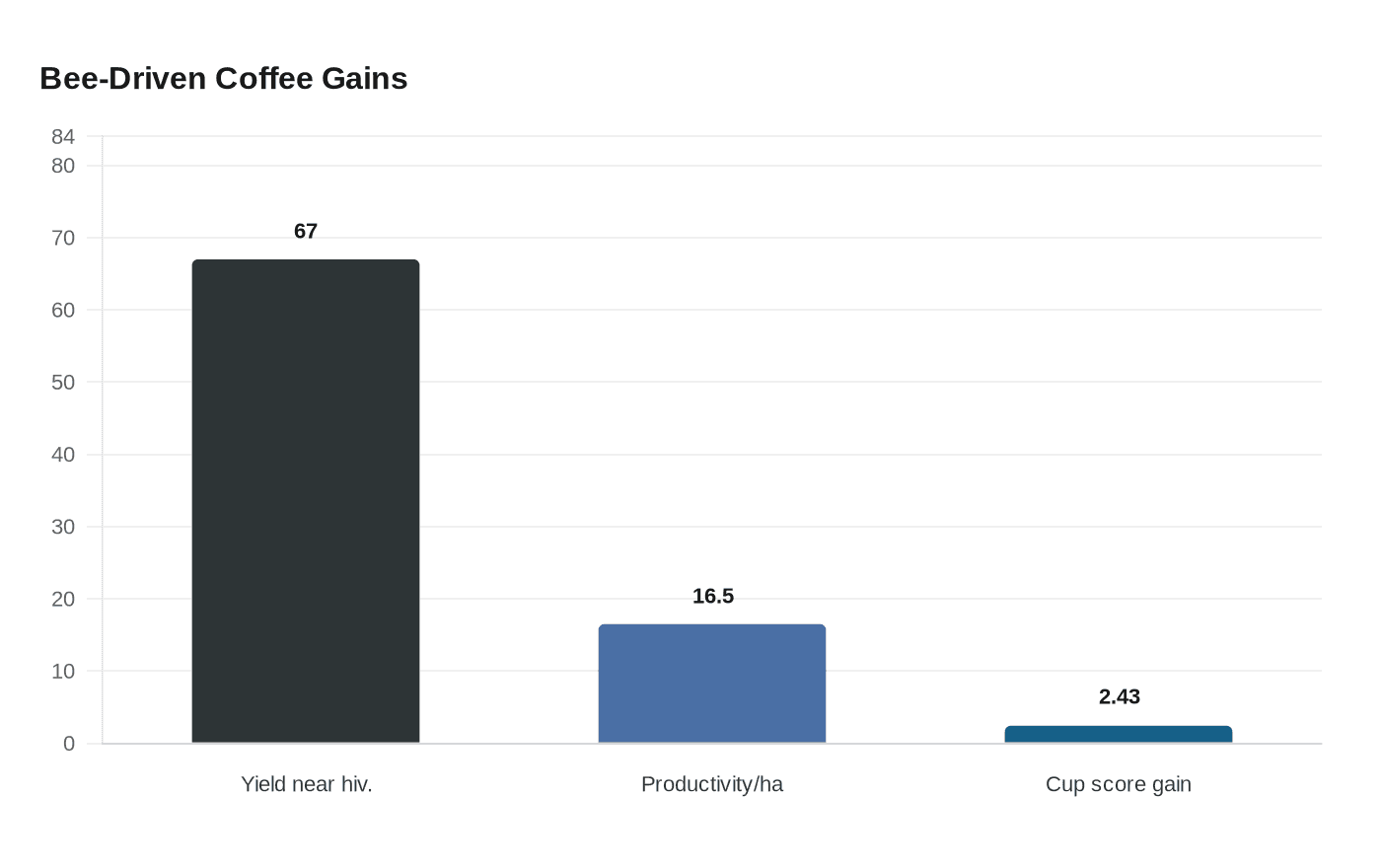
Managed Scaptotrigona depilis colonies pushed coffee yield up 67 percent on branches closest to the hives, a result that gives Brazilian farmers a sharper argument for treating pollination as a production tool, not an afterthought. In the same body of work, managed Apis mellifera colonies lifted productivity by about 16.5 percent per hectare and helped raise cup scores by an average 2.43 points, a jump that could matter just as much in the marketplace as in the field.
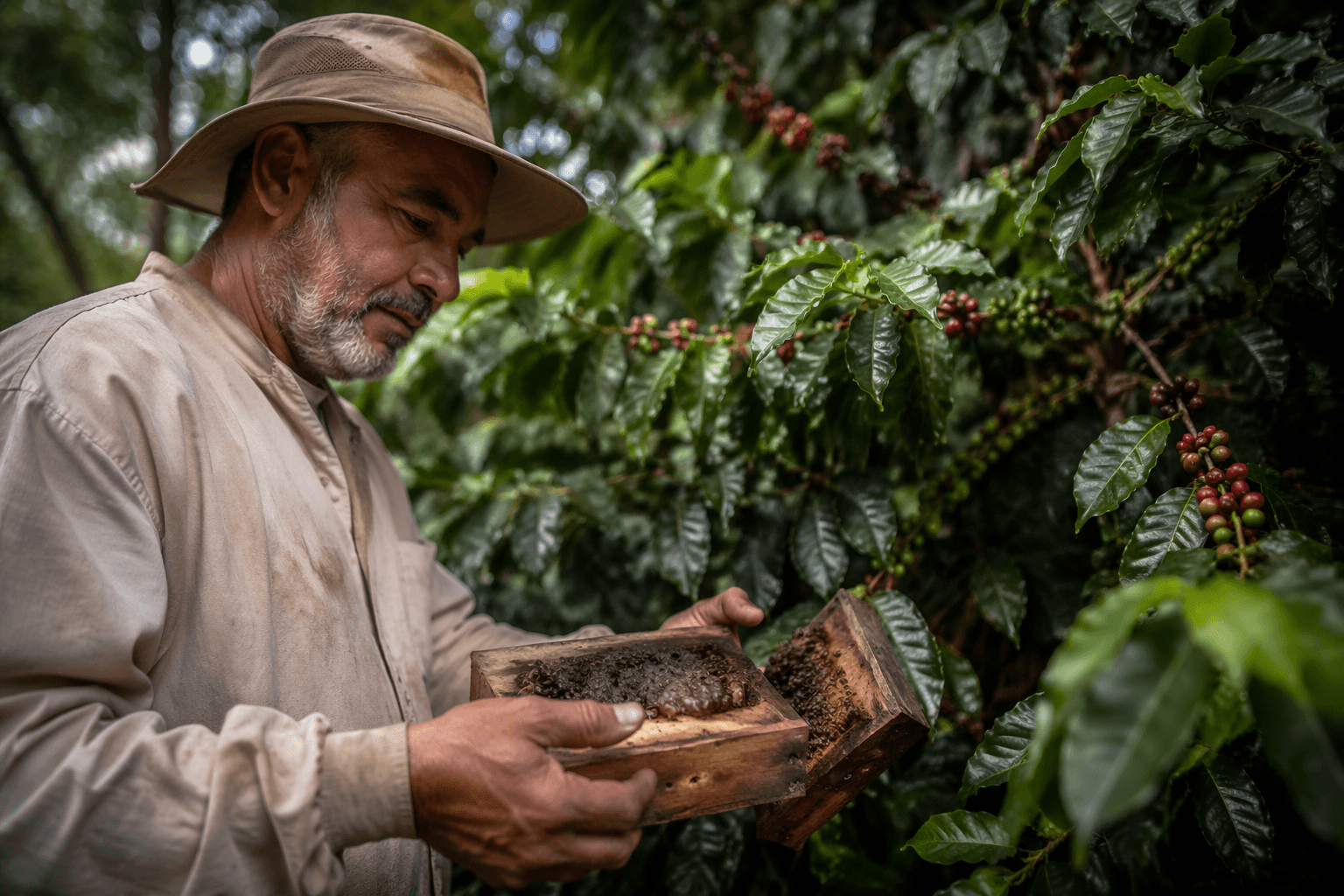
The most important part is where those gains showed up. The stingless bee trial ran in Brazilian coffee farms in both organic and conventional settings, with colonies introduced roughly 10 to 18 days before flowering. Researchers measured yield on branches near the colonies and on branches farther away, and they also tracked pesticide residues in leaves, nectar, pollen and bee-collected floral resources. The result was not a vague sustainability signal. It was a direct crop response, tied to managed bee placement around bloom.
Brazil is the right place for this question to get serious attention. Coffee production is forecast at 178.7 million bags for 2025/26, and Brazil alone cultivated 2.25 million hectares of coffee in 2025, including 1.84 million hectares of arabica, or 82 percent of the total. When a country that large starts showing measurable yield and quality gains from pollinator management, the implications go beyond one experiment plot in Minas Gerais or São Paulo. They reach straight into supply, consistency and farm income.
The Frontiers paper, Stingless bees in coffee: yield gains and assessing neonicotinoid impact, also found low but detectable residues of thiamethoxam and its metabolite clothianidin in plant tissues and bee-collected resources. Even so, brood production and brood mortality did not differ significantly between colonies on conventional and organic farms, and foraging activity, which differed before coffee bloom, normalized over time. That is the kind of result coffee growers will read carefully, because it suggests pollinator supplementation may fit alongside existing pest-control programs rather than forcing a clean break from them.
What is proven so far is narrower than the hype around it. The study shows that managed bees can improve yield and, in the honeybee trial, cup quality under the conditions tested. What it does not yet prove is how reliably those gains will hold across more farms, more seasons and different management styles, or how far they will carry into pricing, flavor consistency and resilience when weather, pests and chemical pressure all stack up.
The direction of travel is hard to miss. A 2025 study in southeastern Brazil had already shown that managed Africanized honey bees and native stingless bees increased Arabica yield near colonies across 23 coffee fields. The new stingless bee results do not stand alone; they tighten the case that coffee farms in Brazil can buy more than crop protection and fertilizer. They can also manage bee activity, and that may be the next lever that changes both the cup and the ledger.
This article was produced by Prism’s automated news system from verified source data, official records, and press releases, then run through automated quality and moderation checks before publishing. The system is built and supervised by the people who set the standards it runs under. Read our full AI policy.
Did this article answer your question?