Coffee Industry Faces Tougher Forest Risk Scrutiny in 2026 Report
Coffee sits at the bottom of Forest 500 traceability, with only 18% of exposed companies reporting systems as EU fines for forest-risk imports loom.
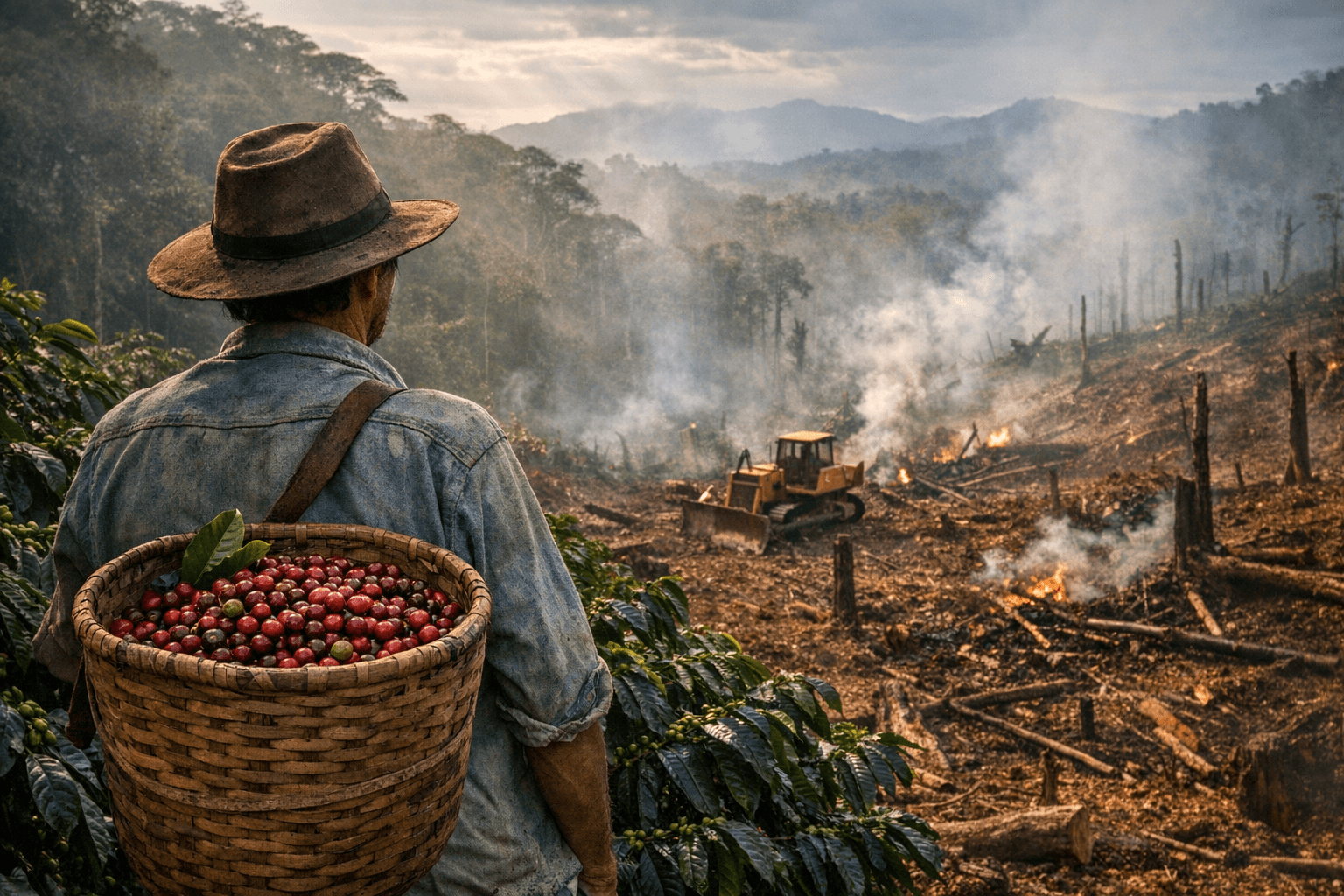
Coffee is still lagging where it now matters most: proof. Global Canopy’s 12th Forest 500 assessment, built on 270,000 public data points across 500 companies and nine forest-risk commodities, found that only 18% of coffee-exposed companies reported traceability systems, the weakest showing among the commodities tracked.
That gap lands as the European Union Deforestation Regulation moves toward implementation at the end of 2026, with non-compliance carrying a fine of at least 4% of a company’s EU turnover. Global Canopy said 68 of the 500 companies, or 14%, cited the regulation in public documents tied to deforestation action, and more than a quarter reported implementation steps in 2025 that they had not reported a year earlier. In the coffee lane, Corporación Perhusa is one of the names linked to that kind of movement, a sign that the regulation is already changing how buyers talk to suppliers.
The harder read is what is not moving. Global Canopy classified 19 companies as leaders, 313 as late majority and 168 as laggards with no deforestation or ecosystem conversion commitments for any commodity. The report also identified 24 companies that have never published deforestation commitments and 14 that backtracked on previous commitments in 2025. Even with 146 companies, or 29%, now committed to addressing deforestation across all commodities they produce or source, progress only inched up from 27% the year before.
Chloe Rollscane, Global Canopy’s research associate, said the public record likely captures only the “tip of a bigger iceberg,” because the assessment is limited to disclosures companies choose to make. Niki Mardas, Global Canopy’s executive director, said companies and governments cannot afford to “drop the ball on nature and climate” and pressed for implementation without further delays or scope reductions.
For coffee buyers and shoppers, the message is blunt: packaging language is no longer enough if a company cannot show where beans came from, how land was managed, and whether the supply chain is actually deforestation-free. The Forest 500 now measures that credibility against a harder standard, and the brands that can document it will separate themselves from the ones still selling promises without the paper trail.
This article was produced by Prism’s automated news system from verified source data, official records, and press releases, then run through automated quality and moderation checks before publishing. The system is built and supervised by the people who set the standards it runs under. Read our full AI policy.
Did this article answer your question?