Genomic study reveals how coffee wilt disease keeps evolving and returning
A fungus that first surfaced in 1927 has learned new tricks, and coffee wilt disease is again threatening arabica and robusta supply from Africa.
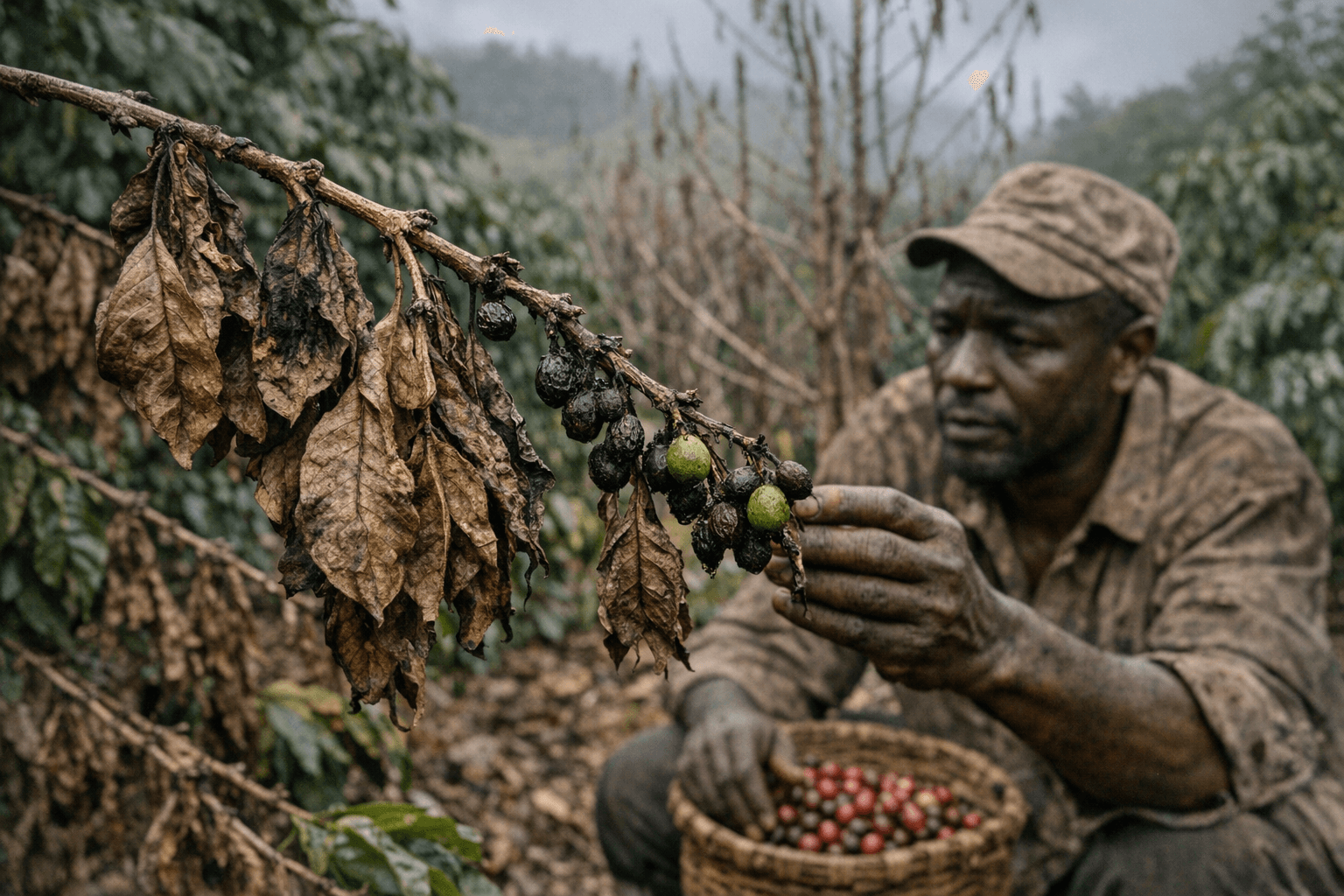
Coffee wilt disease is not a relic of old farm lore. It is a stubborn supply threat that has already wiped out coffee trees across western, central and eastern Africa, and new genomic work shows why it keeps coming back with fresh force.
The pathogen, Fusarium xylarioides, kills coffee by invading through the roots and blocking water uptake until the plant wilts and dies. That sounds simple enough, but the disease’s history is anything but. First identified in 1927, it devastated several coffee varieties in western and central Africa, then reappeared on robusta in the 1970s and spread through eastern and central Africa. In places such as the Democratic Republic of Congo, production collapses took decades to recover from, and the pattern has made every resurgence feel less like a flare-up than a reset.
The new research, published in PLOS Biology, compared 13 historic strains of F. xylarioides spanning six decades and multiple outbreaks. The scientists found at least four distinct lineages: one specialized to arabica, one to robusta, and two historic lineages linked to related coffee species. They also found evidence that the fungus picked up DNA from Fusarium oxysporum through horizontal gene transfer, including effector genes and other infection-related regions that help determine which host a pathogen can attack. Mobile elements such as transposons or starships may have helped move that DNA around. Researchers at Imperial College London and the University of Oxford said the findings help explain how the fungus acquired the genetic tools to infect both arabica and robusta.
For coffee, this is not just an academic detective story. Since the 1990s, coffee wilt outbreaks have cost more than US$1 billion. Coffee remains a primary source of income for more than 12 million households in Africa, and Ethiopia alone exports about $762.8 million worth of coffee annually. When a disease can move through a crop, adapt to new hosts, and return after growers think they have bred resistance, the risk reaches far beyond the farm gate and into national export income, rural livelihoods, and the availability of specific origins on the market.
The warning signs are already visible. Uganda’s coffee production reportedly did not return to pre-outbreak levels until 2020, and researchers reported in 2023 that coffee wilt disease had resurfaced across all coffee-producing regions of Ivory Coast. For the coffee world, that makes disease surveillance as important as weather, and as market-moving as futures prices.
This article was produced by Prism’s automated news system from verified source data, official records, and press releases, then run through automated quality and moderation checks before publishing. The system is built and supervised by the people who set the standards it runs under. Read our full AI policy.
Did this article answer your question?