Global Coffee Alliance Launches in Vietnam, Targets Sustainable Supply Chains Through 2040
Le Hoang Diep Thao's TNI King Coffee launched a global coffee alliance in Hanoi, drawing delegates from up to 19 countries to sign sustainability pledges through 2040.
The world's second-largest coffee exporter just made its move to shape the sustainability agenda, not simply comply with one handed down from consuming markets.
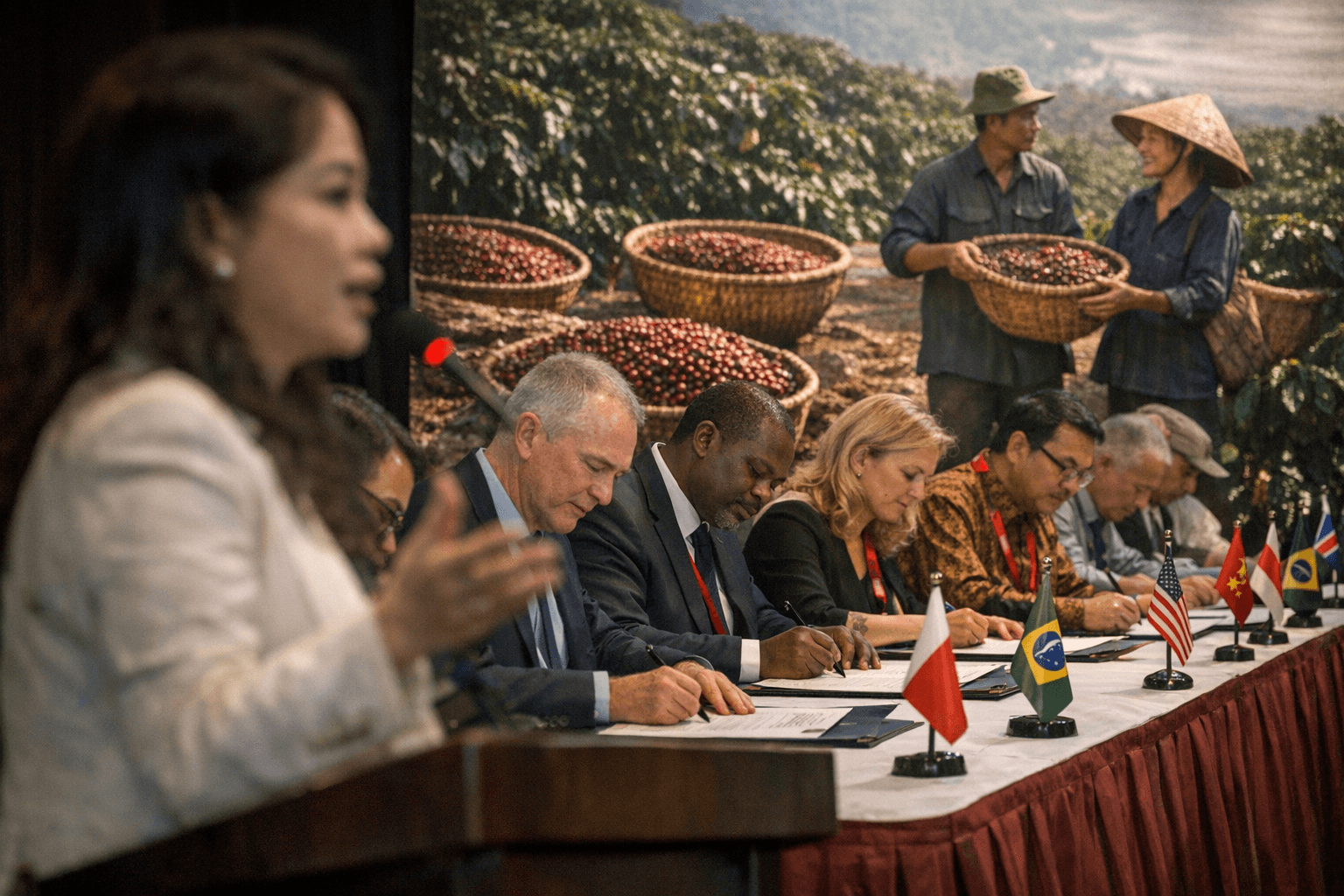
Vietnam's International Coffee Conference in Hanoi on March 26 saw the launch of the Global Coffee Alliance, a public-private partnership convened by TNI King Coffee that drew representatives from 15 to 19 countries to sign an inaugural declaration of shared priorities stretching to 2040.
The GCA 2026 Declaration organizes its ambitions around five pillars: protecting coffee ecosystems through regenerative agriculture; securing fair incomes for farmers through equitable trade and capacity building; deepening government-business cooperation for transparent supply chains; accelerating technology adoption and digital transformation; and recognizing coffee culture as shared global heritage. Longer-term, the alliance is targeting net-zero carbon pathways and a proposed Sustainable Development Fund to back green production and reforestation across producing regions.
Le Hoang Diep Thao, founder and CEO of TNI King Coffee and the event's host, called for unity between producing and consuming countries and pushed for practical action beyond broad declarations. That framing matters: Vietnam is not only the world's second-largest coffee exporter but the dominant Robusta producer globally, and its industry leaders are increasingly positioning themselves as architects of sustainability frameworks rather than recipients of them. Diplomatic representatives at the launch described the GCA's public-private structure as a model for combining policy levers with private financing and execution capacity, a design that reflects a deliberate push toward higher-value processing and away from raw green bean exports.
The GCA's Strategic Vision 2040 and net-zero commitments will need more than declaration language to gain traction. Multi-year financing, credible monitoring frameworks, and clear alignment with existing multilateral bodies like the International Coffee Organization will determine whether the alliance moves from Hanoi communiqué to funded pilots in actual farming communities. The proposed Sustainable Development Fund's real test will come when it needs to translate to measurable outcomes at the farm level, where regenerative agriculture upgrades and reforestation efforts ultimately need to land.
Vietnam's leverage as the dominant Robusta supplier gives the GCA an unusual kind of credibility at launch. Whether it holds across a 14-year horizon is the harder question.
This article was produced by Prism’s automated news system from verified source data, official records, and press releases, then run through automated quality and moderation checks before publishing. The system is built and supervised by the people who set the standards it runs under. Read our full AI policy.
Did this article answer your question?