Iran Tensions Disrupt UAE Food Imports, Including Indonesian Coffee
Indonesian coffee shipments to the UAE are stuck in ports or being rerouted by air as Iranian missile strikes complicate Strait of Hormuz shipping lanes.

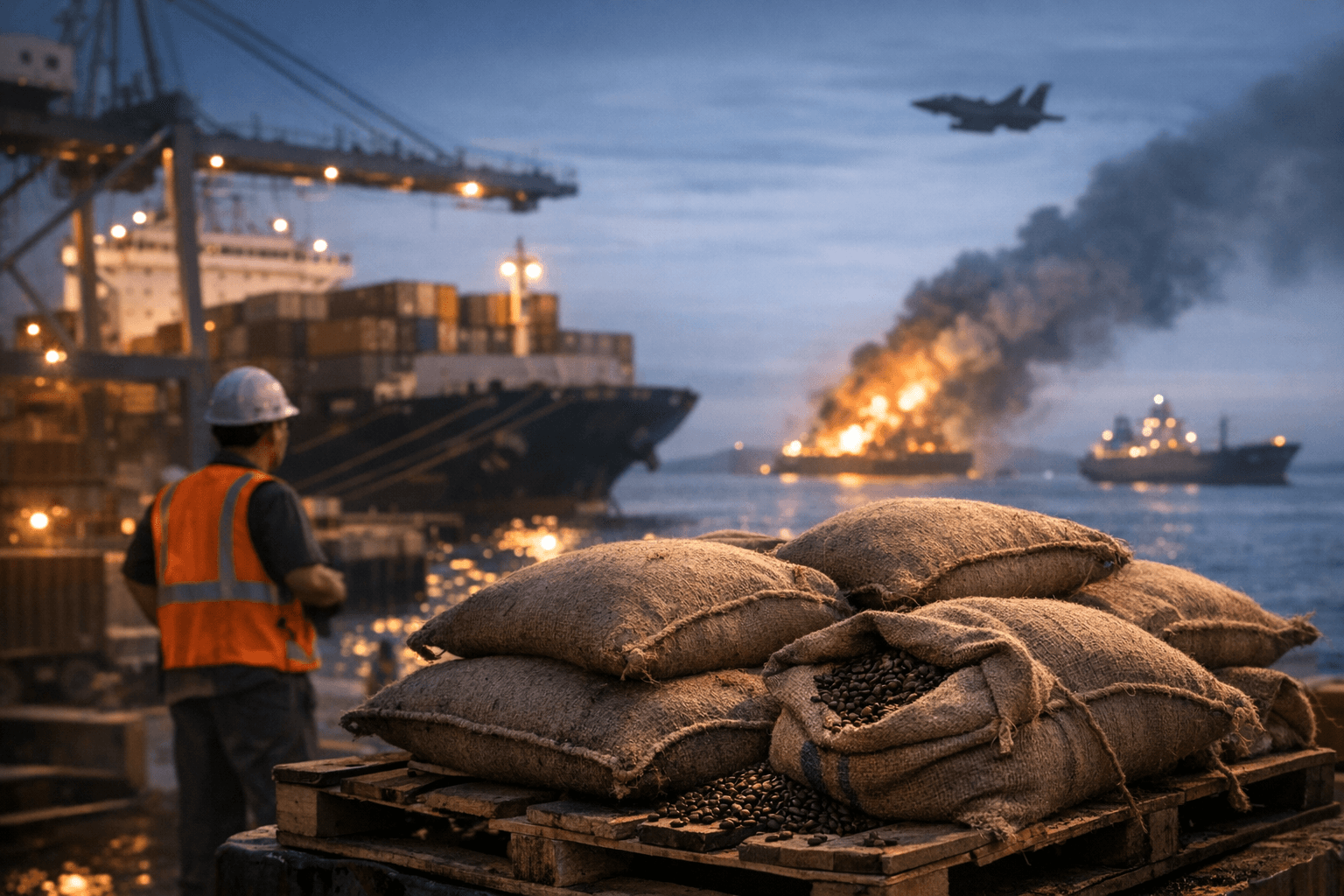
Vessels carrying Indonesian coffee, Indian rice, and Australian meat are sitting idle in ports or being forced onto alternative routes as Iranian missile and drone strikes against Gulf cities push the UAE's food supply chains into contingency mode. Some of those shipments are now being redirected entirely, arriving by plane or overland road transport rather than by sea.
The disruption cuts deep in a country that imports roughly 90% of its food. Problems with food imports arose after Dubai and other Gulf cities became targets of Iranian missiles and drones, with Tehran striking US military bases, though civilians also suffered in strikes on hotels and from air defense operations. The Strait of Hormuz, one of the world's most critical maritime corridors and the primary sea route for goods reaching the Gulf, sits at the center of the complications. Even temporary snarls there push up transportation costs, insurance premiums, and freight rates, all of which ultimately affect supermarket prices.
UAE Minister of Economy Abdulla bin Touq Al Marri has said the country's strategic reserves of essential products will last four to six months, and authorities say they are prepared to source from alternative markets and supply routes if necessary. Supermarket shelves in Dubai remain stocked for now, and large retailers say they have not raised prices. Authorities have instructed them not to, and are closely monitoring the situation. The food industry is drawing on logistics networks built during the COVID-19 pandemic and the 2024 floods to keep supply moving.
Iran's role in the disruption extends beyond its strikes. Tehran, one of the UAE's main suppliers of fresh fruits and vegetables, has banned the export of all food and agricultural products until further notice. That ban lands with particular force during Ramadan, when fruits, vegetables, and juices form a large part of iftar meals, driving demand at exactly the moment supply chains are under strain.
The ripple effects are reaching India's rice sector. The All India Rice Exporters Association has flagged concerns over the conflict's impact on one of its most important export markets. "Iran is one of India's largest rice importers, with some 25% of India's basmati rice exports going into this market. Last year basmati rice exports here were valued at some US$1.2bn," AIREA General Secretary Ajay Bhalothia said. "Another 20% of Indian basmati rice usually goes to Iraq, but this conflict means that these exports are also likely to be affected, and the uncertainty also means that rice exports throughout the region are likely to be impacted."
Sector analysts at Foodnavigator-asia identify rice as the commodity facing the sharpest immediate pressure, but the list of vulnerable categories is far broader: bakery, beverages, dairy, meat, seafood, confectionery, and convenience foods all face potential volatility. With US President Donald Trump and Israeli Prime Minister Benjamin Netanyahu showing no signs of backing down until change is seen in Iran, Iranian retaliatory strikes have already significantly disrupted both air and sea routes across Kuwait, Saudi Arabia, the UAE, Oman, Qatar, and Bahrain.
The UAE's four-to-six month reserve window gives authorities time to maneuver, but that buffer shrinks quickly if shipping lanes remain contested and freight costs continue climbing.
Know something we missed? Have a correction or additional information?
Submit a Tip