Iran’s Coffee Shops Offer Low-Cost Refuge Amid Hardship
Iran’s cafés have become low-cost pressure valves, where crowded tables offer company, conversation, and a fragile sense of normal life amid inflation and conflict.
Cafes as social infrastructure
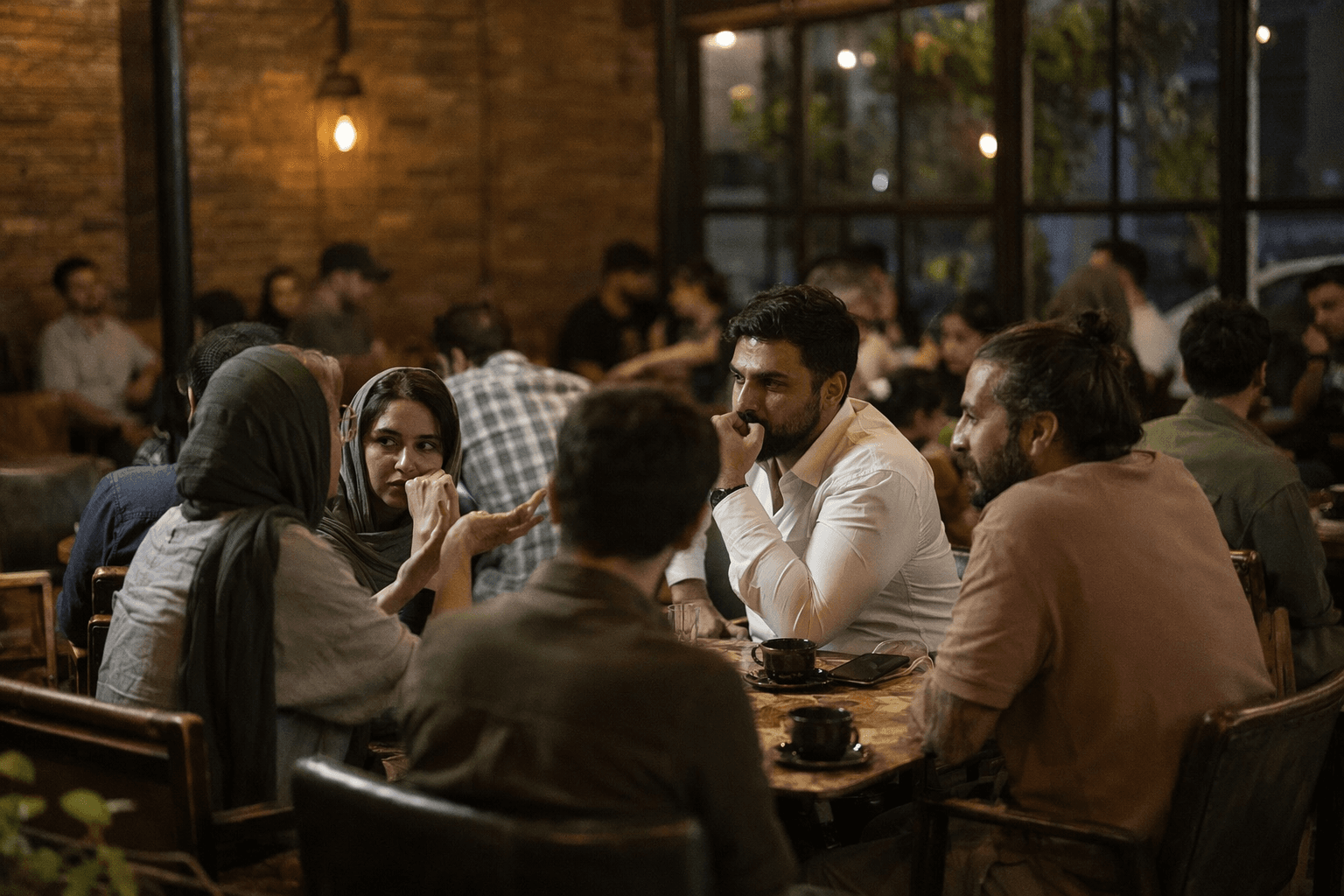
In Tehran and across other Iranian cities, coffee shops have become more than places to order a drink. They are affordable refuges where people gather to talk through war anxiety, living costs, and the strain of daily uncertainty, turning a simple table and a cup into a form of social shelter. Recent reporting described men and women, young and old, crowding into cafés after a fragile cease-fire, trying to reclaim pieces of ordinary life together.
That role fits deep Iranian habits. Coffee-house and café traditions have long functioned as hybrid social spaces in Iran, part gathering place, part cultural stage, part neighborhood commons. What is striking now is how visible that function has become as people look for low-cost spaces that offer company without the pressure of spending heavily, making the café one of the few places where conversation still feels easy to buy.
A cheap escape in an expensive economy
The appeal is inseparable from the country’s economic squeeze. The World Bank says Iran’s economy is facing mounting pressure from regional conflict, intensified sanctions, and growing water and energy shortages, and it says GDP growth slowed to 3.7 percent in 2024/25. The same World Bank assessment says the recent slowdown and GDP contraction are expected to push 2 million people into poverty in 2025, a scale of hardship that makes everyday gathering spots matter even more.
Inflation has made that pressure impossible to ignore. World Bank data shows consumer-price inflation at 32.5 percent in 2024, while the International Monetary Fund’s April 2026 data puts Iran’s inflation rate at 68.9 percent. In that kind of environment, a café visit is not a luxury splurge for many people, it is one of the few affordable ways to sit indoors, talk for a while, and feel less isolated while prices, politics, and personal finances all keep shifting.
The New York Times reported that cafés and coffee shops give Iranians affordable places to talk about hopes, fears, and the cost of living, and that insight captures why these rooms have become so central. A coffee shop offers something practical that many other forms of leisure cannot: a shared public setting where the emotional burden of the day can be lightened by simply being around other people. In a hard economy, that kind of low-cost company is its own social service.
Tehran’s coffee culture renaissance
The café scene is not just surviving, it is evolving. New reporting says Tehran has seen a coffee-culture renaissance led by young Iranians, with coffee becoming both a lifestyle marker and a quiet form of social expression. That shift matters because it shows cafés functioning on two levels at once: as everyday refuges for people under pressure, and as markers of a younger generation shaping a different social rhythm in the city.
Walk into one of these rooms and the scene tells the story. Some tables are filled with friends trading updates in low voices, others with students, freelancers, and families stretching a single visit as long as they can. The mix of ages and genders is part of the point, because the café preserves a version of public life that still feels open, familiar, and inexpensive enough to return to again and again.
For coffee culture watchers, this is the real takeaway from Tehran’s renaissance. The growth is not just about drink quality, sourcing language, or the spread of specialty habits, though those matter too. It is about coffee becoming a recognizable social code, one that lets people signal modernity, comfort, and connection in a city where many other public spaces feel more constrained.
Pressure from above, fragility below
That same visibility has brought scrutiny. In 2025, Tehran police said undercover agents were monitoring cafés, concerts, and cultural events, underscoring how politically sensitive these gathering spaces have become. When a coffee shop is watched this closely, it is no longer just a retail venue, it is a place where ordinary sociability can be read as a public signal.
The sector itself is fragile. A February 2026 report said about a quarter of cafés in parts of Iran had shut down over the previous three months because of protests, legal pressure, and economic strain. That number shows the paradox at the heart of Iran’s café life: these spaces are central to social resilience, yet they are exposed to the same financial and political shocks that make people need them in the first place.
Even so, the broader pattern is hard to miss. Cafés have become one of the few low-cost spaces where Iranians can process the present together, whether the topic is inflation, the fear of renewed conflict, or the simple relief of seeing familiar faces across a table. In a country shaped by sanctions, surveillance, and uncertainty, the coffee shop remains a small but stubborn form of public life, and that may be exactly why it matters so much now.
This article was produced by Prism’s automated news system from verified source data, official records, and press releases, then run through automated quality and moderation checks before publishing. The system is built and supervised by the people who set the standards it runs under. Read our full AI policy.
Did this article answer your question?