Middle East Shipping Crisis Strands Coffee Exports From India, Ethiopia
Hundreds of Indian coffee containers stranded by the Strait of Hormuz crisis, with a Ugandan cooperative watching payments freeze as cooperatives absorb the cash-flow fallout.
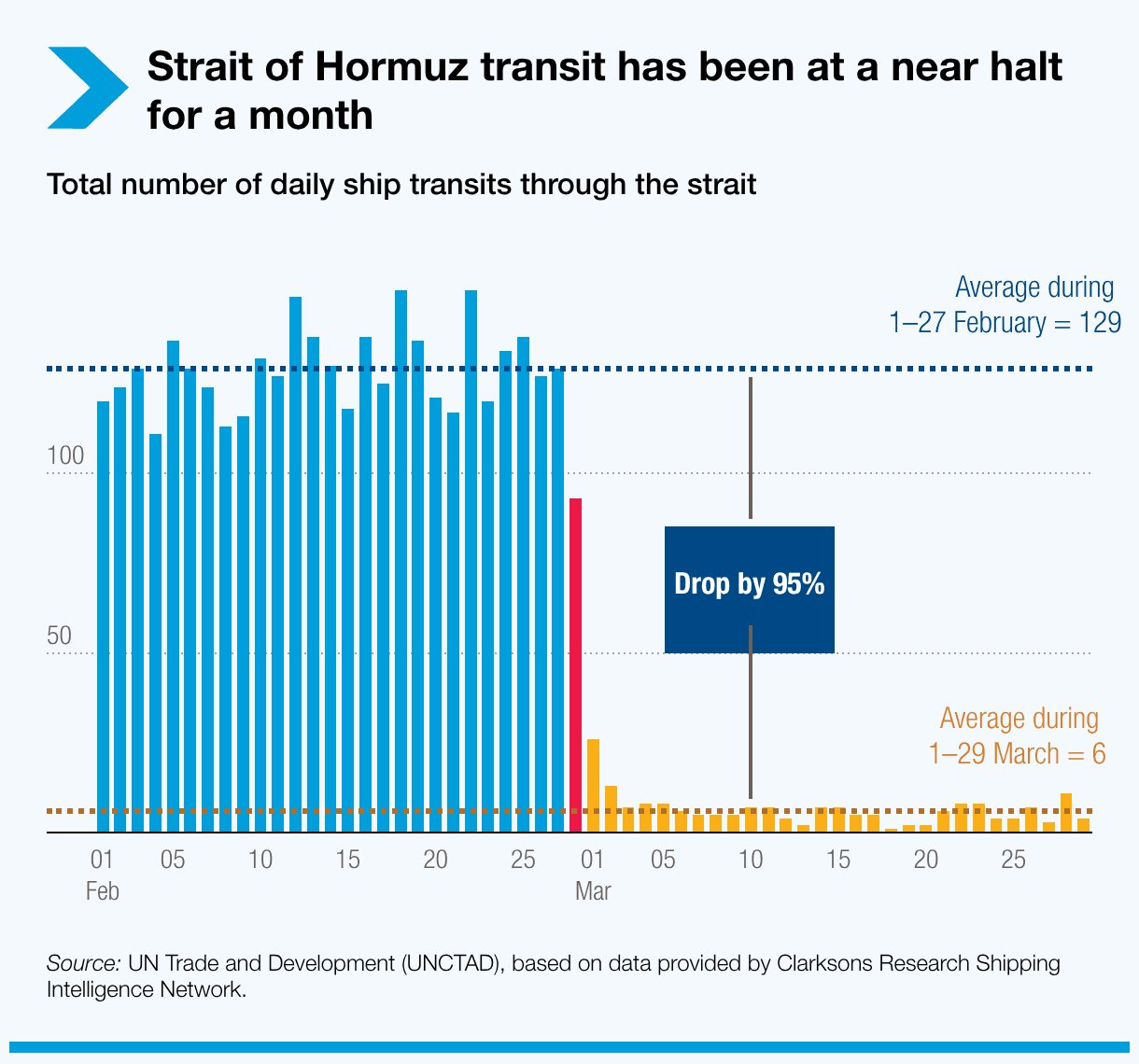
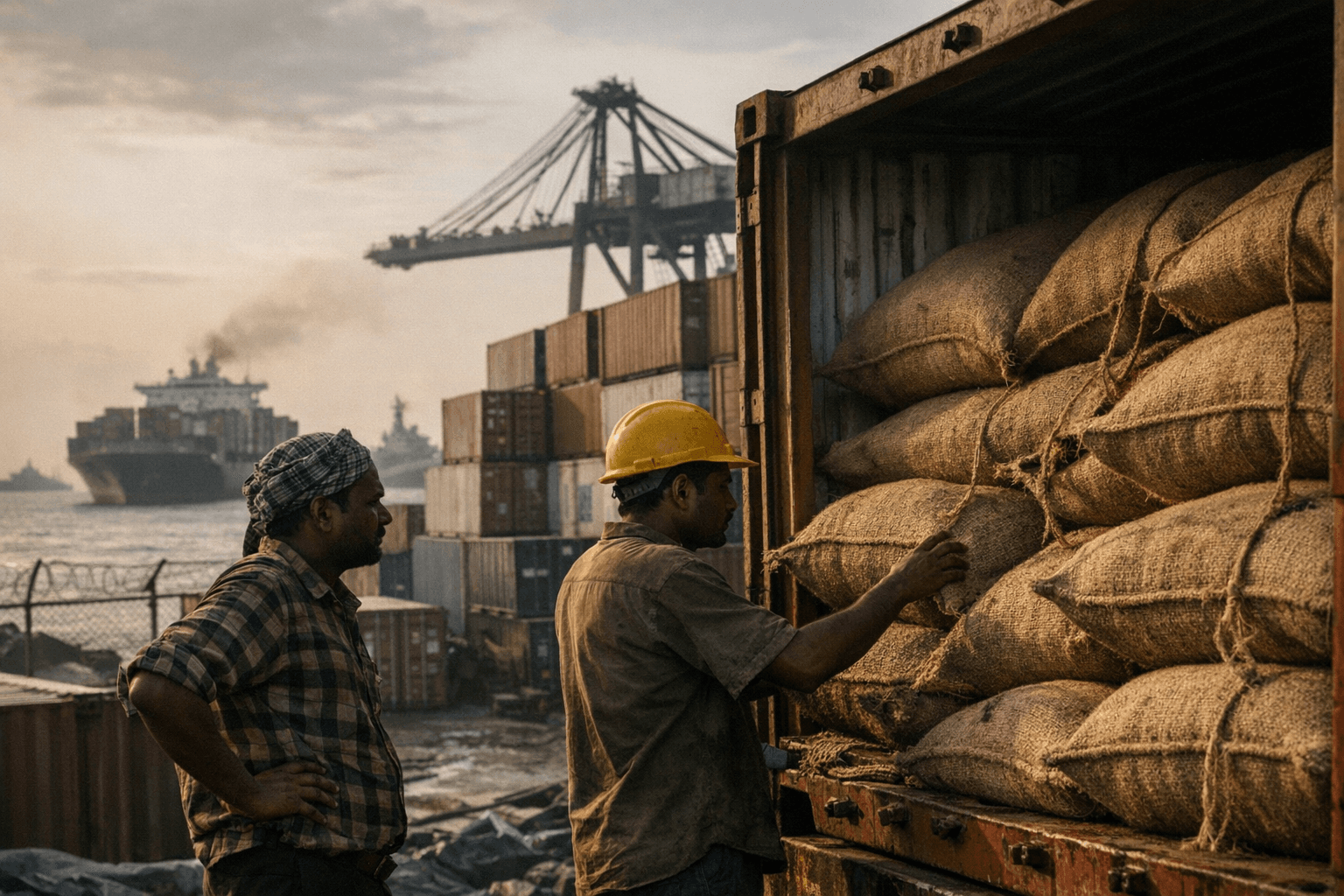
Hundreds of containers carrying Indian coffee exports sat stranded last week as disruptions tied to the Middle East conflict tightened their grip on global shipping routes, exposing cooperatives and smallholder exporters to a cascading cash-flow crisis that no futures hedge can fully absorb.
The disruption coalesced in late March 2026 and continued into early April, centered on closures and heavy restrictions around the Strait of Hormuz. UNCTAD published a rapid assessment in early April framing the situation as a fast-moving global risk that had widened from energy markets into broader trade flows, driving up costs and slowing cargo across multiple commodity sectors, coffee included.
India's exports destined for West Asia, Europe and the United States bore some of the earliest documented impact. A report published April 1 noted hundreds of containers of Indian coffee caught in the disruption, with carriers rerouting vessels, freight and insurance premiums rising, and port schedules thrown into disarray. For exporters already operating on tight margins, the addition of demurrage fees and potential port penalties compounds the revenue loss from delay alone.
Ethiopia's maritime authorities issued a public call for faster customs and container clearance, signaling that the country's coffee shipments were also caught in the backlog. The appeal underscored how quickly a geopolitical shock translates into bureaucratic pressure at origin ports, where every day of delay costs money that most smallholder organizations simply don't hold in reserve.
The most instructive case of what this looks like on the ground came from Uganda, where a cooperative reported shipments stranded and payments stalled entirely. That freeze is not an abstraction: cooperatives that prepaid farmers for their harvest or financed processing now face a gap between outgoing obligations and incoming revenue, with no clear resolution date in sight.
Coffee futures posted gains in response to the route closures and insurance spikes, a market signal that traders were pricing in near-term supply risk. But that price uptick offers little comfort to origin sellers accumulating demurrage charges while their product sits in a container somewhere between a contested shipping lane and its destination.
Analysts note that smaller exporters and cooperatives carry outsized exposure to this kind of shock because their business models depend on tight payment cycles and pre-financing. A large multinational trader can absorb a week of logistics friction; a cooperative that advanced cash to smallholders before harvest cannot.
The immediate response from governments, ports and trade bodies has focused on expedited container clearance and alternative routing. For coffee companies with direct-trade relationships at origin, the more urgent task is protecting farmer payments through short-term liquidity support and direct engagement with insurers and logistics partners. UNCTAD flagged the need for coordinated international response to keep trade moving, but coordination takes time that farmers and cooperatives currently don't have.
The situation remained fluid heading into the first week of April, and its resolution depends on factors well outside the coffee sector's control.
This article was produced by Prism’s automated news system from verified source data, official records, and press releases, then run through automated quality and moderation checks before publishing. The system is built and supervised by the people who set the standards it runs under. Read our full AI policy.
Did this article answer your question?