Nestlé Finds Six-Robusta Mix Can Lift Yields 86% in Côte d’Ivoire
Nestlé said a six-variety robusta mix lifted yields by up to 86% in Côte d’Ivoire, while also softening the cup for instant coffee and blends.
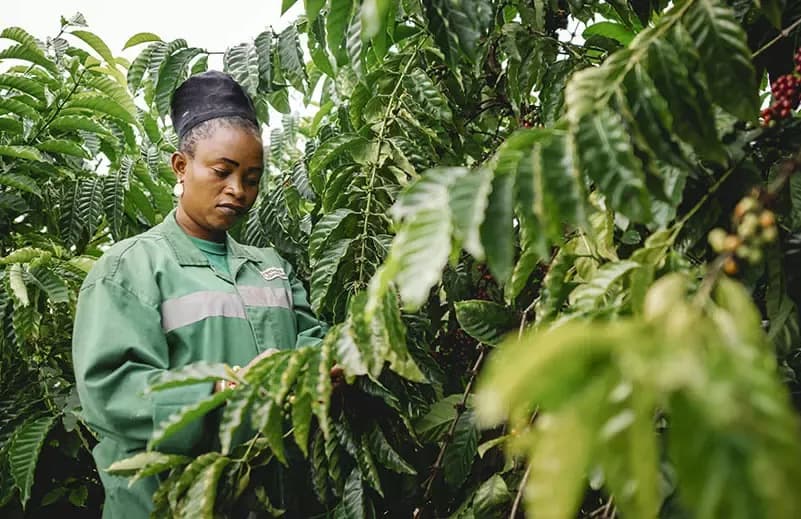
An 86% yield jump is the headline, but the bigger coffee-world question is what Nestlé found underneath it: a six-variety robusta mix that did not just grow more, it tasted better too.
Nestlé said research in Côte d’Ivoire showed that planting a carefully selected mix of six robusta varieties lifted yields by up to 86% across multi-year trials that began in 2018. The work, carried out by Nestlé’s Institute of Agricultural Sciences with the Centre National de Recherche Agronomique, CNRA, stretched across four coffee-growing regions and screened 18 robusta varieties before researchers narrowed the field to six top performers.
Two of those varieties came from Nestlé and four from CNRA. Once planted together, the mixed strategy delivered the strongest results, according to the company. Sensory tests found the coffee to be smoother, with less bitterness and fewer woody notes than the usual robusta profile, a notable point for a species that often gets treated as the workhorse of instant coffee and mass-market blends rather than a cup with much to say for itself.
That is what makes the result unusually relevant beyond the farm gate. Robusta is the bean that keeps a lot of commercial coffee moving, from soluble coffee to blends where price, body and supply security matter as much as aroma. A more productive, better-tasting robusta does not just promise a nicer cup. It could help steady sourcing in a market where volatility has become part of the daily grind.
The Côte d’Ivoire backdrop matters, too. Industry reviews have described the country’s coffee output as falling sharply after 2020, with aging farms, climate change, Covid-19 and a shift toward cocoa and cashew all weighing on production. In that setting, a higher-yielding robusta system is as much a resilience story as a quality breakthrough.
Nestlé has already tied the breeding work to production. The company said the registered varieties are positioned for distribution to producers through cooperatives under the Nescafé Plan, linking the research to farmer livelihoods and supply continuity. CNRA said in August 2024 that it and Nestlé planned to distribute 4.2 million coffee plants to producers.
The company has also kept a visible footprint in the country for years, including a 30-hectare experimental farm and training center that opened in 2013. With Nestlé saying most of its coffee is sourced from smallholder farmers, the message is clear: the genetics of robusta are being recast not just to lift yields, but to make the crop sturdier, more usable and more valuable in the parts of coffee that most people drink every day.
This article was produced by Prism’s automated news system from verified source data, official records, and press releases, then run through automated quality and moderation checks before publishing. The system is built and supervised by the people who set the standards it runs under. Read our full AI policy.
Did this article answer your question?