Oat milk default triples plant-based orders, cuts café drink emissions
Making oat milk the default at Barjon Café pushed plant-based orders from 16.6% to 51.9% and cut milk-related emissions by up to 34%.
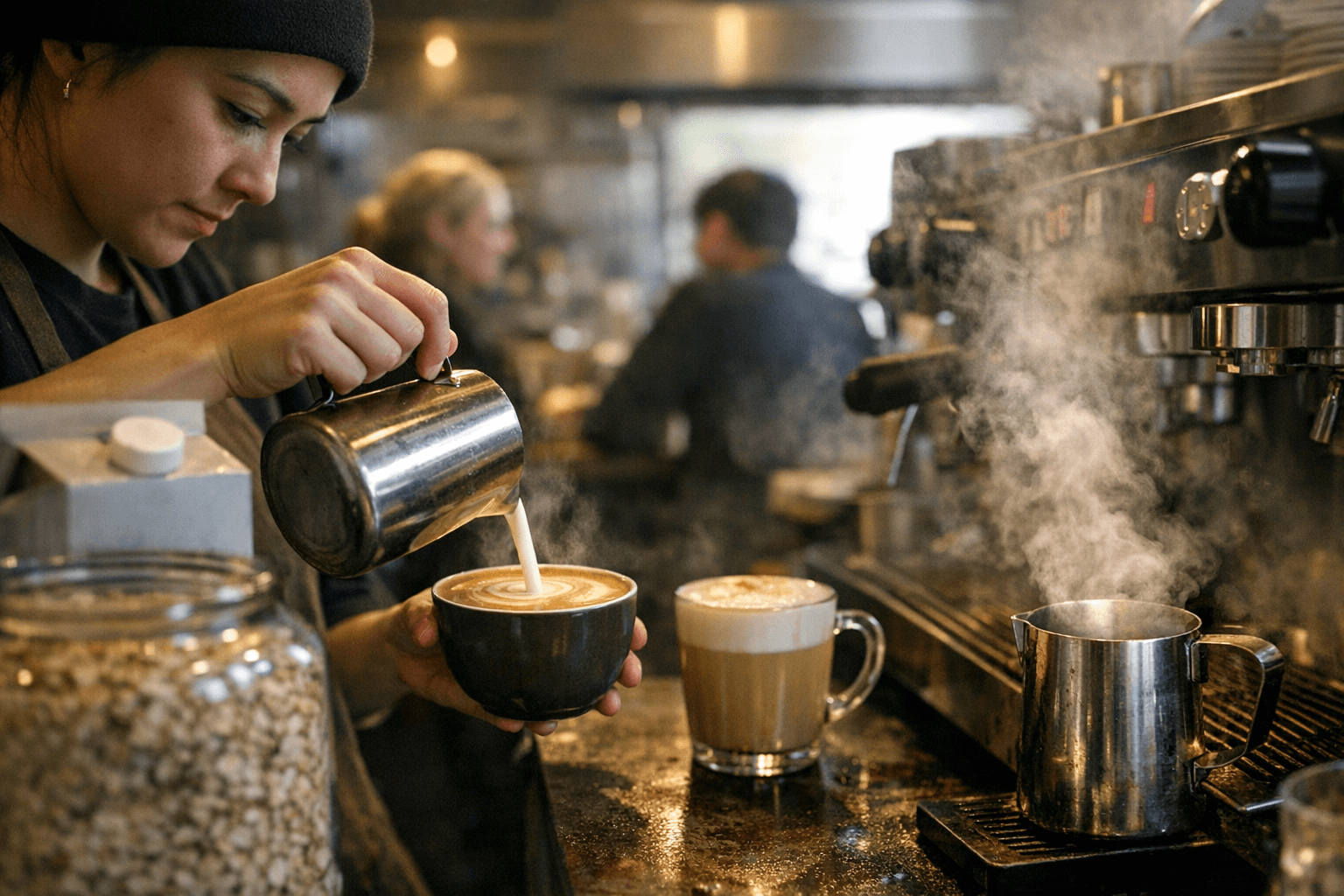
A small menu change at Barjon Café moved plant-based milk from a niche pick to the majority choice. When oat milk became the default, customers were about three times more likely to choose a plant-based option, and the milk-related carbon footprint per drink fell by an estimated 25% to 34%.
The study, published in Global Environmental Psychology by Katie Major-Smith, Gregory Borne, Laura Wallis, Daniel Major-Smith and Debby Cotton, used an ABAB design at Plymouth Marjon University in Plymouth, UK. That meant the café switched back and forth between default dairy and default oat milk, giving the researchers a direct comparison of how ordering changed under each setup. In the first intervention phase, plant-based milk consumption jumped from 16.6% to 51.9%. In the second intervention phase, the effect was still there but weaker, with plant-based milk consumption falling to 46.0%, a sign that the nudge did not hit with the same force over time.
The control site mattered just as much as the intervention. A second café on the same university campus did not change its default and showed no meaningful shift in plant-based milk intake during the study period. That makes the result harder to dismiss as a campus-wide trend or a seasonal blip. The simplest reading is the most useful one for operators: the default itself changed behavior.
The university’s sustainability page says the pilot ran in 2023 for about two months, with signs in the café telling customers about the switch and making clear that other milk options were still available. Oat milk was chosen because it was the most requested non-dairy option among customers and because it carried a low environmental impact. That detail matters for cafés, campus caterers and chains looking for a change that does not require new equipment, new recipes or a big customer education campaign.
For coffee service, this is the kind of tweak that actually travels. It keeps the familiar drink menu intact, preserves choice for anyone who still wants cow’s milk, and nudges the average order toward a lower-carbon outcome at the point of sale. The lesson from Barjon Café is plain: when the default shifts, a surprising number of drinks follow.
This article was produced by Prism’s automated news system from verified source data, official records, and press releases, then run through automated quality and moderation checks before publishing. The system is built and supervised by the people who set the standards it runs under. Read our full AI policy.
Did this article answer your question?