Shelbru’s June brewer targets steadier heat and better pour-over extraction
Vacuum insulation keeps June’s brew temps far steadier than glass or metal, but the real win is for pour-over obsessives chasing small gains.
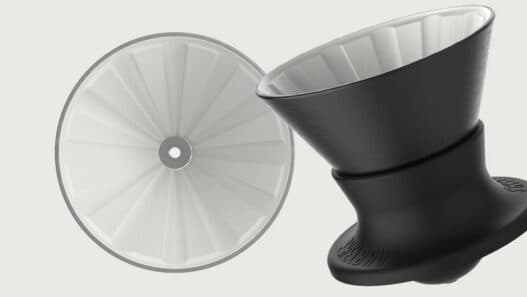
June is a Kickstarter-backed conical manual brewer from Stanley Chang, the founder of Taiwan’s Coffee Stopover, built with vacuum-insulated, double-walled stainless steel. Shelbru is pitching it on control: hold heat better, pull a more repeatable cup. For serious home brewers, the question is whether this kind of thermal tuning solves a problem you actually taste.
What June is trying to fix
At first glance, June lives in familiar V60 territory. It is a conical manual brewer, but instead of glass or plain plastic, it uses vacuum-insulated, double-walled stainless steel. That construction is the whole argument: keep the bed hotter for longer, slow the temperature swing after the bloom, and make extraction less dependent on how fast the dripper bleeds heat into the room.
Pour-over is full of tiny losses. If the brewer itself is a heat sink, the slurry cools faster, the drawdown can change, and the same recipe stops behaving the same way from one session to the next. June is aimed squarely at people already weighing doses to the gram and timing pours to the second.
The thermal numbers tell the story
Shelbru’s campaign data shows the vacuum-insulated June changed only 1 to 2°C from post-bloom to the four-minute mark. By comparison, a glass dripper dropped about 9°C, and a metal dripper fell 11°C over the same window.
For a brewer who is chasing light-roast clarity, clean sweetness, and repeatable contact time, a steadier bed temperature can make a recipe feel less twitchy. The brewer will not magically fix a sloppy grind or a bad pour pattern, but it should reduce one of the variables that gets in the way when you are trying to reproduce a good cup day after day.
If you are brewing casually, the effect will be harder to spot. It will be easier to spot if you are already preheating hard, using the same kettle, the same filter, and the same water every morning.
The ribbed cone is doing more work than the steel
June is not only about insulation. Shelbru also gave it 12 concave ribs, instead of the more common convex pattern. Shelbru says the shape helps keep airflow stable and reduces stalling, which shows up when fines clog the bed and the drawdown slows in an ugly, uneven way.
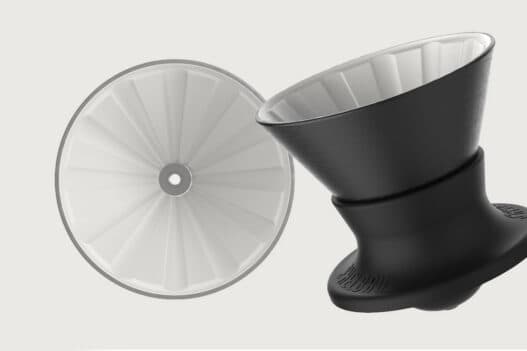
Better temperature retention alone would not be enough if the brewer still choked under a normal pour. The rib geometry suggests Chang’s team is thinking about both heat and flow, which is the right instinct for a brewer that wants to appeal to people who obsess over extraction rather than just hardware aesthetics.
Then there is the bottom attachment, which Shelbru calls Aroma Flow. Shelbru says its job is to center the brewed coffee stream onto the carafe’s punt and aerate the cup. In practical terms, that sounds like a more deliberate exit path for the brew, one that tries to shape the final presentation instead of just letting the dripper dump into the server. It is the kind of feature that will sound fussy to some drinkers and genuinely useful to others, depending on how much you care about cup texture and how the coffee lands in the vessel.
Where June fits in a serious brew bar
The removable base is a useful twist because it is compatible with the Hario Switch. That gives June another lane entirely: hybrid brewing for people who like to mix immersion with pour-over logic. If you already own a Switch, or you like playing with steep time before drawdown, the compatibility makes June more than a single-purpose cone.
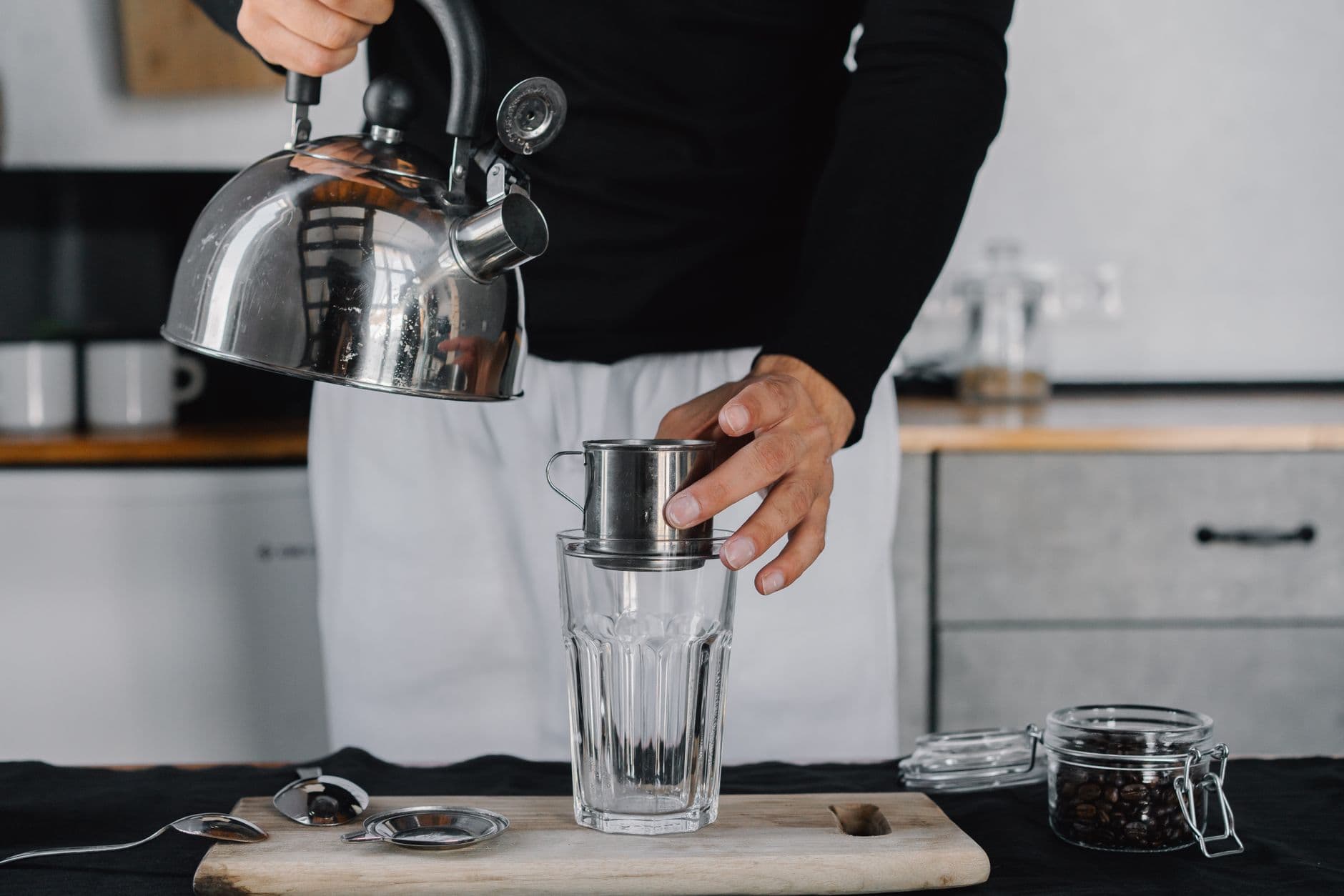
Standard glass and plastic drippers are simple, cheap, and easy to replace. They are hard to beat if your goal is speed and low friction. June asks for more attention and more specific use than the average basic dripper, but in return it gives you a tighter thermal environment and a more engineered flow path.
For the home brewer who already treats pour-over like a controlled experiment, that trade-off makes sense. For someone who wants one dripper to do everything without thinking about it, the extra structure can feel like overhead. The workflow is more specialized.
Kickstarter momentum and what it says about the market
On Kickstarter, June had raised more than $18,000 against a $3,000 goal, with rewards expected to ship in September.
This article was produced by Prism’s automated news system from verified source data, official records, and press releases, then run through automated quality and moderation checks before publishing. The system is built and supervised by the people who set the standards it runs under. Read our full AI policy.
Did this article answer your question?