Starbucks CEO Defends $9 Coffee, Sparking Backlash Over Pricing
Brian Niccol called a $9 Starbucks drink a splurge and a special experience, and the pricing defense quickly turned into a backlash over what coffee should cost.
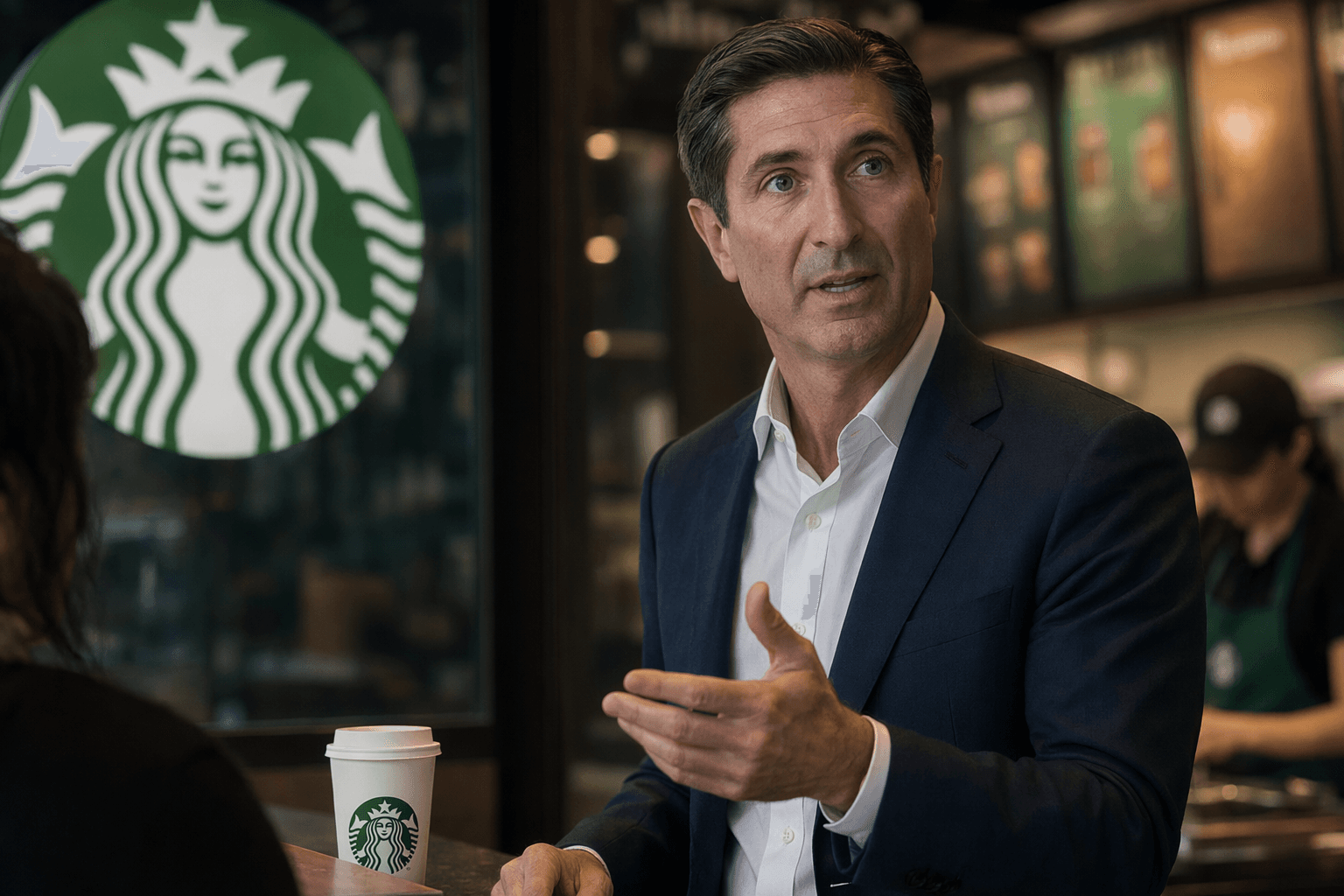
Brian Niccol’s defense of a $9 Starbucks drink landed like a dare in a coffee market already primed for sticker shock: what, exactly, does that price buy?
In an interview around May 1, 2026, on The Wall Street Journal’s What’s News AM podcast, the Starbucks chief said some customers see a $9 drink as a “splurge” and argued the company has to make it a worthwhile “special experience.” He said Starbucks was doing well with Gen Z and millennial consumers and reported strong performance across income cohorts, with average customer spend running “just under $10.”
That message set off a wave of criticism because it arrived just days after Starbucks posted fiscal second-quarter 2026 results on April 28. The company said U.S. comparable store sales rose 7.1%, global comparable store sales rose 6.2%, revenue reached $9.53 billion, and net income attributable to the company was $510.9 million. Starbucks also raised its annual forecast, giving Niccol a strong earnings backdrop even as the pricing debate spread online.
The backlash centered on whether a premium coffee chain can still justify premium pricing when everyday costs keep climbing. Niccol’s argument was that customers are paying for more than espresso and milk: they are buying the in-store experience, the baristas, the seat, and the sense that a drink can feel like a treat rather than a utility. That framing may resonate with loyal Starbucks regulars, but it also sharpened the question many drinkers are asking about the entire cafe market.
Starbucks said it operates more than 41,000 company-operated and licensed coffeehouses worldwide, a scale that gives its pricing decisions outsized influence. Reuters had also tied the company’s improved customer traffic to investments in faster service and more staffing, suggesting the turnaround has depended as much on execution as on menu engineering. In other words, the company is not simply asking customers to pay more; it is betting that speed, staffing and ambiance can make a higher ticket feel earned.
For rival chains and independent specialty cafes, that is the real test. Starbucks can point to rising sales, stronger traffic and a global footprint to defend its prices. Smaller operators have long sold the same promise in a different key: better beans, sharper service, a more distinct room, or a barista who can explain the cup. Niccol’s comments turned a routine earnings victory lap into a broader coffee argument about where premium ends and overpriced begins, and that debate is not going away just because the quarter was strong.
This article was produced by Prism’s automated news system from verified source data, official records, and press releases, then run through automated quality and moderation checks before publishing. The system is built and supervised by the people who set the standards it runs under. Read our full AI policy.
Did this article answer your question?