StoneX Forecasts Record 182.5 Million Bag Coffee Crop in 2026/27, Surplus Expected
StoneX projected a record 182.5 million-bag global coffee crop for 2026/27, creating an expected 10-million-bag surplus after years of deficit seasons.
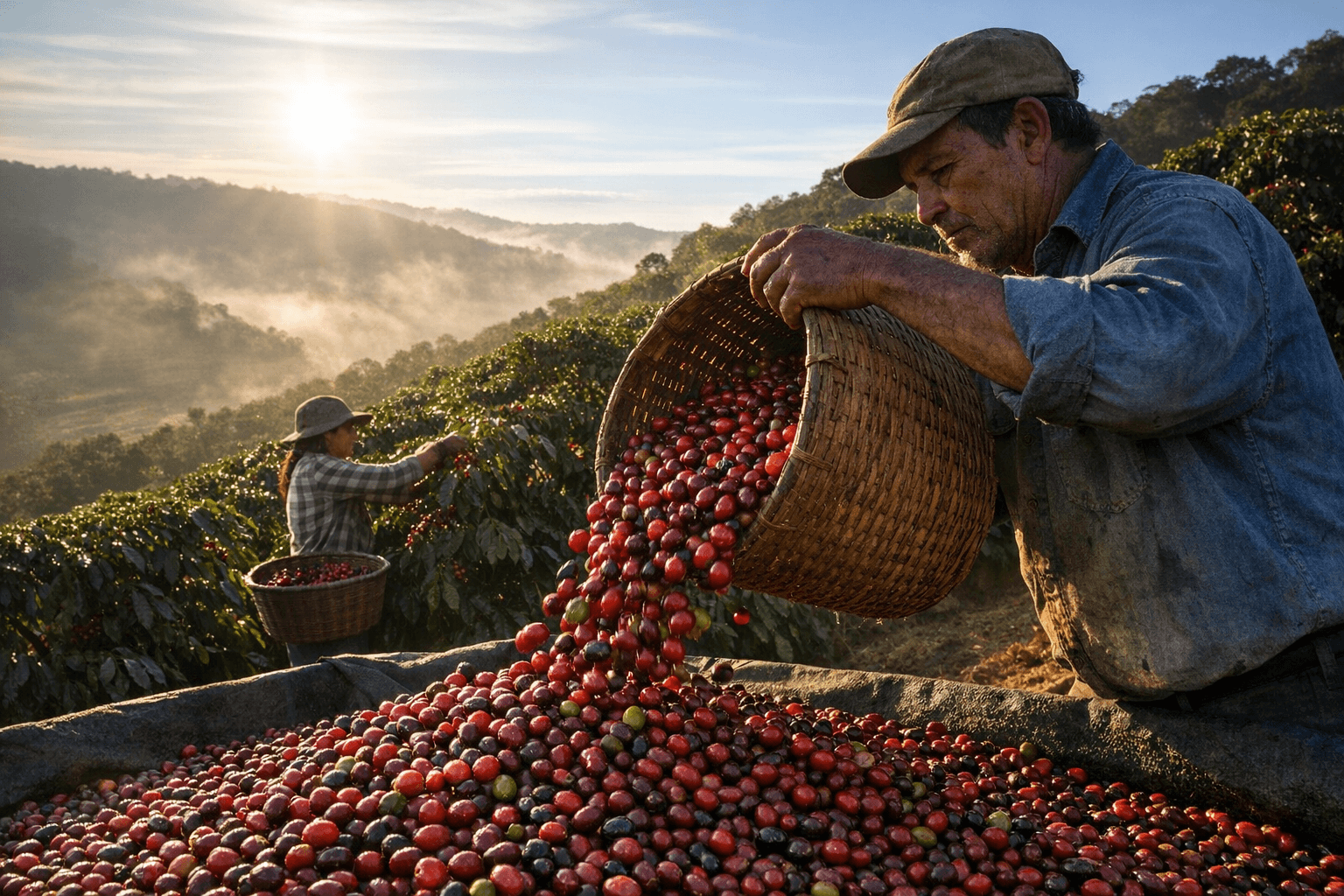
The coffee market stared down its first meaningful supply surplus in years after StoneX's Global Supply and Demand Outlook for the 2026/27 season projected global production at a record 182.5 million 60-kilogram bags, up from roughly 170.1 million bags the prior season, with an expected production surplus of approximately 10 million bags.
Brazil carried the bulk of that gain. StoneX projected Brazilian output at 75.3 million bags, split between 50.2 million arabica and 25.1 million robusta, a year-on-year jump of roughly 13 million bags. The report identified Brazil as "the main driver of the rise in global production," with Vietnam's robust robusta harvest adding further weight to the supply side.
The demand picture complicated the math in important ways. Global consumption was forecast to recover to 172.5 million bags in 2026/27, up from 168.3 million in 2025/26 following a period of softness tied to steep price rises in prior years. That recovery still fell short of 2024's 173.5 million bags, leaving the gap between production and consumption wide enough to support meaningful stock rebuilding. StoneX projected global inventories climbing from an estimated 38 million bags to above 48 million bags by 2026.
That inventory rebuild matters because stocks had been running at unusually low levels through a stretch of consecutive deficit seasons from 2021 to 2024. A 10-million-bag surplus following that run of tightness represents a structural shift: higher global availability typically applies downward pressure on green-bean prices and compresses the scarcity-driven margins that origin sellers had been collecting. Roasters and specialty buyers assessing forward hedging and sourcing strategies now have a materially different supply picture to work with.
The headline surplus does not automatically mean a comfortable market, though. StoneX flagged that stocks remain unevenly distributed, and quality, logistics, and the timing of arrivals all affect premiums for specialty arabica regardless of what the aggregate balance sheet shows. Weather risks, trade policy shifts, and distribution bottlenecks could still introduce volatility even against a broadly favorable supply backdrop.
Brazil's harvest progression, certified warehouse stock levels at ICE-monitored facilities, and Vietnam export flows in the coming weeks will determine whether actual volumes track StoneX's assumptions. If they do, commodity prices and physical premiums are likely to remain under downward pressure. A weather shock or logistical disruption in Brazil could shift the picture quickly, given that inventories are still climbing from a relatively low base.
This article was produced by Prism’s automated news system from verified source data, official records, and press releases, then run through automated quality and moderation checks before publishing. The system is built and supervised by the people who set the standards it runs under. Read our full AI policy.
Did this article answer your question?