UNIDO and WCR Invest €850,000 to Strengthen Uganda's Coffee Seed Systems
Uganda's coffee future just got an €850,000 boost, with WCR and UNIDO targeting the root cause of low yields: bad seed.

The bottleneck holding back Uganda's coffee sector isn't land or labor; it's seed. That diagnosis sits at the center of a new €850,000 co-investment announced by the United Nations Industrial Development Organization (UNIDO) and World Coffee Research (WCR) on April 2, targeting the country's foundation seed systems and nursery infrastructure over a three-year rollout.
The investment operates under the Advancing Climate-Resilience and Transformation in African Coffee (ACT) programme and represents what both organizations describe as a strategic public-private intervention to modernize how improved planting material reaches Ugandan farmers. As WCR framed it in the announcement: "Access to quality seed and planting material is essential to scaling resilient coffee production."
Uganda produces Robusta at scale and has set ambitious national output targets in recent years. But without reliable access to certified, genetically improved seed, those targets remain aspirational. Higher temperatures and shifting rainfall patterns compound the problem, making variety selection at the nursery level more consequential than ever.
The €850,000 package combines technical assistance with direct investment across several interconnected areas: improving breeder and foundation seed systems, establishing nursery accreditation protocols, scaling the distribution of improved varieties, and piloting certified seed lots across key growing regions. The programme also includes capacity building for local institutions and strengthening the regulatory frameworks governing how seed moves through Uganda's supply chain.
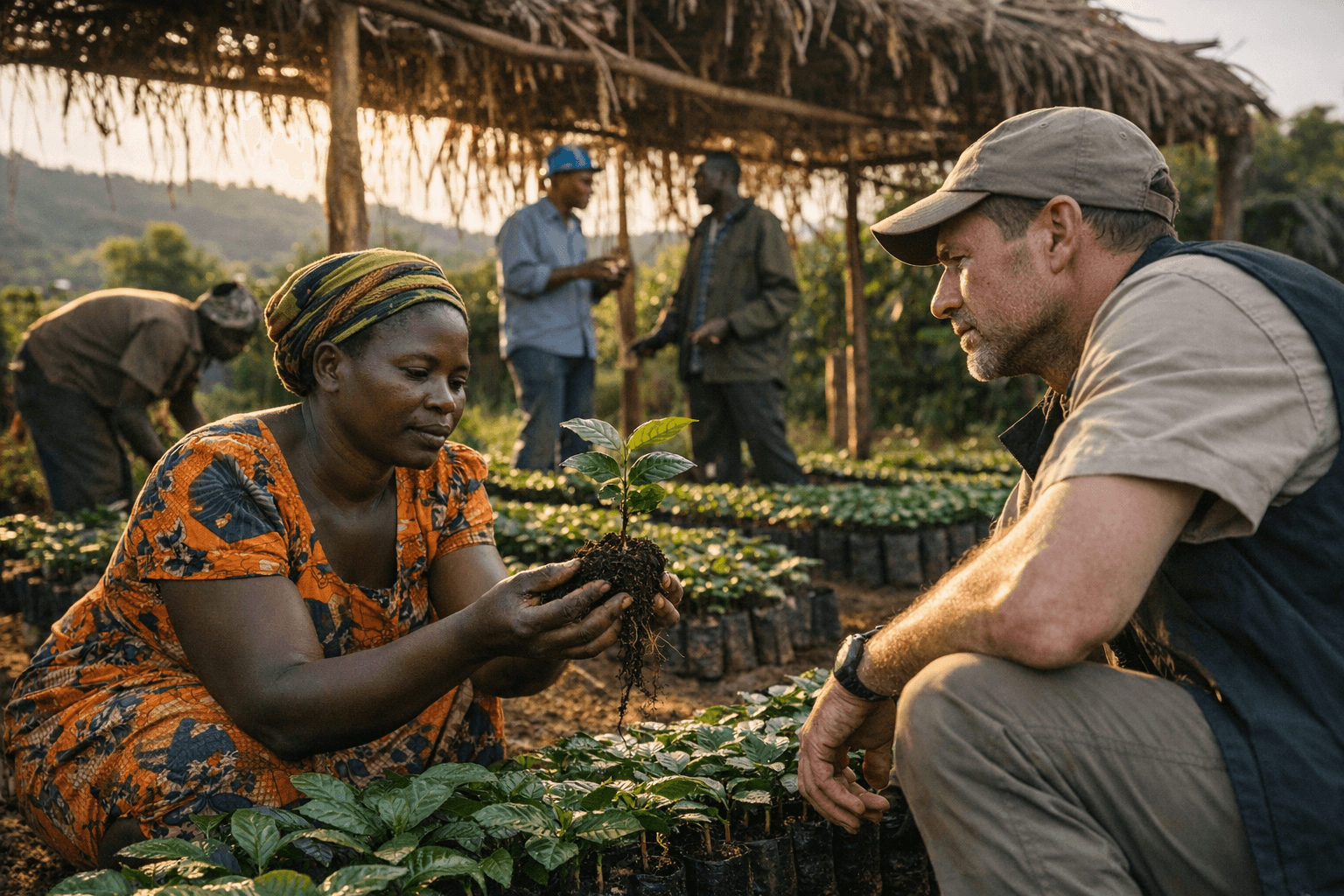
Two Ugandan national bodies, the National Coffee Research Institute (NaCORI) and the Uganda Coffee Development Authority (UCDA), are named as implementation partners. Their involvement grounds the initiative in existing national infrastructure rather than building parallel systems, a design choice that matters for long-term sustainability once the three-year programme concludes.
WCR contributes breeding knowledge and its existing work on nursery standards and varietal testing. UNIDO brings development financing and the capacity to engage Uganda's public sector at the level needed to move regulatory and institutional reform.
For roasters and green buyers sourcing Ugandan lots, a more reliable foundation seed supply could translate into greater consistency and traceability further up the chain. The real stakes, though, are at farm level: improved planting material directly affects yield stability and income predictability for smallholders facing increasing climate pressure. If the ACT programme delivers on its three-year mandate, Uganda's production trajectory and quality profile, across both its Robusta and Arabica output, could shift in ways that matter to everyone from the washing station to the roaster.
This article was produced by Prism’s automated news system from verified source data, official records, and press releases, then run through automated quality and moderation checks before publishing. The system is built and supervised by the people who set the standards it runs under. Read our full AI policy.
Did this article answer your question?