World of Coffee San Diego spotlights precision-driven home coffee gear battle
San Diego's biggest coffee gear story was control. From AI-guided brewers to pressure-reading tampers, home setups are heading toward mini labs.
The show floor’s new standard
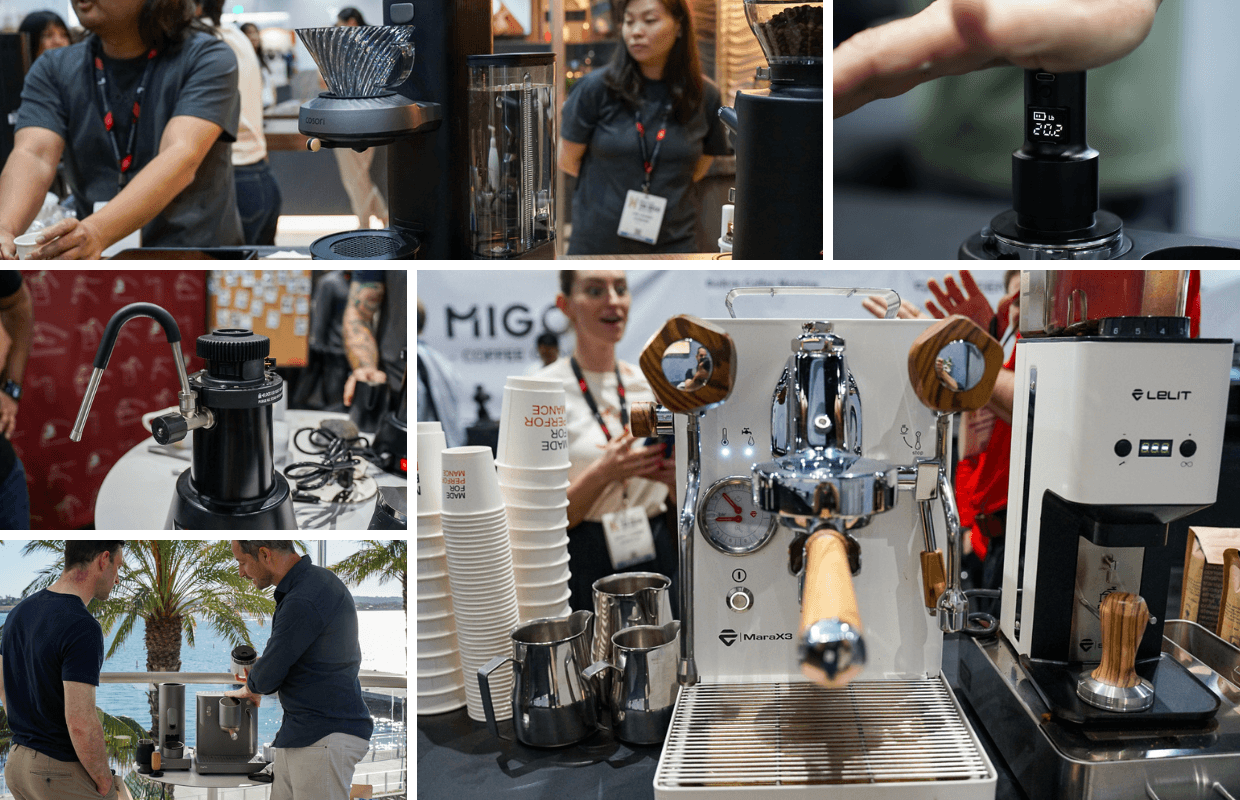
At the San Diego Convention Center, home coffee gear did not feel like a side attraction. It looked like a battlefield, with precision, automation and user control competing for attention across espresso and drip categories as World of Coffee San Diego drew more than 17,000 visitors over three days. The scale matched the show’s ambitions: the Specialty Coffee Association had framed the event as a draw for more than 15,000 attendees from over 90 countries, with 600-plus exhibitors, and post-show coverage later called it the largest crowd in event history, with 650-plus exhibitors on the floor.
That matters because World of Coffee San Diego was the first North American edition under the World of Coffee name after the long Specialty Coffee Expo era, and the programming was built like a full coffee ecosystem, not just a product hall. Colombia took the Portrait Country spotlight with dedicated activations and tastings, while the schedule also packed in the World Latte Art Championship, lectures, workshops and cuppings. In other words, the home gear launches were happening inside a show that treated coffee as both craft and competition.
What the new home gear race is really about
The clearest signal from the roundup is that the home market is shifting away from one-size-fits-all appliances and toward machines that expose more of the brew process to the user. Daily Coffee News’ look at the show singled out launches from Cosori, Varia, Flair, Fellow and Brezi, but the products that really define the next year are the ones that make precision feel usable rather than intimidating.
That means fewer gadgets that simply look futuristic, and more tools that let home brewers choose how much help they want. Some brands are leaning into automation and software. Others are doubling down on manual control, but with enough feedback to make each shot or cup repeatable. The direction is not either-or; it is a menu of control levels, from guided brewing to old-school pressure profiling.
Automation is getting more specialized
Cosori’s Juni was one of the most revealing launches because it marks a mainstream appliance company’s first serious step into specialty coffee. The Juni is Cosori’s first automatic pour-over coffee machine, and the pitch is not just convenience. It is control over flow rate, timing and temperature, plus a moving nozzle and vibration meant to influence extraction patterns. The machine can switch between small-batch cone brewing and larger flat-bottom brewing, which puts it squarely in the camp of brewers trying to reduce the gap between a beginner-friendly appliance and a serious home setup.
The price point sharpened that signal further. Cosori listed early-access pricing at $199 with a refundable $20 deposit, which places Juni well below the kind of spend usually associated with premium pour-over automation. That makes it more than a niche showpiece. It looks like an attempt to bring programmable brewing into a broader kitchen audience without flattening it into a simple drip machine.
Next Level Coffee pointed in the same direction with its Anybeans feature. The system reads coffee bag information and then uses a proprietary AI database to suggest grind and extraction settings for the company’s wi-fi-connected machine and grinder. That kind of guidance is a big deal in a category where most bad cups come from uncertainty rather than lack of enthusiasm. The promise here is not that software replaces taste, but that it cuts down the amount of trial and error needed before a brewer lands on something dialed in.
The manual camp is becoming more data-rich
If automation was one side of the floor, manual gear was the other, and it was not playing nostalgia. Kopel Labs’ DigiTamper is a good example: an ergonomic espresso tamper that shows pressure in real time. That sounds simple, but it is exactly the kind of upgrade that signals where serious home espresso is going. Even a tamper is no longer just a shaped hunk of metal. It is a feedback tool.
Flair Espresso’s 49 PRO sits in the same lane. The machine uses a 49mm portafilter system and includes a pressure gauge, while Flair positions it as its most advanced all-manual lever espresso machine. The point is not to automate the shot for you. It is to give you complete extraction control without electronics, while also plugging into a wider accessory ecosystem. For home brewers who like to feel every variable, that kind of platform is becoming as important as the machine itself.
Lelit took a slightly different route with the MaraX3. Its Pagaia side-mounted paddle lets users adjust group pressure on the fly, giving full control over extraction from the pump to the L58E group. Lelit also leaned hard into the visual reset, adding premium wood finishes and a redesigned look it described as “the beginning of a new era.” The message is easy to read: even heritage espresso machines now have to justify themselves with control, aesthetics and the sense that they can keep up with how enthusiasts actually brew.
The drip and portable side is converging with espresso thinking
Varia Brewing’s launches show how the categories are blending together. The Orbi leaned into the cylindrical portable-espresso form factor, but what makes it notable is the way it folds in flow and pressure control for drip-style brewing and brew profiling. That is the kind of hybrid thinking that keeps showing up on today’s home gear floor: espresso ideas are migrating into filter brewing, and filter logic is creeping into espresso-adjacent tools.
Varia’s FLO line pushes the same idea through its interchangeable flow screens, which allow fast, medium and slow flow control. That makes the company part of a larger movement toward customizable extraction rather than a fixed brew path. The fact that Varia also lists a 2026 Best New Product award for the VS4 grinder only reinforces the point that grinders are central to the current arms race. The better the grind control, the more every other piece of equipment can actually do its job.
What home brewers will actually want next
The home coffee gear battle coming out of San Diego is not about novelty. It is about choice, repeatability and the ability to tune a setup without turning the kitchen into a full-time lab. The strongest launches all say the same thing in different languages: a home brewer should be able to choose between assistance and manual control, and the tools should make that choice feel intentional.
That is the real shift. The next wave of serious home setups will not be defined by a single machine that does everything. It will be built from systems that offer better feedback, tighter parameter control and cleaner paths from guesswork to consistency. San Diego made it obvious that the home coffee aisle is no longer chasing convenience alone. It is chasing mastery.
Know something we missed? Have a correction or additional information?
Submit a Tip