American Cricket Academy expands school outreach across Missouri
Cricket in Missouri is being introduced in gym class, not just club nets. ACAC says it has reached 2,000 PE teachers and 5,000 students.
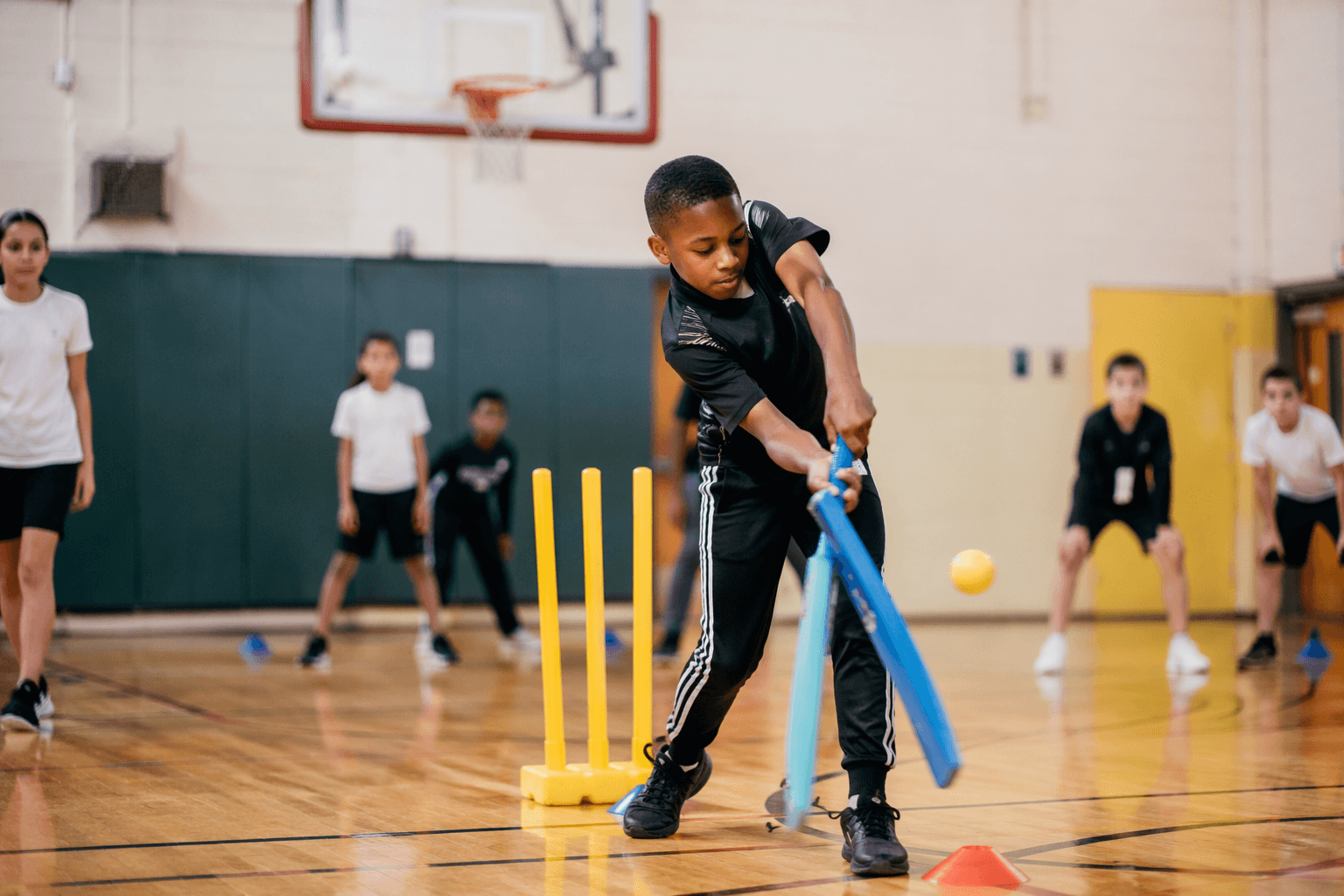
The clearest way to keep cricket alive in Missouri may be to meet kids before they ever ask for a club roster. American Cricket Academy has built its outreach around that idea, using school assemblies, teacher development, school and classroom partnerships, and after-school programs to make cricket part of the school day long before it becomes a weekend commitment.
The school-to-club pipeline
For ACAC, schools are not a side project. They are the front door. The academy’s outreach page shows a pattern that runs from elementary schools to middle schools, high schools, public-school systems, and university teacher training, which is exactly how a niche sport starts to feel normal in a new place. If a child sees cricket in an assembly, hears it explained by a PE teacher, and then tries it again after school, the jump to club cricket gets much smaller.
The outreach list makes that strategy easy to see:
- Green Tree Elementary, March 28, 2016
- Ladue Middle School, March 28, 2016
- Academy of Sacred Heart, February 16, 2016
- Immaculate Conception Dardenne, February 8, 2016
- Gallatin MS & HS, February 2, 2016
- St. Louis Public Schools, December 11, 2015
- Missouri State University future PE teacher development, December 10, 2015
- Liberty High School, December 7, 2015
- Wentzville School District Teacher Development program, December 7, 2015
That spread matters because it shows ACAC has not locked cricket into one age band or one neighborhood. It has tried to reach students, teachers, and future physical-education instructors across multiple institutions, which is a much sturdier way to build a sport than relying on a single showcase event.
What teachers get, and what students actually do
The academy says it has presented to more than 2,000 PE teachers and more than 5,000 students through teacher development, state conventions, school presentations, and assemblies. That is the real engine of the outreach model. A teacher who understands the basics can keep cricket alive long after one visiting demo ends, and a student who touches the game in class is far more likely to recognize it later in a park, a league, or an after-school session.
ACAC’s approach also includes introductory and high-performance camps, which gives the program a clear ladder. Beginners can start with assemblies and classroom partnerships, then move into after-school programs, while more advanced players have a path into higher-level training. In Missouri, that kind of structure matters because cricket often arrives through family knowledge or club circles, but schools turn it into something visible and repeatable for everyone else.
The volunteer backbone behind the program
ACAC is a 501(c)(3) nonprofit run by volunteers, and its own history explains why the outreach can stretch so far. The academy says the journey began in July 2015 with 6 kids, and it now has 200+ athletes. Its community pages add that the first community service project came in 2015 and that by 2017 the organization had spent around 19,000+ volunteer hours.
That matters because school outreach is labor-heavy. It takes people to run assemblies, prepare teachers, support after-school programs, and keep the organization in front of schools, districts, and civic groups. ACAC says it has also reached out to civil and government organizations as part of spreading cricket in Missouri, which shows the effort is not confined to the boundary ropes. It is being built piece by piece by volunteers who treat access as part of the sport.
Why schools are the most concrete growth mechanism
This is where the story becomes more than a feel-good youth snapshot. For Missouri cricket, school outreach is one of the clearest mechanisms keeping the next generation in the game because it widens the funnel before anyone has to sign a club form. In a region where many families still come to cricket through immigrant household networks, the school setting gives the sport a second life: as a low-pressure, public-facing activity that students can learn together.
ACAC says its youth players are drawn from across the St. Louis and St. Charles areas, which fits that wider funnel. A 2019 St. Louis Public Radio story, in a conversation between host Sarah Fenske and academy founder and president Ajay Jhamb, said the American Cricket Academy and Club had grown from 6 members to 300. Separate academy materials now say the program has 200+ athletes, and the throughline is the same: growth has come from institutions, families, and volunteer energy, not from hype alone.
The youth pipeline has also shown up in competition. In 2015, St. Louis hosted U10 and U14 games from the National Youth Cricket League Championships, described as the first cricket event of its kind and magnitude in the region. That made the city not just a place where cricket was explained, but a place where kids could actually play it at a serious level.
The route from first exposure to first club
For a Missouri parent, teacher, or school coordinator, the path is straightforward. A student can encounter cricket through an assembly, a classroom partnership, or an after-school program, while teachers get enough background to keep the game moving in PE. From there, ACAC’s camps and youth teams create the next step into organized play, especially for kids in St. Louis and St. Charles who are starting with no prior experience.
That is why ACAC’s outreach page reads less like a scrapbook than a pipeline map. The future of cricket in Missouri may not begin under lights at a league ground; it may begin in a school gym, with a teacher confident enough to roll a ball and a child seeing cricket clearly for the first time.
This article was produced by Prism’s automated news system from verified source data, official records, and press releases, then run through automated quality and moderation checks before publishing. The system is built and supervised by the people who set the standards it runs under. Read our full AI policy.
Did this article answer your question?