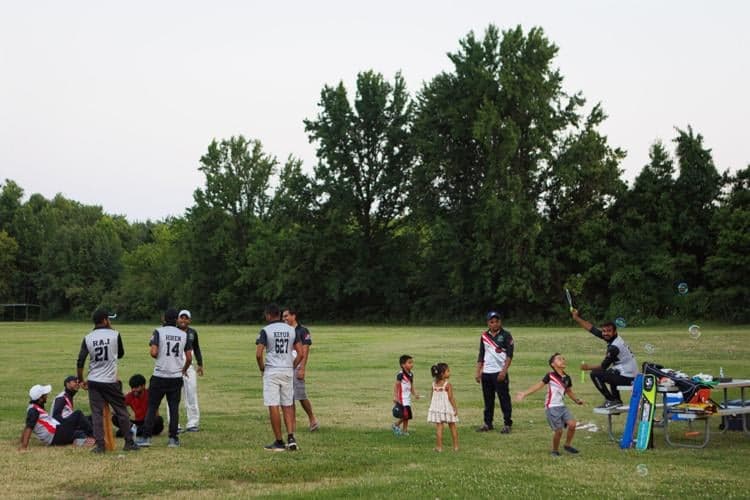
Forest Park map keeps Cricket Field visible in St. Louis park system
Cricket Field still appears on Forest Park’s GPS map, sits in a permit-run field complex, and keeps cricket named inside one of St. Louis’s busiest public spaces.
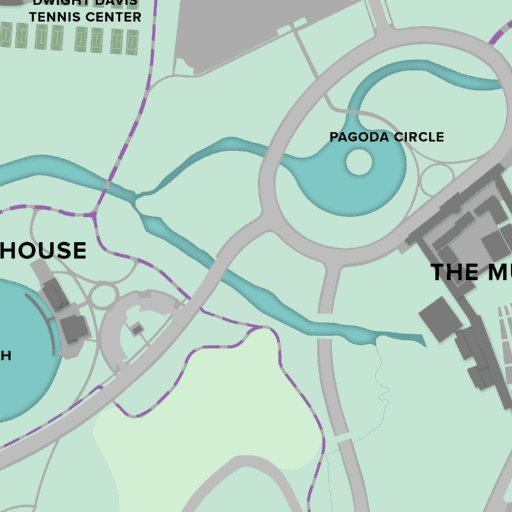
Cricket Field matters in St. Louis because it is still visible where people actually look for public space: on Forest Park’s map, inside the city’s park system, and alongside other active recreation areas. It is not treated like a forgotten label on old paper but as part of a maintained, GPS-enabled park landscape that visitors can navigate, reserve, and use.
That visibility is the story here. For anyone who plays, organizes, or is simply trying to find a place where cricket still has a public foothold, the field’s presence in Forest Park gives the sport a real civic address.
Where Cricket Field sits in Forest Park
The Forest Park map places Cricket Field among the park’s recreation sites and amenities, alongside landmarks, transit access, parking, restrooms, and other destinations people rely on when moving through the park. The page also includes visitor alerts, frequently asked questions, and links to the park calendar, which makes the field part of an actively managed public navigation system rather than a static reference.
That matters for casual players and families because Forest Park is not a secluded sports complex. It is one of St. Louis’s best-known public spaces, so a named field inside it is easy to find, easy to recognize, and easy to fold into a day at the park. The map also says Cricket Field hosts recreational activities including rugby, which reinforces that the space is not ornamental. It is part of the park’s working athletic footprint.
What access looks like now
The City of St. Louis lists Forest Park Rugby Fields as five fields total: one Cricket Field, one Lindell Field, and three Central Fields. The city says those fields are available by permit, and Forest Park Forever gives a direct permit contact number through the Department of Parks, Recreation and Forestry at (314) 289-5389.
That permit structure is important. It means Cricket Field is not just open ground with an old name attached. It is a managed public field, subject to formal use rules and city oversight. For anyone planning a match, training session, or community event, the message is straightforward: this is a real venue in the park system, and it runs through the city’s standard public process.
Why a mapped field matters in a park this large
Forest Park is a major civic asset, and its scale explains why a single named field can still carry weight. The park opened on June 24, 1876, to an estimated 50,000 people. It now covers about 1,300 acres, includes 30 miles of paths and trails, contains 172 acres of nature reserve, and draws about 15.5 million annual visitors.
The park is owned by the City of St. Louis and maintained by the city’s Parks Department and Division of Parks, Recreation and Forestry in partnership with Forest Park Forever. It is also home to five major cultural institutions: the Saint Louis Art Museum, Saint Louis Science Center, Missouri History Museum, The Muny, and the Saint Louis Zoo. In a place that busy, a field with a clear name and a place on the map becomes more than a sports detail. It becomes part of the park’s everyday civic language.

The park history behind the field
Forest Park’s survival as a public landscape goes back to the 1870s. The City of St. Louis says the park was established in 1874, when the Missouri Legislature passed ordinances creating three parks in what was then St. Louis County. The city frames that era as part of the Gilded Age park-building movement, when parks were created to meet the social needs of a crowded industrial city.
That background helps explain why Cricket Field still belongs in the conversation. The park was designed as public infrastructure, not as a private club ground. So when a field named Cricket Field remains on the map today, it preserves a piece of that older civic idea: green space should have room for different games, different users, and different generations of parkgoers.
What a live event says about the field’s role
One of the clearest signs that Cricket Field is still part of active park life is how it appears in Forest Park programming. Forest Park Forever listed the 10th Annual St. Louis Cup at Forest Park for July 27, 2024, at Langenberg, Lindell, and Cricket Fields. The event was hosted by the St. Louis Brown Stockings, and the description said it featured “Base Ball the way it was played in 1860.” It was free to the public.
Even though that event was baseball heritage rather than cricket, it still tells you something useful about Cricket Field. The field is not isolated from current use, and it is not stuck outside the calendar. It sits alongside other named fields in a park where organized recreation still gets programmed, posted, and opened to the public.
What this means for Missouri cricket
For Missouri cricket readers, the practical value is simple: Cricket Field keeps cricket visible in one of the state’s most recognizable public spaces. It gives the sport a named place in St. Louis, and that name appears within a system that includes GPS navigation, park alerts, permit rules, and calendar links.
That kind of footprint matters for newcomers, families, and casual players because it keeps the sport from disappearing into abstraction. If you are looking for where cricket still lives in the city, Forest Park gives you a mapped, public, permit-based answer. And in a park that opens onto museums, trails, restrooms, parking, and millions of annual visitors, the fact that the word cricket still shows up on the map is not a small thing. It is the difference between a memory and a place you can still find.
This article was produced by Prism’s automated news system from verified source data, official records, and press releases, then run through automated quality and moderation checks before publishing. The system is built and supervised by the people who set the standards it runs under. Read our full AI policy.
Did this article answer your question?