Missouri cricket leagues use online rosters to show teams and grounds
Missouri cricket league pages do more than post scores: they show who is active, where matches land, and which clubs are open to newcomers.
The fastest way to understand cricket in Missouri is to read a league page like a map, a roster sheet, and a schedule all at once. The names on those pages tell you who is active, the grounds tell you where the game actually happens, and the fixture list shows whether a club is building around one format or stretching across several.
How to read the roster first
CricClubs is the backbone for a lot of Missouri cricket online. It presents itself as free league management software with live scoring on iOS, Android, and Windows, and the Missouri pages use it for more than scores: they publish schedules, roster lists, captains, vice-captains, and home grounds. If you want to know whether a league is real and organized, the roster is usually the first clue.
The Cricket Premier League of Kansas City’s Div A page is the cleanest example. It lists nine teams, with player counts ranging from 17 to 46, and it names captains and vice-captains for each side. It also gives home grounds, including OCG, which matters because a ground listing is the difference between a paper league and one that actually has a field to play on. The Missouri Premier Cricket League pages follow the same pattern, which tells you the structure is not accidental. It is how the local scene presents itself.
What the teams and numbers say about depth
Team counts and roster size tell you how much life is behind the competition. In Kansas City, KCUR reported in 2017 that the Cricket Premier League of Kansas City already had 350 players on 24 teams. That is not a casual weekend pickup scene, and it is not a tiny club page with a handful of names. It is enough players to sustain multiple divisions, keep captains in place, and give newcomers somewhere to land without being thrown into a one-team bottleneck.
That same report noted that games were split between two pitches in Olathe. For a local reader, that detail is gold: it shows the league was not pretending to play in one symbolic location. It had enough volume to use two pitches, which is often the clearest sign that a cricket community has moved from occasional meetups to regular competition.
Where the matches actually happen
If you are trying to figure out where Missouri cricket lives on the ground, the venue names matter as much as the team names. Kansas City’s first dedicated cricket pitch opened at Stocksdale Park in June 2017, a real milestone for players who had been making do without proper space. That kind of venue is a signal that the sport has moved from adaptation to infrastructure.
St. Louis has its own marker of permanence. BaratHaven Park in Dardenne Prairie became the dedicated home for the American Cricket Academy and Club of St. Louis, giving the club a true base for practice and matches. On the league pages, you see that same anchoring instinct in home-ground fields like Love Park on the Saint Louis Cricket League page. A ground listing is not cosmetic. It tells you where to show up, who controls access, and whether the league has a reliable place to keep playing.
How serious the competition is
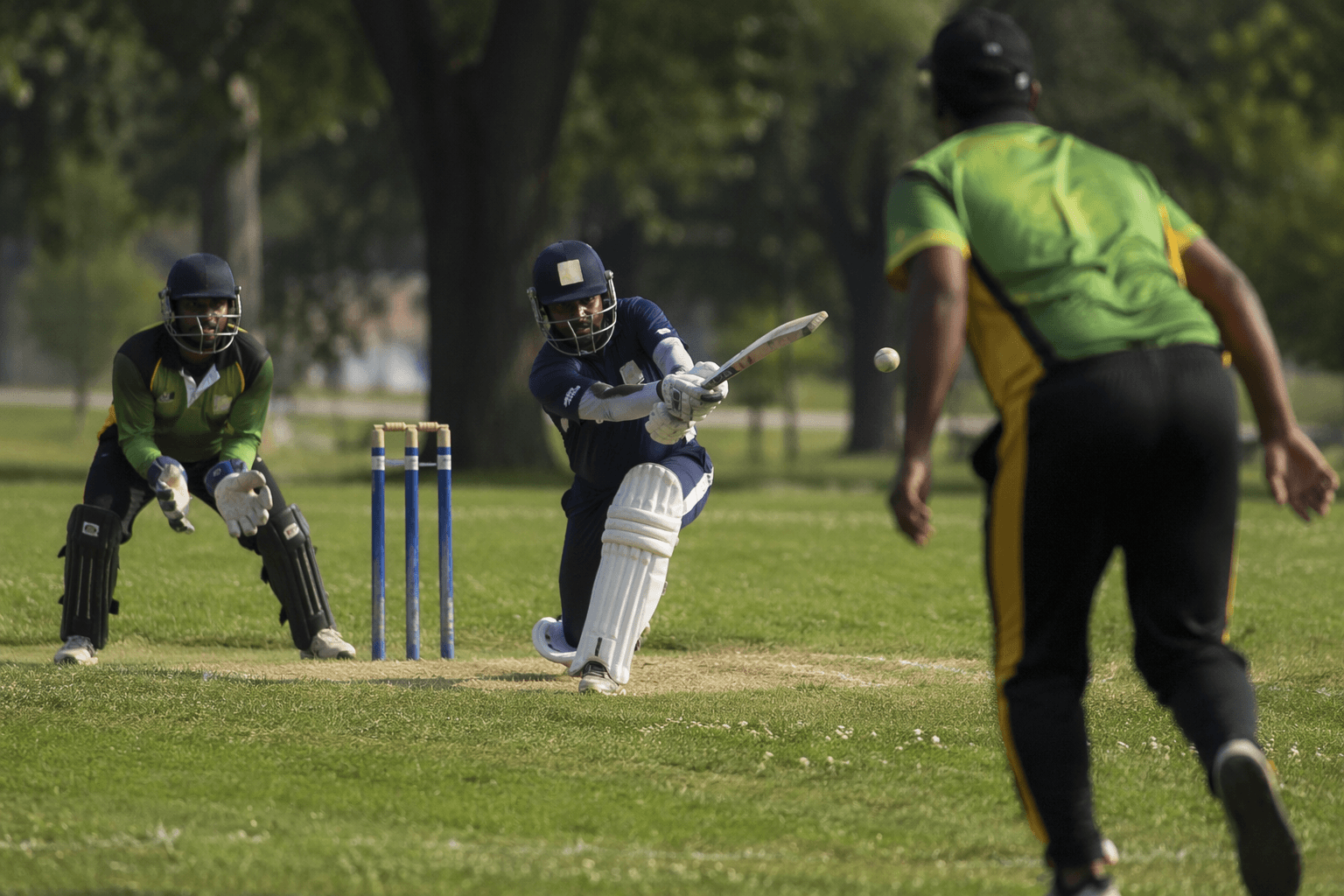
The fixture pages show that Missouri cricket is not one uniform competition. The Saint Louis Cricket League archive includes Women Cricket League, T20, T15, T12, leather-ball events, and six-a-side matches. That variety is a useful tell. It means the scene has different entry points for different schedules, skill levels, and tastes, from shorter social formats to more traditional hard-ball cricket.
Kansas City shows the same range of ambition in a different way. The MCC-KC Premier League says it was established in 2024 as a professionally organized T10 tournament, while the Cricket Premier League of Kansas City remains a T20 setup. In practice, that means the same city can support both faster entertainment-style cricket and longer club competition. If you are reading league pages closely, format labels are one of the best ways to judge whether a competition is built for high turnover, serious club cricket, or both.
How a newcomer can join the scene
The most encouraging thing about Missouri cricket is that the pages do not just describe closed clubs. They often show pathways in plain sight. The American Cricket Academy and Club of St. Louis grew from 6 members to 300, and founder Ajay Jhamb has talked about how local kids can get involved. That growth matters because it shows an entry point for families, not just established adults with cricket backgrounds.
There is also a women’s pathway taking shape. USA Cricket said on February 19, 2024, that the Missouri-based St. Louis Shooting Stars were newly formed for the women’s domestic pathway. The same update said the 2024 women’s domestic pathway had 230 new registrants nationwide and that the women’s intraregional competition featured 15 teams. That is a strong sign that Missouri is not standing apart from the wider U.S. structure. It is plugged into it.
USA Cricket’s regional system places Missouri in the Midwest zone, which helps explain why these league pages matter so much. They are not isolated hobby pages. They are the public face of a ladder that runs from local clubs to regional competition and, for some players, into more formal domestic pathways. When you know how to read the roster, the fixture labels, and the ground names, you can tell at a glance whether a Missouri cricket page is advertising a league, a community, or the next step into both.
That is the real trick hidden in those pages. The teams, the venues, the formats, and the names are not just admin clutter. They are proof that Missouri cricket is already organized enough to be mapped by anyone who knows where to look.
This article was produced by Prism’s automated news system from verified source data, official records, and press releases, then run through automated quality and moderation checks before publishing. The system is built and supervised by the people who set the standards it runs under. Read our full AI policy.
Did this article answer your question?