Missouri cricket rises with formal umpiring pathways and certification
Missouri cricket’s umpiring scene is more formal than it looks: MCC laws, USA Cricket certification, and league grading turn match-day authority into a real pathway.
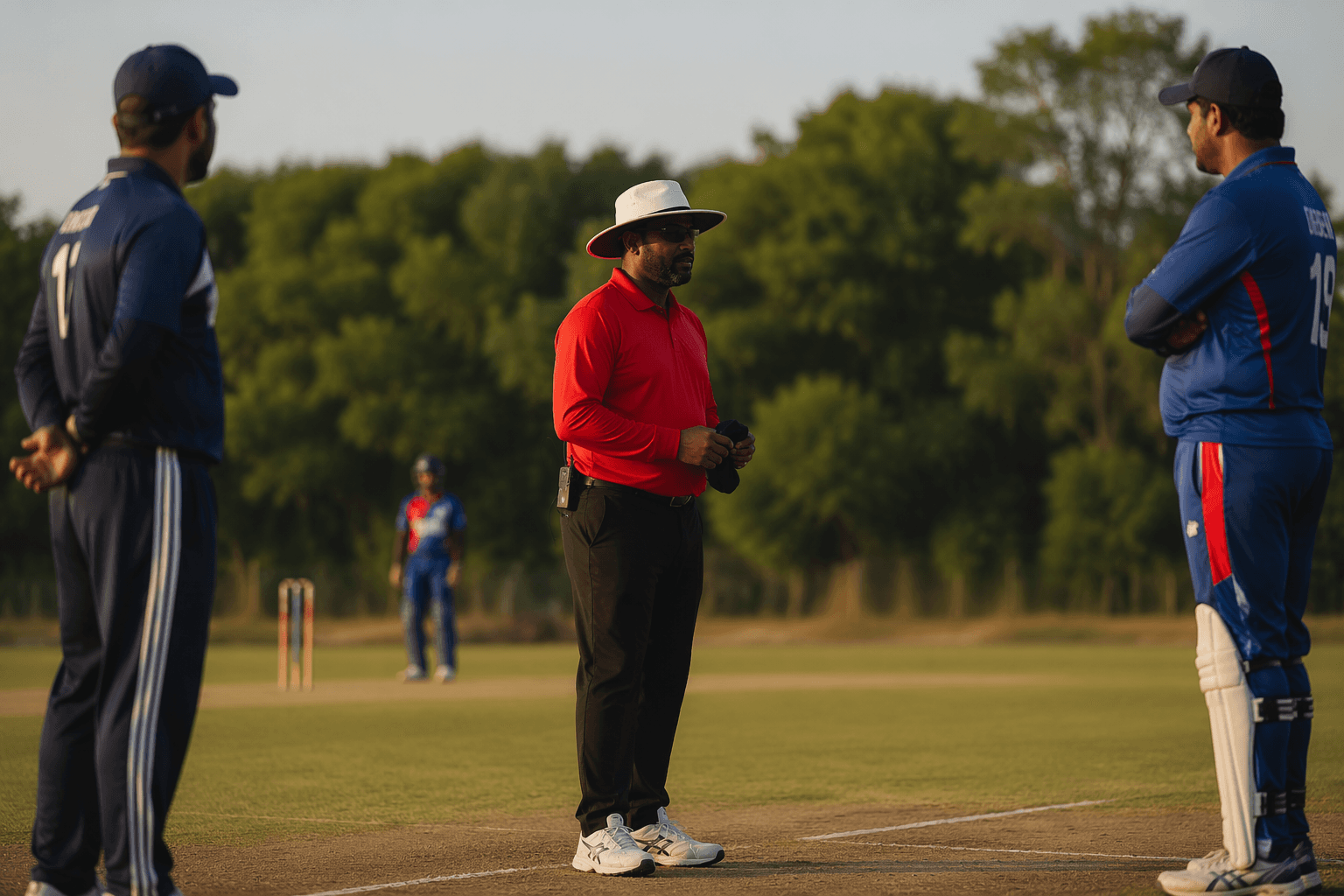
Missouri cricket is growing in the quiet, procedural way serious cricket always has: through umpires who know the Laws, earn certificates, and get graded before they ever get trusted with bigger matches. What looks like a volunteer standing behind the stumps is often the end result of a much longer pipeline, one that starts with MCC’s Laws of Cricket and runs through USA Cricket’s certification structure into local league assignment.
The laws begin at the top, not on the boundary rope
The Marylebone Cricket Club still writes and interprets the Laws of Cricket, and it says those laws apply everywhere from a village green to the Test arena. MCC’s Laws sub-committee handles the debating, decision-making, and drafting, which is the first reminder that cricket’s rulebook is not informal folklore, even if plenty of casual players treat it that way. The International Cricket Council uses those laws as the baseline for match officials, so the umpire’s job is tied to a global standard before it ever becomes a Missouri conversation.
That matters in a place like Missouri because it changes the meaning of authority on match day. A trusted umpire is not just someone who knows what a wide or no-ball looks like. The trusted umpire is someone trained to interpret the same code used across levels of the game, from local fixtures to the international stage, and to apply it consistently enough that players can actually build trust around the result.
USA Cricket turns the Laws into a path
USA Cricket adds the American structure on top of that global rulebook. Its umpiring program lays out a pathway built around an introductory course and three accreditation levels, Level 1 through Level 3, along with guidance on match appointments, performance monitoring tools, and an initial registration and categorization process. USA Cricket launched its first Umpiring Program and Pathway on October 30, 2020, and named six zonal coordinators to help deliver it, which tells you how seriously the country now treats officiating as a development track rather than a casual favor.
The ladder is real. In USA Cricket’s 2020 pathway document, Level 3 certified umpires can be nominated for Inter-Zonal and National Championship matches and for the USA Cricket Umpires Elite Panel. That is the clearest line between a hobbyist who knows the rules and an official who has been tested, tracked, and considered ready for higher-stakes cricket.
The first Level 1 course showed how formal the entry point already is. USA Cricket described it as Umpiring Fundamentals, with 13 online theory modules on the Laws of Cricket, four health-and-safety modules, and a three-hour online instructor-led module. By April 2022, USA Cricket said 103 people had earned its first Level 1 Umpiring Certificates, a number that shows the pipeline was not theoretical. It was already producing certified officials.
Missouri leagues are already speaking this language
That structure shows up locally in the Missouri Premier Cricket League’s umpire directory. The league lists officials with visible level tags such as Elementary Level, Level 2, Level 3, and Level 4, which is exactly the kind of language you would expect from a formal development system. The directory also publicly names a core officiating pool that includes Amol Musale, Gurpreet Ghotra, Niraj Patel, Omeel Doyle, Pramod Mogallapu, Puran Malhotra, Suresh Guttikonda, and Vikram Tashildar.
That public grading matters because it turns umpiring into something legible for clubs and captains. When a league can identify who is Elementary Level and who is Level 4, it can make match assignments with more confidence, match officials to fixture difficulty, and create a path for umpires to move up instead of simply showing up again and again in the same role. The result is not just tidier administration. It is better game management.
Why the grading affects the match itself
The practical benefits show up in the small moments that decide whether a game feels fair. Better officiating reduces disputes, keeps matches on schedule, and makes league records more credible. It also helps newer players learn cricket’s shared procedural language, because terms like wide, no-ball, leg before wicket, dead ball, over, innings, and dismissal stop being abstract once a trained umpire is managing them cleanly and consistently.
This is where hidden professionalism becomes visible. A casual rules-knower might recognize a few calls, but a certified umpire brings the discipline of training, evaluation, and assignment criteria to every over. That steadiness is what lets players trust that a close call was handled by someone who understands not only the Laws, but the expectations attached to the role.
The wider cricket world treats officials the same way
Cricket is not unique in building officials into a system, and that comparison helps explain why Missouri’s local umpiring ladder is a sign of maturity. The International Cricket Council says it announces provisional umpire and referee appointments for upcoming series and matches as early as possible, even though assignments can still change before play. In other words, appointments, grading, and progression are normal parts of cricket administration at every level.
The Missouri picture also fits the broader officials culture familiar to nearby amateur sports. The Missouri State High School Activities Association uses an official registration system and says it promotes sportsmanship and community contribution, while local umpire associations in the region emphasize recruiting, training, mentoring, and impartial assigning. Cricket’s umpiring pathway belongs to that same world of structured credibility.
For Missouri cricket, that is the real story underneath the scorecard. The person behind the stumps is not there because nobody else volunteered. The umpire is there because the game has built a ladder, and Missouri is already climbing it.
This article was produced by Prism’s automated news system from verified source data, official records, and press releases, then run through automated quality and moderation checks before publishing. The system is built and supervised by the people who set the standards it runs under. Read our full AI policy.
Did this article answer your question?