Missouri cricket scorecards made simple in five minutes
A Missouri newcomer can read cricket almost instantly once the scorecard clicks: runs, wickets, overs, innings, and the result. One sample chase turns the notation into a live match.

At 142 for 3 after 18 overs, a cricket scorecard stops looking like a private language. Once you can read it, the whole match opens up, from a park game in St. Louis to a sanctioned contest under the same laws that govern cricket from “the village green to the Test arena.”
Start with the score, not the jargon
The quickest way in is to read the scoreboard in this order: runs first, wickets second, overs third. If a side is 142 for 3 after 18 overs, that means it has scored 142 runs, lost 3 wickets, and used 18 overs of its batting time. That is not an error, and it is not missing information; it is the standard shorthand Missouri fans will see at local grounds, school showcases, and club matches.
Picture a simple chase. Team A posts 158 for 6 in 20 overs, and Team B gets to 142 for 3 after 18 overs. At that moment, Team B still needs 17 runs, and everyone around the boundary starts doing the same math: how many balls remain, how many wickets are left, and whether the batting side can finish the job before the final over disappears.
What an over really means
An over is six valid balls, full stop. Under the Marylebone Cricket Club’s Laws, no-balls and wides do not count as valid balls toward that six, and the umpire calls “Over” only after six valid deliveries have been bowled and the ball is dead. That is why an over can be messy and still count as one over on the board.
If you see a bowler’s figures move from 2 overs to 2.3 overs, the “.3” does not mean three-quarters of an over. It means 2 overs and 3 legal balls, because cricket counts the balls inside the over, not decimal fractions. A local Missouri match may add its own rules on top, but the scoreboard still counts the balls inside the over, not decimal fractions.
How runs actually appear
Runs come from movement, boundaries, and penalties. A run is scored when batters cross and make good their ground from end to end, when a boundary is hit, or when penalty runs are awarded. That is why a single delivery can produce more than one run, and why the ball may feel like one event while the scoreboard jumps by two, three, four, or six.
Boundaries do a lot of the heavy lifting for the casual eye. When the ball reaches the rope after bouncing, it is four; when it clears the rope on the full, it is six. But the quieter runs matter too, especially in the middle overs, where batters are turning the strike, building totals, and keeping the innings moving without always swinging for the fence.
Why innings and results matter
An innings is each team’s turn to bat. In a two-innings match, the sides alternate innings unless the match conditions say otherwise, which is why scoreboards sometimes list more than one batting turn for each side. In a one-innings match, the side with more runs wins, while ties and draws depend on whether all innings were completed and whether the scores are equal.
That is also why the final line on a scorecard can appear before the full allotment of overs is used. In a chase, if the batting side passes the target, the match ends immediately. In the sample chase above, if Team B reaches 159 for 4 after 19.2 overs, it wins before using all 20 overs because it has already gone past 158.
Why Missouri scorecards can look a little different
Missouri cricket sits inside a much bigger American game. USA Cricket counts more than 200,000 players across more than 400 local leagues, tournaments, academies, college programs, and school programs, and those settings include hardball, tapeball, softball, disabled, and indoor cricket. That mix leaves one scorecard very formal while another, played in a local park, may have a few house rules layered on top.
USA Cricket is the sole governing body for cricket in the United States and controls approval of domestic cricket under ICC regulations. The ICC’s Playing Handbook gathers the main regulations for formats such as Test Match, One-Day, Twenty20, development events, and the Code of Conduct.
St. Louis is already part of that picture
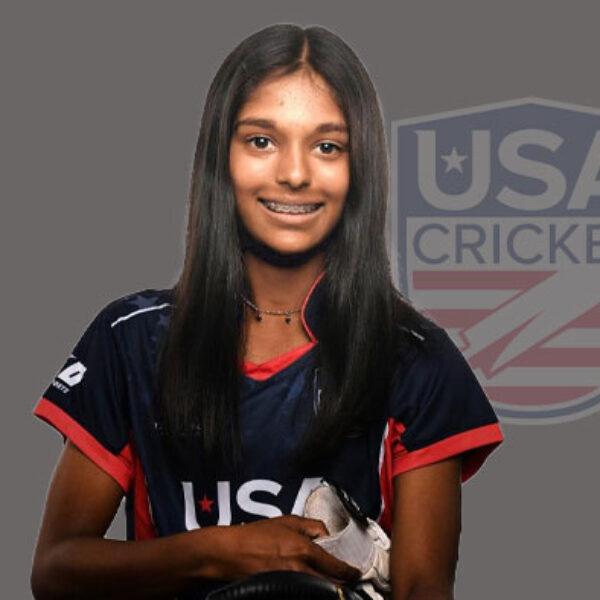
In February 2024, USA Cricket added the St. Louis Shooting Stars, a Missouri-based women’s team, to the 2024 intraregional competition and named Ranjeet Singh as volunteer team coordinator. The same announcement put the women’s domestic pathway at 230 new registrants and identified St. Louis as one of the strongest-growth markets in that pipeline.
USA Cricket later listed St. Louis Women’s Open as an approved 2025 event at ACAC Park in St. Louis, scheduled for November 19 to December 7, 2025.
The longer American backstory
USA Cricket dates the game here back more than 300 years, with records as early as 1709. The modern governance structure is newer: the former U.S. body, USACA, was expelled by the ICC in June 2017, and USA Cricket was granted associate membership in January 2019.
This article was produced by Prism’s automated news system from verified source data, official records, and press releases, then run through automated quality and moderation checks before publishing. The system is built and supervised by the people who set the standards it runs under. Read our full AI policy.
Did this article answer your question?