St. Charles park adds cricket pitch, boosting Missouri youth access
St. Charles now has a public cricket stop you can actually find, book, and use. Ed Bales Area pairs a pitch and cages with park access that families and youth teams can plug into right away.
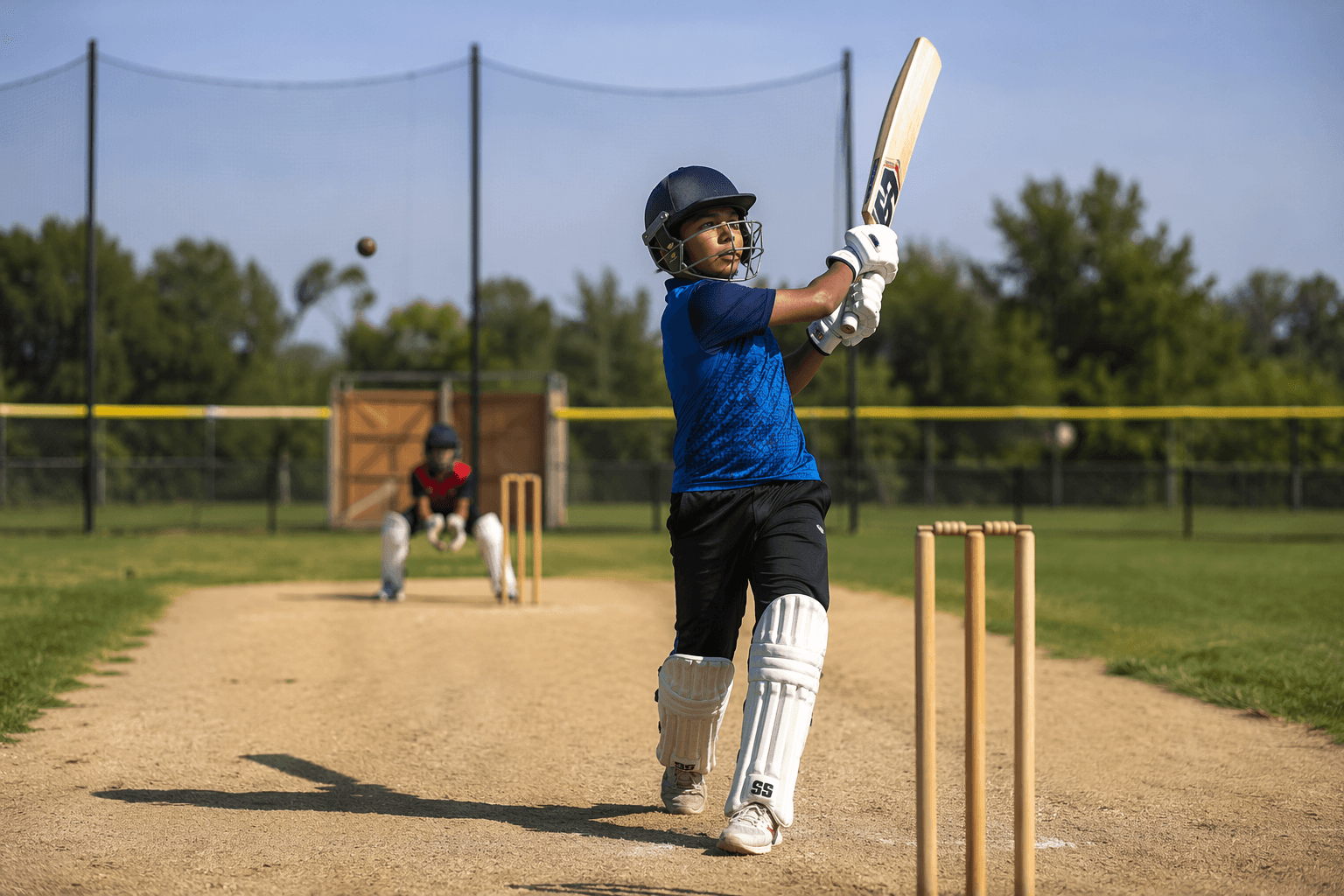
St. Charles now has something Missouri cricket has long needed in plain sight: a public park listing that names cricket as part of the everyday recreation mix. At Ed Bales Area, the city’s park page puts a cricket pitch and cages alongside a basketball court, playground, two picnic shelters, rock and gravel biking and hiking trails, and a nature area at 2598 N Main Street. That is a different kind of milestone than a private field or an informal practice spot tucked behind a school. It gives cricket a civic address.
The setting matters because Ed Bales Area is not treated as a one-off specialty site. St. Charles Parks places it inside DuSable Park, part of a city system of 26 parks serving residents and visitors. For cricket, that means the sport now sits inside a familiar public-park routine, where someone can arrive for a walk, a picnic, or a youth outing and see the game as part of the landscape instead of a closed circle.
What is actually there
The usable cricket space at Ed Bales Area is not vague or symbolic. The city listing names a cricket pitch and cages, which is the key infrastructure for practices and small-group work. Around it are the features that make the site workable for mixed-use outings: basketball, playground equipment, two picnic shelters, and trails for biking and hiking.
The park is listed with dawn-to-dusk hours, which keeps the cricket footprint in the same operating frame as the rest of the public park. Restrooms are open seasonally, from April 1 to November 14, which is another practical detail that matters for families, youth squads, and casual players planning a longer visit. A cricket field that sits inside a normal park schedule is easier to use, easier to explain, and easier to fold into an ordinary weekend.
Who can use it right now
The clearest answer is that the space is open to the public as part of the city park system, so casual players, families, youth groups, and organized clubs can treat it as a real place to gather. The public listing gives people a fixed location, fixed hours, and a known set of amenities, which is exactly what turns cricket from a text-thread plan into something you can actually schedule.
For families, that means the park works as more than a cricket stop. A parent can bring children to the playground, use the shelters, or walk the trails while a practice session happens nearby. For youth groups and clubs, the park gives St. Charles a public base where a team can meet, train, and recruit without needing to explain a private venue from scratch. The importance is not just that cricket exists here, but that it exists where ordinary park users already know how to show up.
The reservation detail that makes it usable
St. Charles Parks’ reservation system goes a step further and names a specific facility: Dusable Cricket Cage 1. The booking rules are concrete. Cricket cage reservations can be made for one hour per week per household, and only two weeks in advance.
That small scheduling window tells you a lot about how the city is handling cricket. It is being folded into ordinary park management, not left as an ad hoc arrangement. For a household trying to get a regular batting session or a quick training slot, the system gives a clear path. For organizers, it gives a public reference point they can hand to parents and players instead of improvising directions through social media messages.
Why Missouri cricket already knows this name
Ed Bales Area does not appear out of nowhere to the people who follow the youth game in Missouri. Missouri Youth Cricket Association is listed in directory records as based in Bales Park in St. Charles and Love Park in St. Louis, and those same records describe the organization as a nonprofit tax-exempt 501(c)(3). That places the St. Charles footprint inside a longer youth-cricket network, not just a single local facility.
The connection also reaches back to 2014, when a United States Youth Cricket Association Facebook post identified a St. Charles MYCA team training at Bales Park under managers Rahul S and Sunal K. That detail matters because it shows the St. Charles site was already part of organized youth cricket before the current public listing made the cricket presence so visible. The park now gives a name and address to a training base that has already mattered to the youth side of the sport.
How the park system frames the sport
St. Charles Parks presents DuSable Park as a multi-area park complex, with Ed Bales Area as one of its sections. The broader park system also carries its own long civic history: the city says the public park idea was conceived on July 2, 1914, after citizens petitioned for a $90,000 bond referendum to acquire parkland. Cricket’s new public footprint fits into that older tradition of building parkland as a shared civic resource.
The DuSable name adds another layer. Local history sources say Jean Baptiste Point du Sable lived in St. Charles after selling his Chicago River property and moving to the river port. That history gives the park complex a deeper local resonance, and it makes the cricket facilities feel less like a novelty dropped into suburbia and more like the latest use inside a long civic landscape.
What this means for a first practice
For a family or youth organizer looking for the first practical move, the answer is now simple: start at Ed Bales Area. The park has a named cricket pitch and cages, public hours, seasonal restrooms, and a reservation system that already recognizes cricket as a schedulable use. It also sits inside a larger park network with shelter, trails, and playground space, which makes it easier to bring along siblings, parents, and mixed-age groups.
That combination is the real story here. St. Charles has moved cricket from a hard-to-find niche into a public place with an address, a calendar, and a city system around it. In Missouri, that is how a sport starts becoming part of ordinary recreation: one park, one reservation page, one visible cricket footprint at a time.
This article was produced by Prism’s automated news system from verified source data, official records, and press releases, then run through automated quality and moderation checks before publishing. The system is built and supervised by the people who set the standards it runs under. Read our full AI policy.
Did this article answer your question?