2026 yarn survey shows skilled crocheters spend more on projects
Skilled crocheters are moving into pricier projects, with bigger material investments and stronger demand for cotton, synthetics and video-led learning.
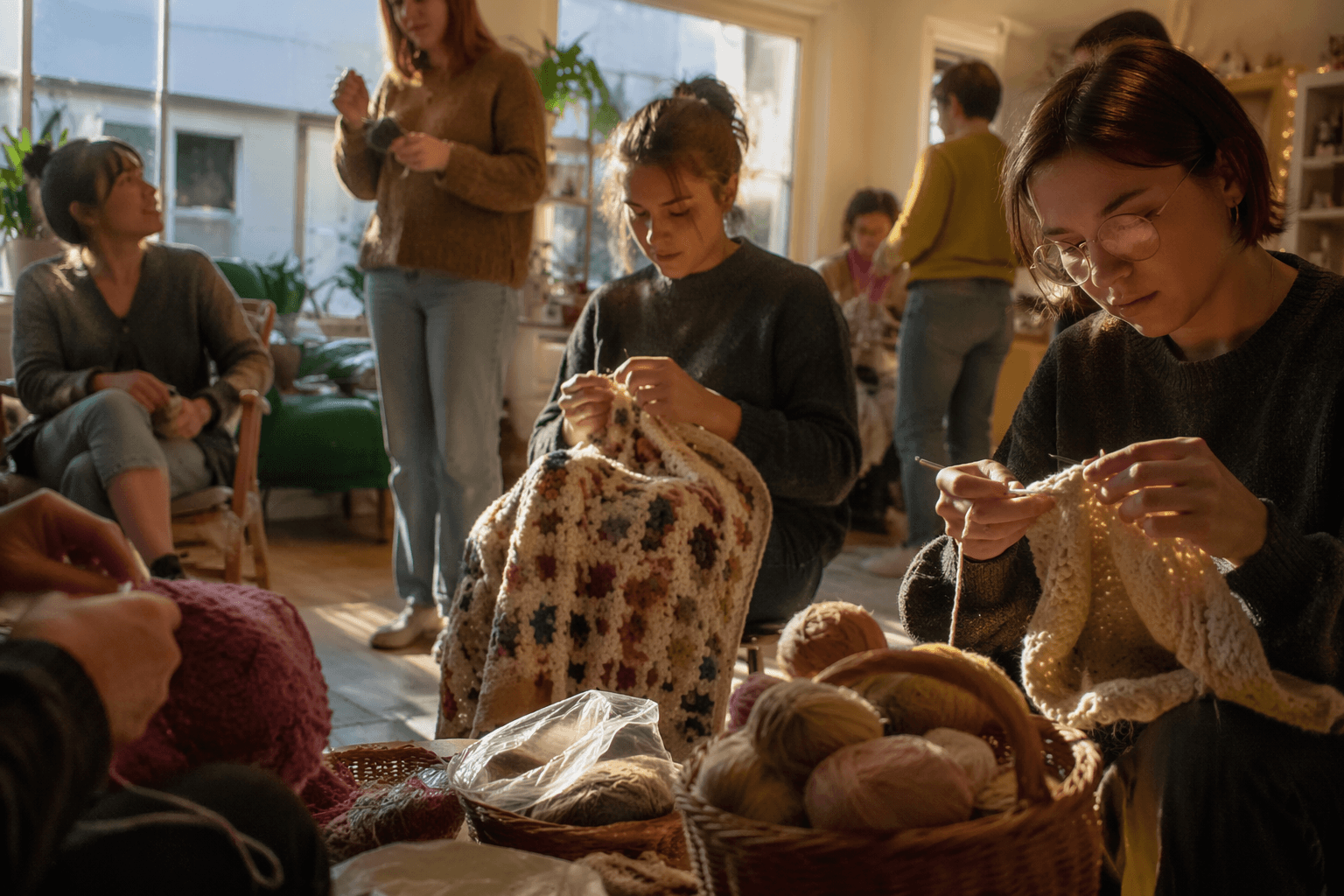
The deeper crocheters get into the craft, the more they spend, and that trend is reshaping everything from stash planning to what sells fastest in local shops and online carts. A 2026 yarn consumer survey spanning 3,076 respondents across five Local Crafts brands showed that as makers advance, their projects become more complex, their material choices improve and their overall investment rises.
Benjamin Peterson, vice president of analytics at Local Crafts, presented the findings at h+h americas in Chicago on May 8, 2026, after the three-day event ran May 6-8 at the Donald E. Stephens Convention Center in Rosemont, Illinois. The clearest crochet takeaway is that spending is not flat across skill levels. Sweaters and other garments nearly doubled as skill increased, while home décor held steadier across the board, a sign that blankets, pillows and other household projects remain a reliable on-ramp even as crocheters move into more ambitious makes.
That matters for the whole market. Berroco, founded in 1968 by the Wheelock family, has long described local yarn stores as the backbone of the yarn industry, and the survey backs up that view. Makers who shop only online or only at chain stores tended to spend less and attend fewer classes or events, while local yarn stores still played a major role in discovery and skill-building. Local Crafts, which says it has a team of 200-plus across the U.S., sits in the middle of that ecosystem, making needles, yarns, printed fabric and thread for a wide range of makers.
The learning pipeline has changed just as sharply. YouTube is now three times more likely than family to be a beginner’s entry point into yarn crafts, a clear sign that video has overtaken older, home-taught pathways for many crocheters. Ravelry remains a major hub across ages, Facebook leads among older users, Instagram is strongest from ages 25 to 54, and YouTube serves both new and experienced makers. For designers, that points to pattern launches that explain the payoff fast, with clear visuals and project-specific framing rather than generic “easy” labels.
The fiber split is just as useful. Crocheters showed a stronger preference for cotton and synthetics, while knitters, especially advanced ones, leaned more heavily toward wool, other natural fibers and hand-dyed yarns. That gives indie sellers a sharper read on what to stock, especially for amigurumi, wearables and home projects. It also fits the prior survey’s profile of a buyer base that was 73% crochet, 84% knit and 58% both, with 56% saying they were buying more yarn online than the year before. The message is hard to miss: as crochet skills rise, the projects get bigger, the yarn gets more deliberate and the spending follows.
This article was produced by Prism’s automated news system from verified source data, official records, and press releases, then run through automated quality and moderation checks before publishing. The system is built and supervised by the people who set the standards it runs under. Read our full AI policy.
Did this article answer your question?