Beginner-friendly dragon amigurumi pattern uses just two yarn colors
A chubby little dragon, a spiked spine, and four wings give this beginner amigurumi instant shelf presence without complicated shaping.
A starter dragon with real personality
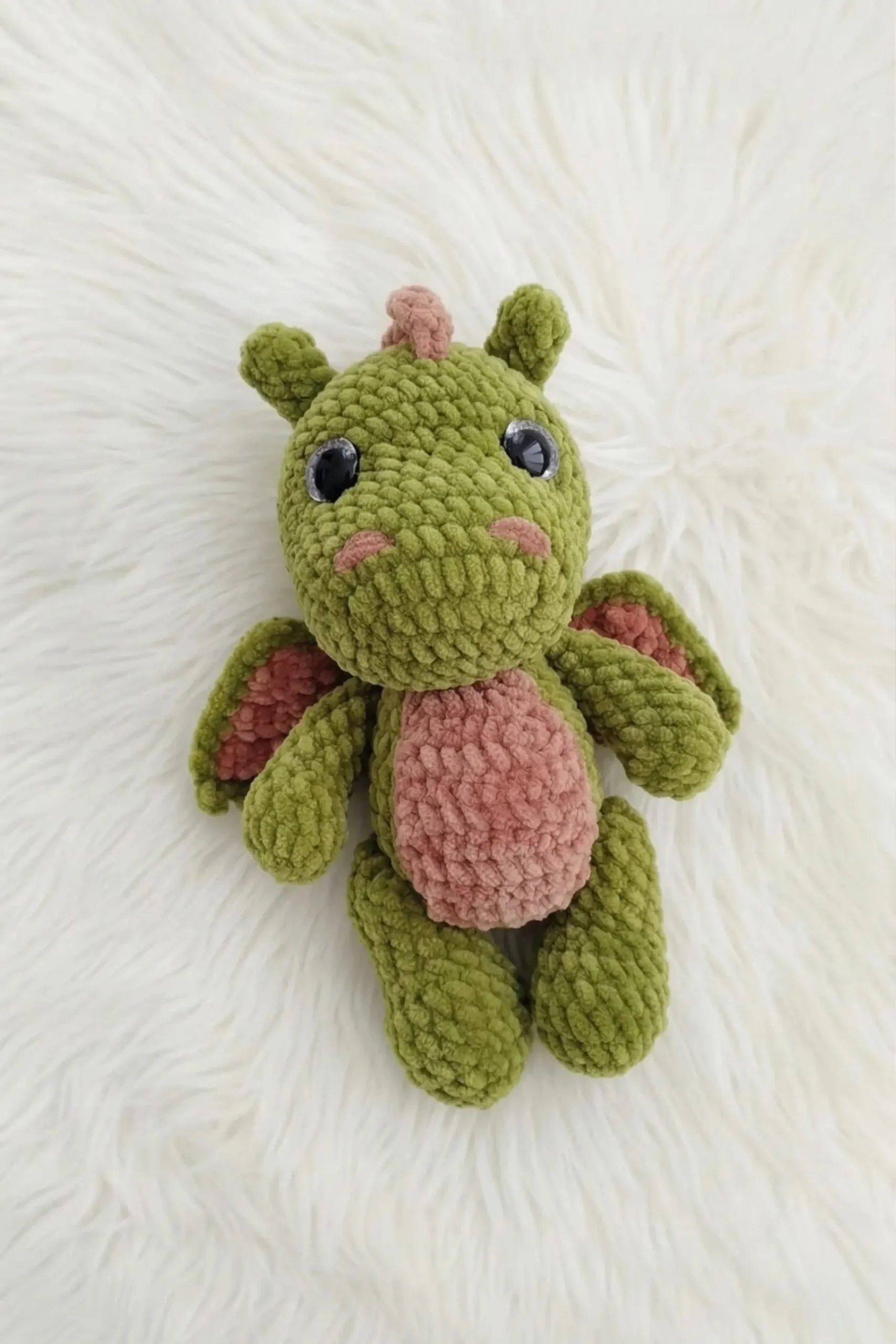
A little dragon with a spiked back and four wings does something most beginner plushes never quite manage: it looks finished, expressive, and a little bit magical from the first glance. Drakosha the Little Dragon, a free amigurumi pattern credited to Yulia Musatova and listed as updated on May 18, 2026, leans into that sweet spot where fantasy detail and beginner-friendly construction meet.
The design is built around a clear silhouette instead of tricky shaping. Its chubby body, wings, spiked spine, ears, tail, and belly panel give it a distinct character without demanding advanced techniques. That is exactly why it feels like a smart first statement amigurumi. It has enough personality to stand out on a shelf, but not so much complexity that the project turns into a tangle of tiny, intimidating pieces.
Why the construction feels approachable
What makes Drakosha especially friendly is the way the pattern breaks the dragon down into manageable parts: body, arms, legs, tail, belly panel, ears, spines or dorsal ridge, head, and four wings total. That modular structure matters. Instead of staring down one giant creature and wondering where to begin, you can complete each section in stages and watch the dragon come together piece by piece.
The body is worked from the bottom up in continuous spiral rounds, which is one of the most familiar amigurumi methods. For newer makers, that round-by-round rhythm is useful because it reinforces shaping without adding extra joins or complicated transitions. The pattern’s body construction begins with 12 stitches in a magic ring, increases to 30 stitches, then narrows again before stuffing and assembly, so the shaping stays readable and predictable as the form takes shape.
That sense of control is a big part of the appeal. Drakosha does not ask you to master sculptural crochet on day one. It gives you a clear, repeatable structure and lets the fantasy details do the storytelling.
Two colors, one dragon, plenty of style
The material list is simple in the best possible way. Drakosha uses a 3.5 mm hook and just two yarn colors, with La Mia Mellow yarn in color 932 green and color 922 brown. The rest of the supply list is just as practical: 18 to 20 mm safety eyes, black embroidery yarn for the eyebrows and nostrils, polyester fiberfill, a stitch marker, and a yarn needle for assembly.
That limited palette is part of what makes the dragon feel beginner-friendly rather than overwhelming. Two colors are enough to create contrast and keep the creature interesting, especially when the wings are split into two brown and two green pieces. The result is a fantasy make with enough visual movement to feel intentional, not busy. For a newer crocheter, that is a reassuring balance: the project looks impressive without asking for a huge yarn stash or a complicated colorwork setup.
The black embroidered details also do a lot of quiet work. Eyebrows and nostrils are tiny additions, but they sharpen the expression and keep the face from reading as blank. In amigurumi, those small facial marks can be the difference between a generic plush and a dragon that feels like it has a mood.
What gives Drakosha its shelf appeal
Drakosha’s shape is doing more than just being cute. The spiked ridge along the back and the wings create a strong silhouette, which is exactly why the dragon reads well as a display piece. A lot of starter plushes lean on simple round bodies or familiar animal forms; Drakosha adds fantasy texture while still staying compact and giftable.
That is also why dragons remain such a strong subgenre in amigurumi. They hit a sweet spot between collectible and imaginative, and they work for birthdays, desk decor, and handmade gifts without feeling overly seasonal. Roundups like Handy Little Me’s collection of free dragon crochet patterns reflect that ongoing appeal, especially for crafters looking for magical gifts or a first step into fantasy creatures.
The charm here is not just that it is a dragon. It is that it is a dragon with a readable personality. The chubby body makes it feel friendly, the ridge gives it attitude, and the wings push it away from being just another rounded toy. That combination is what gives the pattern its staying power in a crowded amigurumi world.
How Drakosha fits into amigurumi culture
Drakosha also makes more sense when you place it inside the broader history of amigurumi. The term comes from Japanese words that refer roughly to crocheted or knitted and stuffed doll, and the craft first gained popularity in Japan during the mid-20th century. By the early 2000s, it had spread far beyond Japan, helped along by the internet and social media.
That history matters because amigurumi has always been about more than just making small toys. It is a craft language built around kawaii-style cuteness, personal character design, and lots of room for interpretation. A pattern like Drakosha fits that tradition cleanly. It is small-scale, expressive, and easy to personalize while still giving the maker a clear roadmap.
The continuous spiral method used here is one of the foundational skills in that language. Yarn Society’s amigurumi guidance points beginners toward learning continuous rounds early, and that advice shows up in patterns like this for a reason. The technique helps create seamless stuffed forms, and once it clicks, a lot of other amigurumi projects start to feel more manageable. Cuddly Stitches Craft’s dragon pattern guidance makes the same practical point by noting that spiral rounds remove the need to slip stitch and join each round.
A beginner project that still feels special
Drakosha works because it respects both sides of the beginner amigurumi equation. It is simple enough to be realistic, with a 3.5 mm hook, two yarn colors, and a build broken into familiar parts. But it is also full of identity, thanks to the wings, spiked spine, chubby body, and face details that keep it from fading into the background.
That is the real strength of this little dragon. It gives a newer crocheter something achievable, then rewards that effort with a plush that looks like it belongs on display. In a genre where cute is common, Drakosha earns its place by being cute with a point of view.
This article was produced by Prism’s automated news system from verified source data, official records, and press releases, then run through automated quality and moderation checks before publishing. The system is built and supervised by the people who set the standards it runs under. Read our full AI policy.
Did this article answer your question?