Bobby Bear amigurumi pattern blends classic charm with heirloom detail
Bobby Bear leans on a familiar teddy silhouette that feels ready for gifts, nurseries, and first big amigurumi wins. The intermediate build adds jointed limbs and heirloom polish.
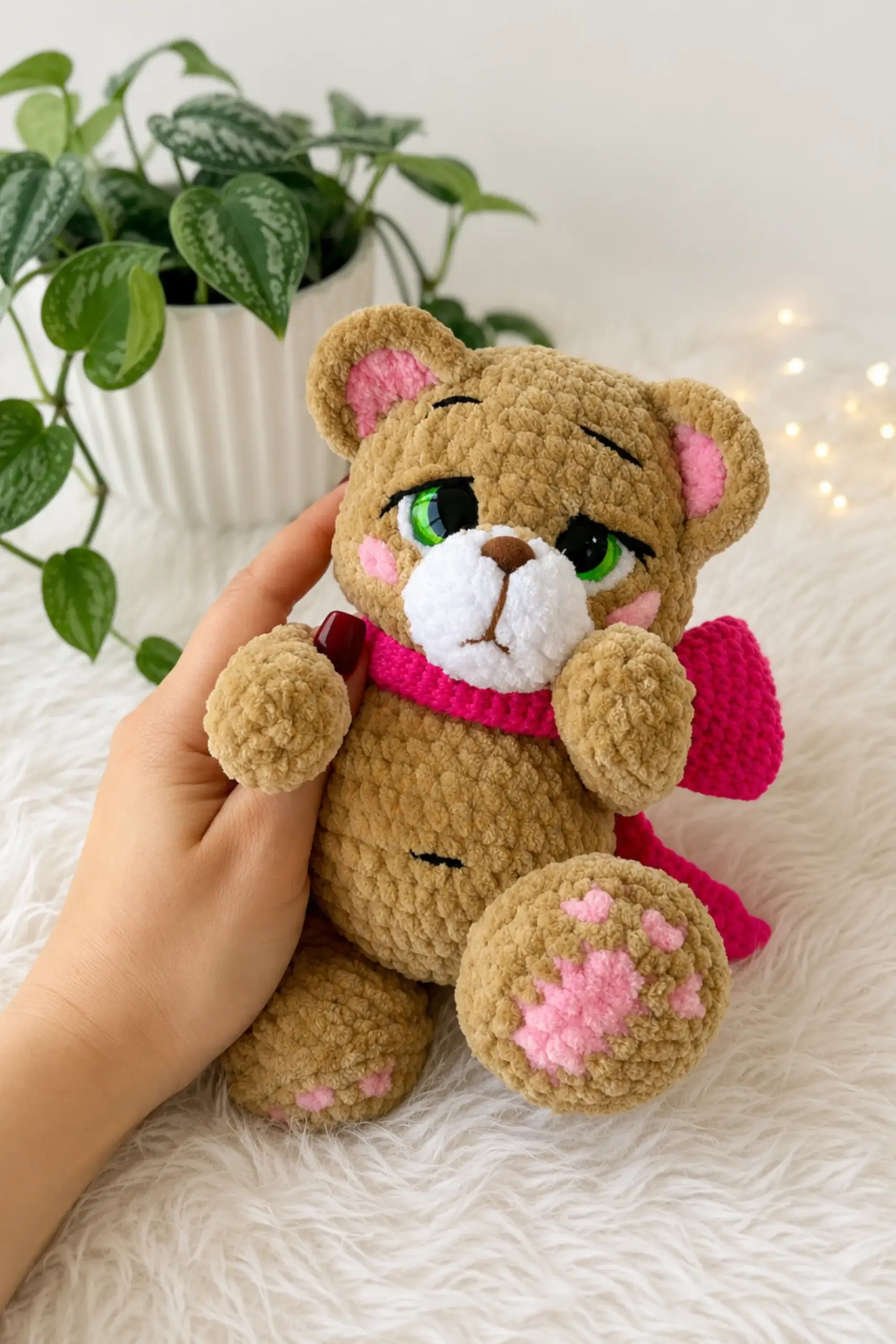
Bobby Bear makes a strong first impression because it looks exactly like the kind of plush people already want to keep, gift, or display. The friendly brown bear, soft blue bow, and rounded face read instantly as nursery-ready, which is a big reason this release stands out in a crowded amigurumi feed.
Why Bobby Bear lands so well at a glance
Amigurumi Corner published Bobby Bear on June 22, 2026, and the pitch is clear from the start: this is a classic teddy bear shape treated with enough finish detail to feel special. At about 9 inches tall, it sits in the sweet spot for baby shower gifts, shelf display, and keepsakes that feel substantial without turning into a marathon project.
That scale also explains why the pattern will appeal to makers looking for a safe, high-payoff plush rather than a novelty toy. Bobby Bear feels familiar in the best possible way, which matters when you want a project that looks giftable before anyone even zooms in on the stitches.
What makes the build more than a simple stuffed toy
The pattern is labeled intermediate, and that fits the construction. Bobby Bear is built from jointed limbs, a shaped muzzle, ears, a tail, a body, a head, a bow, and a neck band, so the finished silhouette depends on assembly as much as on crochet technique.
That is exactly what gives the bear its more polished, heirloom-style finish. The exact stitch counts and step-by-step assembly are not decorative extras here, they are what keep the shape clean and the proportions balanced as the toy comes together.
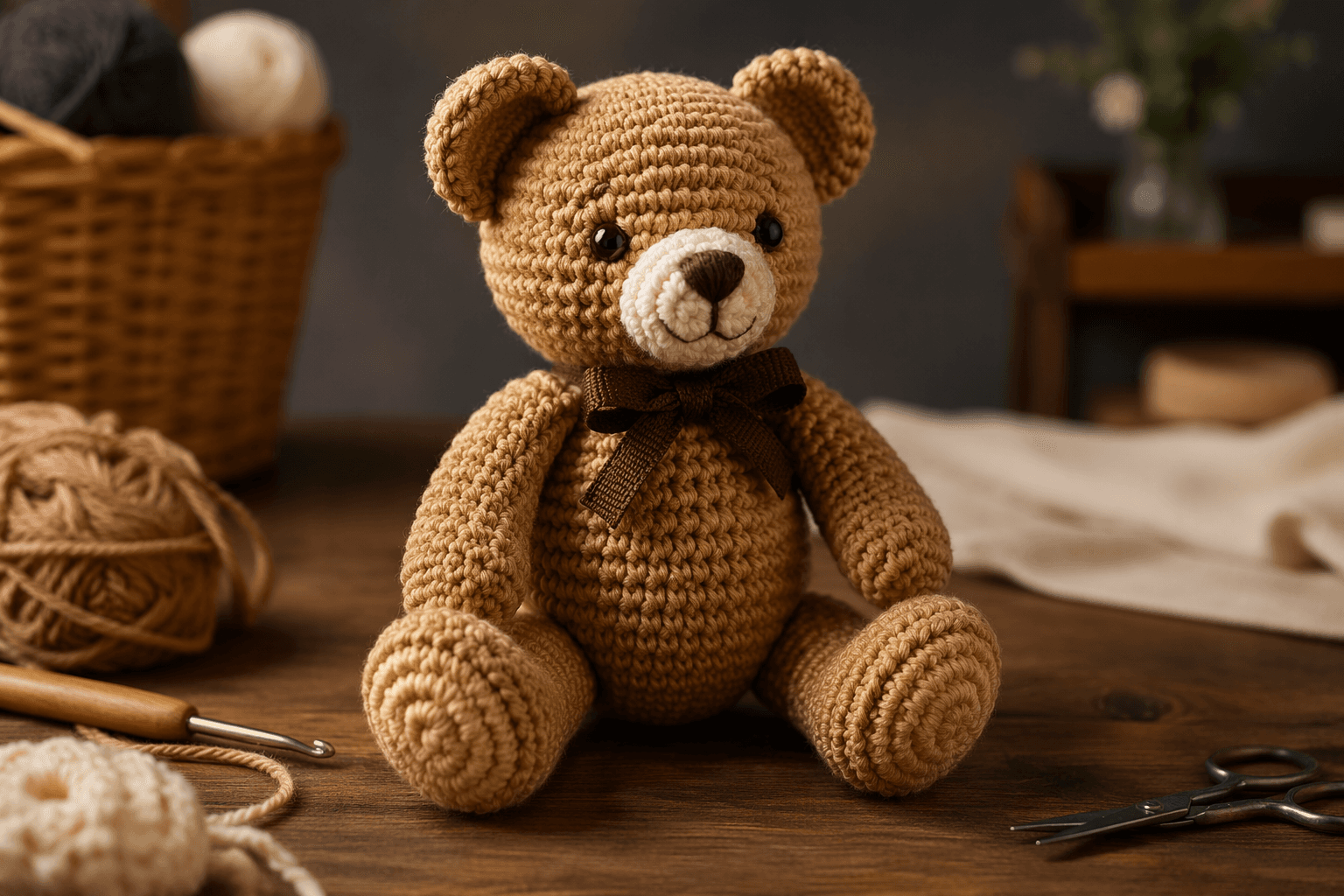
For crocheters ready to move beyond basic spheres and cylinders, this kind of project offers a useful next step. You still get the comfort of a familiar animal motif, but you also get the satisfaction of shaping, attaching, and finishing parts with real intention.
Materials that keep the palette classic
The materials list is straightforward and easy to picture on your worktable. Bobby Bear uses worsted-weight brown yarn for the main body, with small amounts of white and pink for contrast details, plus DK-weight light blue yarn for the accent pieces.
That combination does a lot of quiet work. Brown keeps the bear grounded and traditional, while the blue bow adds the soft, gift-ready touch that pushes the design toward baby gifts and keepsake territory. Because the color palette is restrained, the focus stays on the silhouette and finish rather than on novelty colors or busy styling.
The 9-inch size also helps the project feel practical. It is large enough to show off the shaping in the muzzle, limbs, and bow, but still small enough to finish without committing to an oversized plush build.
Why the pattern presentation matters
Amigurumi Corner presents Bobby Bear as a free pattern guide and includes a full table of contents for the different parts of the toy. That structure signals exactly what makers are getting into before they cast on: arms, tail, ears, muzzle, legs, body, head, bow, neck band, and assembly all get their own place in the build.
The site’s broader approach matches that style of presentation. Amigurumi Corner says it shares step-by-step amigurumi patterns, freebies, and pro tips, and it identifies Martha Miller and Olivia Harper as the co-founders behind the brand. Bobby Bear fits neatly into that catalog, where clear instruction and approachable presentation are part of the appeal.
For makers, that matters because a pattern like this succeeds or stalls on clarity. When the sections are laid out cleanly and the assembly is spelled out, the bear feels less like a guessing game and more like a project you can trust from the first round to the final seam.
How Bobby Bear compares with other bears in the market
The name Bobby Bear is not unique across the crochet world, and that broader context helps explain why this release works so well. Other Bobby Bear patterns on Ravelry show how much variation exists even within the same teddy-bear theme: one version by Kristine Kuluka is an 11-page PDF with detailed step-by-step photographs and a finished size of about 6 1/5 inches, while another by Sayjai Thawornsupacharoen runs 7 pages and includes 16 photos.
Those listings show that bear patterns can differ sharply in size, photo support, and presentation. Against that backdrop, Amigurumi Corner’s Bobby Bear stands out by leaning hard into readability and polish, with a finished shape that looks ready for a gift shelf rather than just another quick plush experiment.
That is the real draw here. Bobby Bear does not try to reinvent the teddy bear, and it does not need to. It wins by giving crocheters a familiar motif, an intermediate build, and the kind of tidy, giftable finish that makes a classic look fresh again.
This article was produced by Prism’s automated news system from verified source data, official records, and press releases, then run through automated quality and moderation checks before publishing. The system is built and supervised by the people who set the standards it runs under. Read our full AI policy.
Did this article answer your question?