Chubby City Pigeon Amigurumi Pattern Brings Urban Charm to Crochet Makers
This 14 cm chubby city pigeon turns a loathed street bird into a shelf-ready amigurumi with real personality, subtle color shifts, and a smart joke that lands.
A pigeon that knows exactly what it is
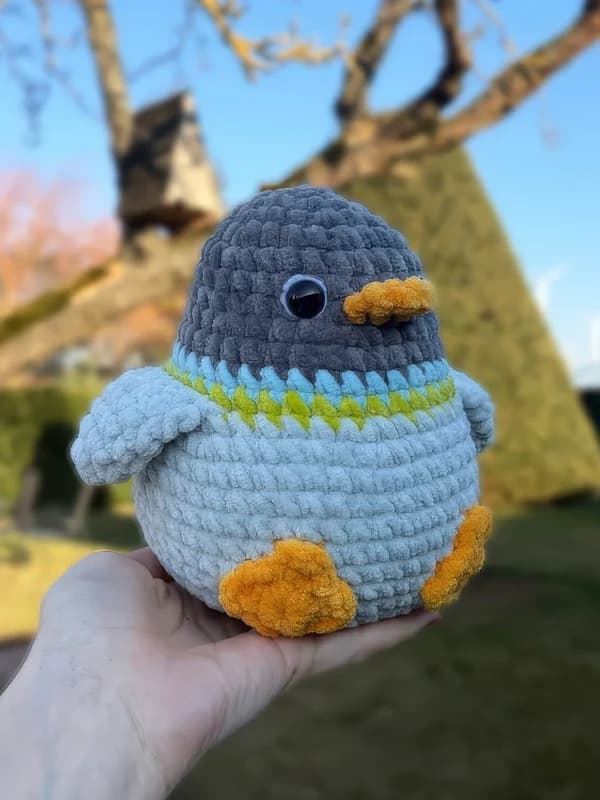
The charm here is not that this amigurumi tries to be a perfect bird. It wins because it is unmistakably a chubby city pigeon, with soft grey, blue, green, and yellow tones that make it feel like the kind of bird you actually spot on a curb, a ledge, or a subway entrance. That specific, slightly funny subject is exactly why these hyper-local, hyper-recognizable crochet designs are outperforming more generic cute animals: they have a built-in personality before you even pick up the hook.
This is the kind of project that makes sense the second you see it. A pigeon is common enough to be instantly recognizable, but odd enough as a plush subject to feel fresh. In New York City alone, pigeons are described as "as much a part of NYC's identity as bagels, pizza, and the subway," and the city has more than 1 million of them. That mix of familiarity and absurdity is the sweet spot this pattern taps into.
What the pattern gives you
The Chubby City Pigeon Amigurumi Free Pattern was published by YarnGems on May 8, 2026, and the design is credited to Vani Crochets. It is built as a full amigurumi project, not just a simple shape with eyes slapped on at the end. You get instructions for the beak, wings, feet, tail, body, and final assembly, plus guidance on how to change colors within the body so the bird keeps that lively, city-bird look instead of becoming a flat grey blob.
That color-change detail matters more than it sounds like it should. The subtle shifts are what keep the pigeon from reading as generic and help it feel like a real urban character, the sort of project that looks better the closer you get to it. The listed finished size is about 14 cm, which is small enough to live comfortably on a shelf, desk, or windowsill without taking over the space.
Materials that keep it approachable
The materials list is straightforward and friendly for anyone who already keeps a basic amigurumi kit on hand. You need bulky chenille yarn in several colors, a 5 mm hook, 12 mm safety eyes, stuffing, scissors, a tapestry needle, stitch markers, and a bit of white felt. That combination tells you a lot about the finished texture: this is meant to feel plush, soft, and slightly chunky rather than sharply realistic.
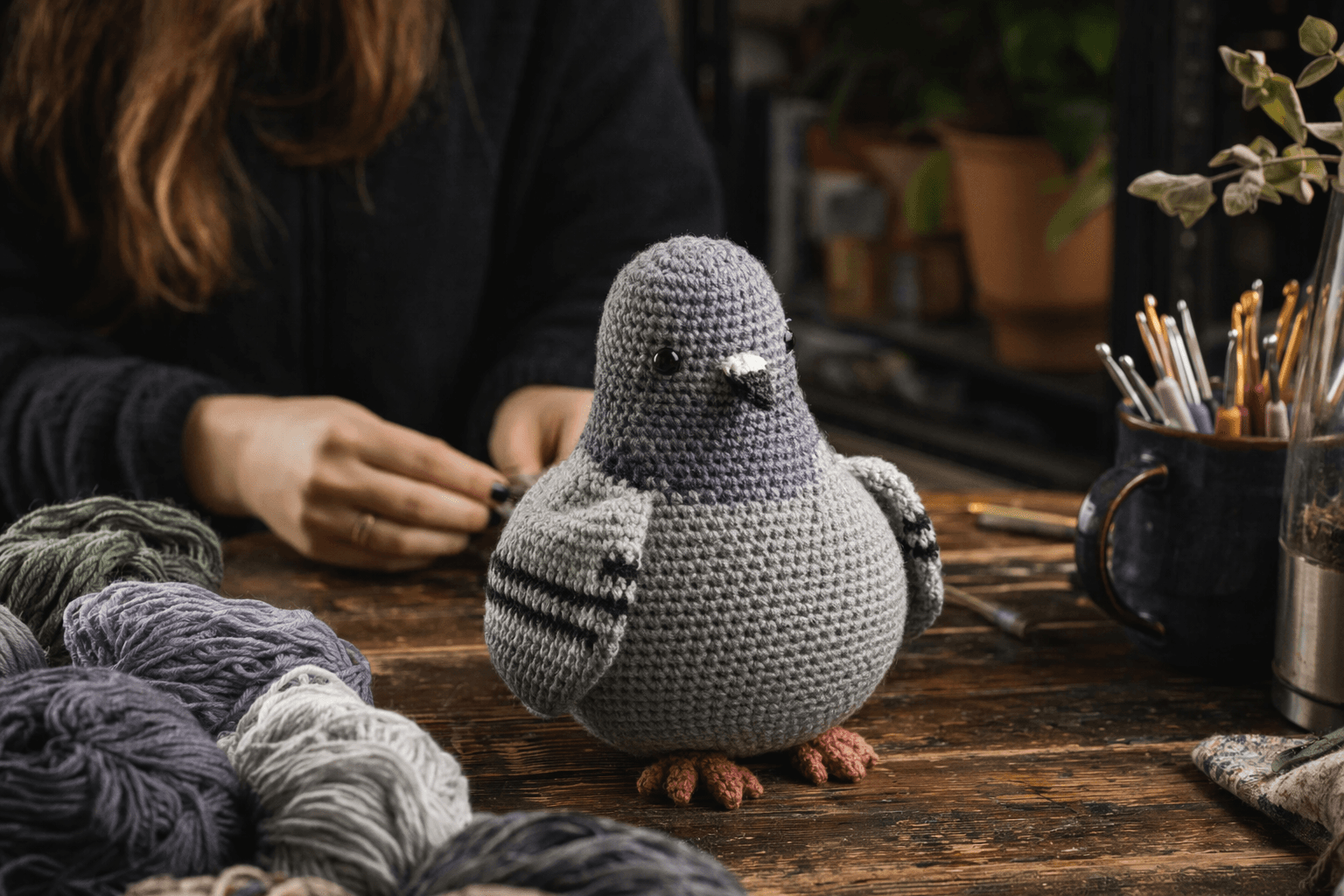
Chenille yarn is doing a lot of the work here. It gives the pigeon that round, padded look that suits the subject, and it helps the whole piece lean into humor instead of precision realism. If you like projects that reward clean shaping and tidy sewing more than fussy surface detail, this pattern sits in a very comfortable lane.
Why the pigeon subject works so well online
Crochet patterns do better when the finished object can be understood in a split second, and this one has that advantage in spades. A chubby city pigeon is funny on sight, but it is also oddly affectionate. It takes an overlooked urban bird and turns it into something you would actually want to display, which is a big reason it has the kind of shareable appeal generic cute-animal patterns often miss.
The broader pigeon story helps explain the appeal. NYC Parks identifies the birds most familiar in New York City as a feral subspecies, Columba livia, the rock dove. The Museum of the City of New York says there are over 1 million pigeons in New York City, and notes that urban pigeon keeping likely arrived with European immigrants, while pigeon racing in the city is recorded as far back as the 1800s. This is not just a random bird. It is a creature with a long relationship to city life.
A cute reversal of a messy reputation
Part of the joke, and part of the charm, is that pigeons are often treated as nuisances in everyday life. A Journal of Urban Ecology article describes feral pigeons as species often seen as feral, exotic, invasive, and dirty, and a scholarly chapter notes that humans did not widely consider pigeons a nuisance until the twentieth century. It also points out that pigeon abundance is positively correlated with human density, which fits the city-bird story neatly.
That is exactly why a crochet pigeon lands so well. It flips the usual reaction. Instead of leaning into grime or realism, the pattern turns the bird into a soft little character with round cheeks, compact proportions, and enough whimsy to make the whole idea feel intentionally affectionate. In a crowded amigurumi field, that reversal gives the project a memorable edge.
The history behind the joke
Pigeons also carry a surprising amount of history, which gives this pattern more depth than its goofy silhouette might suggest. Smithsonian Air and Space notes that 32 pigeons received the Dickin Medal during World War II, a reminder that these birds were once trusted messengers in life-or-death situations. That kind of background makes the pigeon feel less like a throwaway gag and more like a subject with real cultural weight.
The city connection runs deep too. The Museum of the City of New York says pigeon racing in New York goes back to the 1800s, and urban keeping has long been part of the local fabric. So when a crochet pattern leans into a city pigeon, it is not just picking a random bird. It is borrowing from a whole layer of urban memory, immigrant history, and civic weirdness that most animal patterns never touch.
How it fits into a maker’s queue
This is the sort of project that makes sense when you want something detailed but not huge. The instructions suggest an approachable make for crocheters who like assembly and shaping, but do not want a massive time commitment. With its compact 14 cm finished size, it feels like a satisfying weekend project that still leaves room for careful sewing and color work.
It also fits neatly into a broader pigeon-pattern mini-trend on YarnGems. The site already has a pigeon-pattern category that includes an Amigurumi Gray Pigeon Free Crochet Pattern from December 15, 2024, which makes this new release feel less like a one-off joke and more like an evolving niche. That matters, because the best crochet ideas often start as a very specific subject and then prove there is room for a whole little family of them.
Why this one sticks
The Chubby City Pigeon Amigurumi pattern works because it understands what makes crochet shareable now: a clear silhouette, a funny premise, a real-world reference point, and a finished object you can imagine sitting happily in your space. It is not trying to be the prettiest bird on the block. It is trying to be the pigeon you would remember walking past every day, only softer, smaller, and much easier to love.
This article was produced by Prism’s automated news system from verified source data, official records, and press releases, then run through automated quality and moderation checks before publishing. The system is built and supervised by the people who set the standards it runs under. Read our full AI policy.
Did this article answer your question?