Crochet jellyfish pattern brings a soft, playful sea creature to life
This jellyfish amigurumi pairs a rounded body, rosy cheeks, and 18 curling tentacles with an easy build that feels soft, whimsical, and highly photogenic.
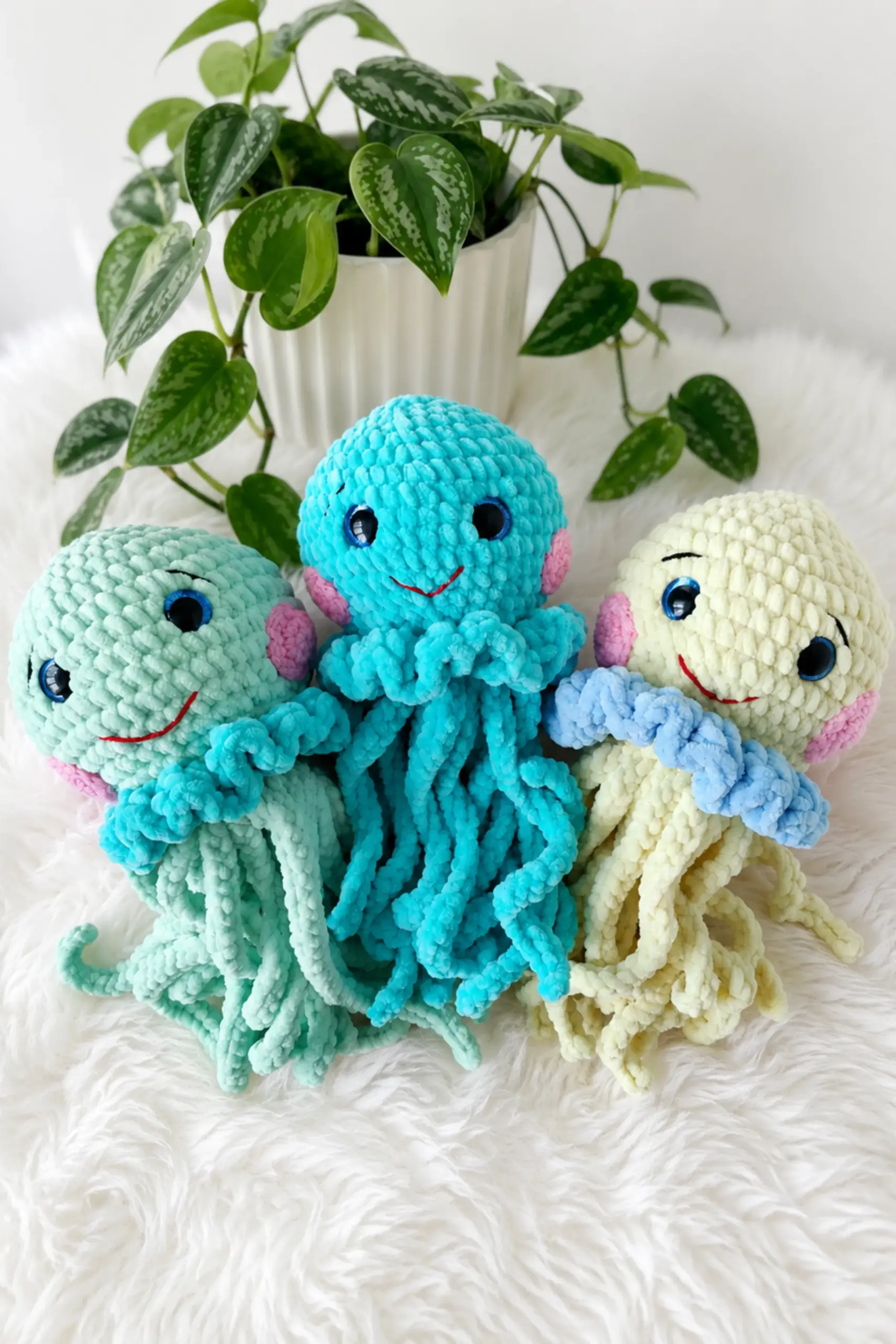
Amigurumi Corner’s jellyfish pattern gives its fluffy sea creature rosy cheeks and tentacles that curl instead of hanging stiffly. It leans hard into the appeal of a jellyfish amigurumi on a screen: soft, rounded, a little dreamy, and just unusual enough to stop the scroll. The texture makes a small plush look far more expressive than its size suggests.
What gives the jellyfish its charm
The visual payoff here comes from contrast. The body is simple and rounded, but the skirt-like frill and tentacles give it motion, so the finished jellyfish looks like it is drifting rather than standing still. In amigurumi, crochet builds shape through interlocking looped stitches with a hooked needle, so a small shift in form, a cheek placement, or a change in the edge treatment can turn a basic sphere into a character.
The material choice helps the effect. Plush yarn gives the project a softer, fuller look, and plush is a fabric with an even pile that is longer and less dense than velvet pile. In teal or turquoise with pink cheeks, the jellyfish gets a nursery-friendly palette that also photographs well, especially when the tentacles flare out around the body like a little underwater halo.
How the pattern is built
The jellyfish is built from a base disc, the body, 18 tentacles, a frill or skirt section, and cheeks, then brought together in assembly. That step-by-step build gives you clear milestones if you like to see a toy take shape in stages rather than all at once.
The main pieces are worked in continuous rounds, and the pattern uses standard amigurumi shaping with increases and decreases. It is written in US terminology, which keeps the instructions familiar if you already move between stuffed-animal patterns, and the piece count makes the construction feel deliberate without becoming fussy.
- Base disc: anchors the bottom of the jellyfish and starts the shape.
- Body: creates the rounded top and the bulk of the plush form.
- Tentacles: 18 strands add movement and the strongest visual texture.
- Skirt or frill: softens the transition between body and tentacles.
- Cheeks: give the finished creature its sweet, expressive face.
Materials that keep it flexible
The materials list stays broad. Plush yarn in teal or turquoise is recommended for the body, pink yarn handles the cheeks, and the rest is classic amigurumi supply kit territory: safety eyes, stuffing, a yarn needle, and optional embroidery for facial details. Nothing in the setup locks you into one brand or one exact look, so the project works just as well with stash yarn as it does with a carefully matched nursery palette.
A brighter sea-glass color pushes it toward toy-box cute, while a softer pastel version fits a shelf or gift basket. Because the facial details can be embroidered, the expression can stay minimal and gentle or become a little more animated, depending on how much personality you want to build in.
Why it lands as a good next-step project
It is comfortable for someone who has already made one or two stuffed toys, but the construction is logical enough that newer stitchers do not have to fight the pattern to get through it. Once you understand the body, tentacles, and skirt, the assembly feels like a tidy sequence rather than a puzzle.
The finished jellyfish can work as a gift for a kid who likes sea creatures, a desk companion, or a nursery shelf decoration that does not demand a weekend of labor.
How it fits into the bigger amigurumi world
Amigurumi itself comes from Japan, where it refers to the art of knitting or crocheting small stuffed yarn creatures. The word is a compound rooted in Japanese terms meaning crocheted or knitted and wrapping.
Craft Industry Alliance’s 2026 yarn consumer survey drew 3,076 respondents across five Local Crafts brands, and the 2025 survey had 6,300 respondents. That same 2025 sample put the average age of knitters and crocheters at 58.8, while the 2024 survey listed baby items, toys, and amigurumi among the project categories.
A free amigurumi jellyfish pattern on AllFreeCrochet is suitable for beginners and works as a gift or nursery-room decoration. Another user-submitted jellyfish pattern lists finished jellyfish items among the best-selling products at craft fairs.
This article was produced by Prism’s automated news system from verified source data, official records, and press releases, then run through automated quality and moderation checks before publishing. The system is built and supervised by the people who set the standards it runs under. Read our full AI policy.
Did this article answer your question?