Crochet tutorial turns granny square into layered 3D floral motif
A layered 3D floral granny square brings bold texture to blankets, bags, cushions, and wearables, while step-by-step construction keeps it approachable.
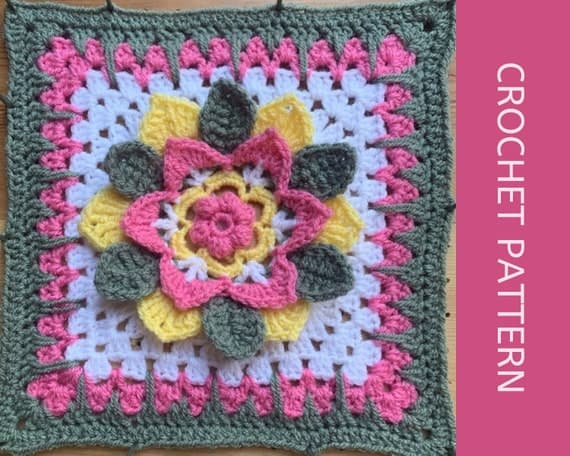
A flat granny square does the job, but this one comes with height, shadow, and a flower that actually lifts off the fabric. Crochet Kingdom’s layered 3D floral motif turns a familiar square into something with real display power, yet the appeal is not just looks. The whole design is broken into readable stages, so the finished bloom feels dramatic without asking you to invent the architecture yourself.
Why this square stands out
The biggest draw is the way the motif changes the surface of the square. Instead of stopping at a neat, flat grid, the petals build upward in layers, which gives the piece a sculptural look that reads clearly even from across the room. That kind of texture is exactly what makes a simple square feel fresh again, especially if you have already made plenty of basic granny squares and want the next project to feel like an upgrade rather than a reinvention.
It is also a genuinely flexible motif. Crochet Kingdom says the square works for blankets, cushions, bags, and wearable crochet projects, which means the same pattern can move from home decor to accessories without losing its impact. A single square can become a statement panel, while a larger set of them can turn into a full blanket or a textured cushion cover with a lot more personality than a standard block.
How the flower grows layer by layer
The pattern’s strength is that it does not throw the entire flower at you all at once. It starts with a center ring built from chained stitches and double crochets, creating eight chain spaces that set up the rest of the structure. That foundation matters because it gives the petals a stable frame before the motif begins to rise.
From there, the first petal layer uses a mix of single crochet, half double crochet, and double crochet stitches. That combination creates the early curve of the flower and gives the motif its first sense of volume. Two more layers follow, each adding more dimensional depth, so the bloom looks increasingly full rather than flat and repeated.
The square is then finished by squaring off the flower with corner shaping and a final square round. That last step is what turns a decorative bloom into something usable in bigger projects, because the edges line up with the rest of your crochet work instead of leaving you with a round shape that is harder to join. In other words, the motif gives you the visual payoff of a flower and the practicality of a square.

What makes the tutorial easier to follow
For a motif that looks elaborate, the tutorial does a lot of the heavy lifting. Crochet Kingdom includes a materials list, an abbreviation key, and a full video tutorial, which makes the pattern friendlier if you like to work visually or need to see the stitch placement before committing your yarn. That matters with layered motifs, where one round can change the whole look of the flower.
The instructions also benefit from pacing. Each stage builds on the one before it, so you are not trying to decode a finished-looking flower from a single dense chart. The structure makes the design feel more manageable than the finished image suggests, which is often the difference between a square you admire and a square you actually make.
A few practical touches can make the motif pop even more:
- Use contrasting colors for the petal layers so each round reads clearly.
- Block the square after finishing to help sharpen the shape and settle the edges.
- Treat the motif as a panel if you want a bold focal point for a bag, cushion, or garment insert.
That combination of visual support and clear sequencing is why this kind of tutorial tends to land well with makers who are ready for more texture but do not want to chase an overly abstract pattern.
Why it feels current, even with old roots
The granny square may be one of crochet’s most recognizable building blocks, but it is not a modern invention. Pattern historians trace documented examples back to the late 19th century, including an 1885 pattern in Prairie Farmer and a similar engraved example in The Art of Crocheting in 1891. The Smithsonian also has a crocheted granny-square blanket made of individual flower squares, which shows how long the motif has lived in decorative home textiles.
That history helps explain why this 3D floral version feels both familiar and new. Similar flower-square tutorials are often pitched for blankets, baby projects, pillow covers, scarves, wall art, and bags, and they are usually framed as achievable once the basic stitches click into place. The motif sits comfortably in that intermediate zone: approachable enough to learn from, textured enough to feel like a real step up.
It also lands inside a wider crochet revival that has pushed granny squares back into fashion and social media, where modern color palettes and square-based garments keep the motif circulating well beyond afghans. Crochet Kingdom’s broader library reinforces that momentum, with hundreds of granny square tutorials and more than 200 square patterns in its square-pattern collection. That scale tells you something important: granny squares are not fading into nostalgia, they are still one of the most active formats in crochet discovery.
If flat squares have started to feel too routine, this layered flower gives you the same familiar format with a lot more presence. It keeps the logic of a granny square, but by the time the last corner is shaped, it looks like the kind of motif that can carry an entire blanket or hold its own on a bag front all by itself.
This article was produced by Prism’s automated news system from verified source data, official records, and press releases, then run through automated quality and moderation checks before publishing. The system is built and supervised by the people who set the standards it runs under. Read our full AI policy.
Did this article answer your question?