Cute zebra amigurumi pattern adds striped safari charm to crochet gifts
Zaza turns simple black-and-white striping into a polished safari gift, with an approachable build and room for custom details.
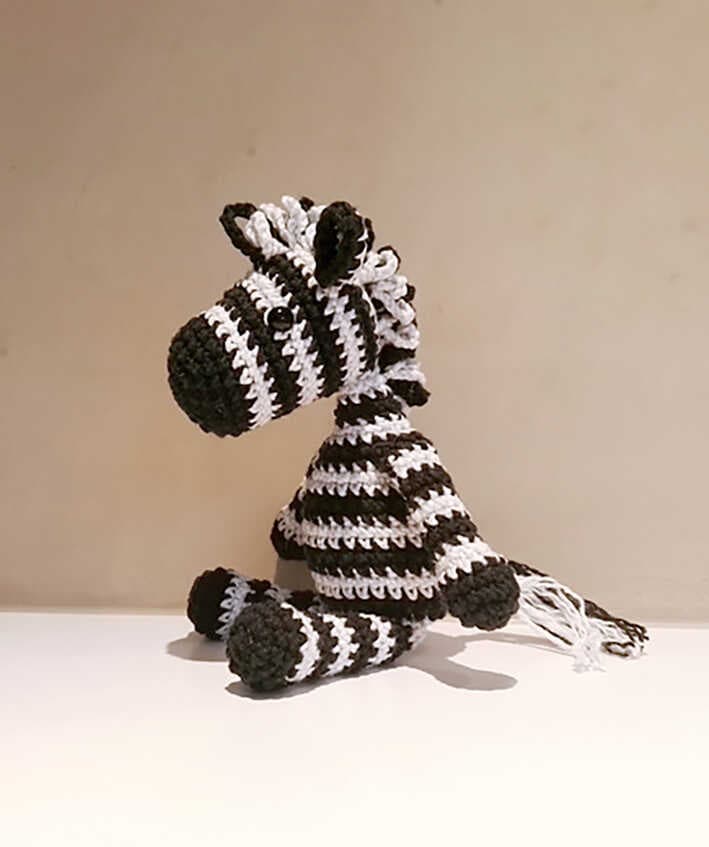
A zebra amigurumi has a built-in advantage: the stripes do the visual heavy lifting. Zaza leans into that instantly recognizable look with a compact body, a small face, and a safari-style finish that feels ready for gifting the moment it comes off the hook. It is the kind of project that stands out fast in a crowded crochet feed, but still stays practical enough for a nursery shelf, a handmade baby gift, or a cute animal make that feels a little more distinctive than the usual teddy or bunny.
Why Zaza catches the eye so quickly
The strongest part of this pattern is its silhouette. Monochrome stripes give the toy a clear identity at a glance, while the small face keeps the overall look soft and approachable. That combination is exactly what makes the zebra feel shareable and giftable at the same time: it is bold enough to notice, but simple enough to work into a clean amigurumi shape.
The pattern is framed as a lovely handmade gift idea, a nursery accent, or a soft crochet companion, and that versatility matters. A zebra can read as playful for a child, decorative for a nursery, or simply charming for anyone who likes animal projects with more personality than the standard farm-animal lineup.
Materials that keep the make accessible
Zaza uses cotton yarn, fiberfill stuffing, a 3 mm hook, and 8 mm safety eyes, which keeps the supply list pleasantly straightforward. Nothing here depends on specialty tools or unusual construction supplies, so the project stays in the sweet spot for crocheters who want a neat finish without a complicated setup.
That simplicity also helps the finished piece look polished. Cotton yarn gives the zebra a crisp structure, the fiberfill helps the compact body hold its shape, and the 8 mm safety-eye size gives the face enough definition to stand out against the alternating colors. The result is a toy that looks deliberate rather than busy, even before you add any small finishing touches.
How the striping gives the zebra its character
The stripe pattern is the detail that makes Zaza read clearly as a zebra instead of just another black-and-white amigurumi. The body follows a rhythm of two rounds in black, then two rounds in white, repeated across the form. That regular switching creates a neat safari look and gives the toy a strong graphic identity from every angle.
The head begins in black and changes to white after round five before continuing into the stripe sequence. That shift matters because it helps the face transition smoothly into the rest of the body instead of looking like a separate piece. The pattern also calls out a black nose, which gives the face a defined focal point and helps the expression stand out against the lighter sections.
For crocheters who like visual clarity in their amigurumi, that striping rhythm is a real strength. It provides structure without making the project feel fussy, and it gives you a built-in guide for where the character of the zebra starts to emerge.
A pattern that stays friendly to familiar basics
The stitch list keeps things grounded in familiar territory: magic ring, single crochet, half double crochet, increases, decreases, and slip stitches. That makes Zaza approachable if you already know the core moves of amigurumi but still want a project with enough variation to stay interesting.
Because the construction begins with the head and builds from there, the pattern feels manageable rather than overwhelming. You are working through a sequence of basic stitches and shape changes, but the stripes and facial details keep the process engaging. It is the kind of project that rewards steady attention without demanding advanced techniques.
What makes the build satisfying
The appeal here is not just the finished zebra, but the way the pattern balances ease and detail. It is easy to prepare, fun to customize, and polished enough to look intentional in a gift basket or nursery setting. That combination gives the project a broader use case than a simple novelty make.

- The compact size keeps the project gift-friendly.
- The black-and-white palette makes the zebra easy to coordinate with nursery decor.
- The basic stitch set keeps the pattern approachable for crocheters who know the fundamentals.
- The small face and stripe pattern leave plenty of room for personal finishing choices.
Where customization fits naturally
Zebras are especially good canvases for small creative decisions, and Zaza takes advantage of that. Stripe placement can be adjusted, accent colors can change the mood, eye style can be tweaked, and the final pose or accessory details can push the toy toward playful or polished.
That flexibility is part of the pattern’s charm. You can keep the visual identity classic with strict black-and-white contrast, or soften the look with subtle accent choices that make the zebra feel more personalized. Because the core structure is already strong, even small changes can make the final piece feel unique without undermining the recognizable safari theme.
A fast safari-themed make with lasting appeal
Released on June 19, 2026, Zaza fits neatly into the kind of amigurumi project that performs well with crochet audiences: cute, clear, and immediately useful as a handmade gift. It does not rely on elaborate construction to make an impression. Instead, it uses a compact body, a black nose, a simple stitch palette, and those two-round stripe shifts to create a toy that looks finished and full of character.
That is what gives the zebra its standout appeal. The stripes and safari character are visible right away, but the pattern still feels approachable enough to pick up for a relaxed make. For anyone wanting a zebra that looks charming on the hook and polished on a shelf, Zaza delivers exactly the kind of striped animal charm that makes a crochet gift feel memorable.
This article was produced by Prism’s automated news system from verified source data, official records, and press releases, then run through automated quality and moderation checks before publishing. The system is built and supervised by the people who set the standards it runs under. Read our full AI policy.
Did this article answer your question?