Flamingo Amigurumi Pattern Blends Bright Decor with Core Crochet Skills
A bright flamingo amigurumi turns a simple bird into shelf-ready decor while teaching clean increases, decreases, and sculptural shaping.
A flamingo that earns its shelf space
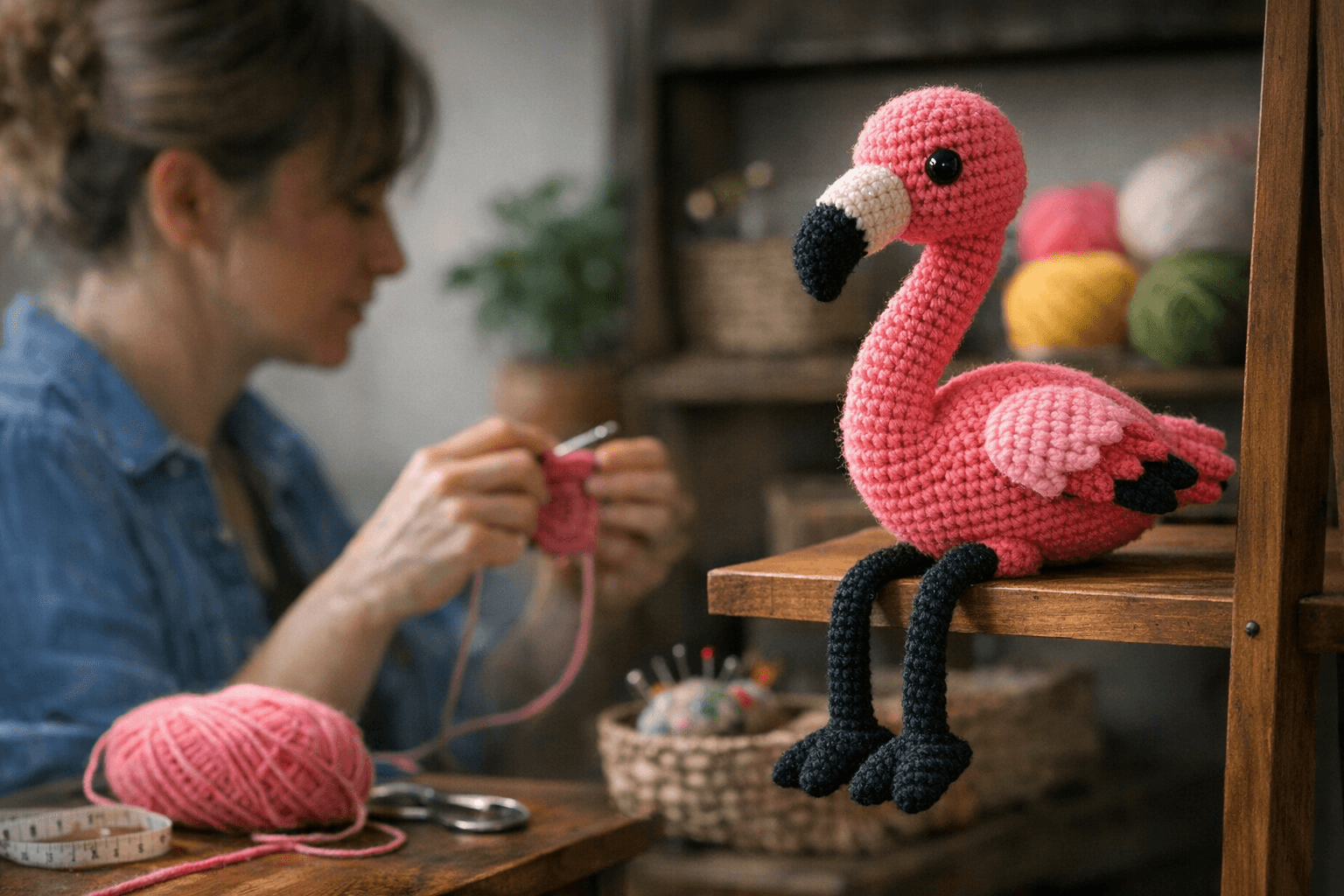
This flamingo amigurumi stands out because it is doing double duty from the start. It gives you the visual punch of a bright pink bird with a long curved neck and slim legs, but it also works as a compact lesson in the parts of amigurumi that matter most: working in the round, shaping with increases and decreases, and keeping tiny parts sturdy without making the build feel fussy.
That mix is what gives the pattern its display appeal. The finished bird is lightweight enough to tuck onto a shelf, desk, or nursery ledge, yet structured enough to feel like a finished decor piece rather than a throwaway novelty. The silhouette reads instantly as a flamingo, which is a big part of why this kind of project travels well online and lands so easily as a gift.
Why flamingos keep winning in amigurumi
Flamingos are natural showpieces. Britannica describes them as tall, pink wading birds with thick downturned bills, slender legs, long graceful necks, and short tails, and that shape language translates beautifully into crochet. Even in yarn, the bird looks elegant before the stuffing is finished, which makes it especially satisfying for makers who want a strong payoff from a relatively small project.
The real bird also brings built-in context that makes the pattern feel richer than a generic plush. National Geographic notes that greater flamingos live and feed in groups called flocks or colonies, and that young flamingos are born gray and white before turning pink over about two years. That slow color change gives the species a memorable story, while the flocking behavior makes it easy to imagine a whole handmade menagerie of flamingos lined up together.
There is also a deeper North American connection. Audubon notes that flocks of flamingos from the Bahamas regularly migrated to Florida Bay until about 1900, and National Geographic says American flamingos had not bred in Florida for over a century. That history gives the animal a surprising amount of cultural and ecological weight for a crochet project, which helps explain why it works so well as a conversation piece.
What this pattern teaches while it decorates
The strongest part of this flamingo pattern is that it never hides the technique behind the cute factor. Crochet itself developed in the 19th century from chain-stitch embroidery, and amigurumi, the Japanese art of making small stuffed crocheted or knitted creatures, became widely popular outside Japan in the early 2000s. This project fits squarely into that tradition: a small sculptural object built through control, repetition, and shaping rather than complicated assembly.
The head and neck begin with a magic circle, then expand gradually before tapering back down. That is exactly the kind of shaping that teaches you how form is created through stitch count changes, not added hardware or extra seams. If you want to sharpen your tension, practice clean rounds, and learn how to keep a long narrow piece from collapsing, this is a smart pattern to queue up.
The post also frames it as a no-sew pattern using simple stitches, which keeps the process approachable while still rewarding careful execution. It is the kind of build that feels accessible to someone who wants a fast finish, but it still asks you to pay attention to structure, especially in the neck and legs where stability matters most.

Materials that support a polished result
The materials list keeps the project focused and compact. You will want pink, black, and white yarn, stuffing, a tapestry needle, and 12 mm safety eyes, along with a small hook in the 2.5 to 3.0 mm range. The listing also mentions a 4.25 mm hook and simple stitches, so the pattern clearly leans into straightforward construction while giving you enough flexibility to aim for a tighter or softer fabric depending on your tension and yarn choice.
That small-hook approach is part of what gives the bird its crisp finish. A tighter stitch makes the curves of the neck, the bill, and the legs read more cleanly, which matters when the whole appeal of the piece rests on shape and silhouette. If you want the flamingo to look polished on a shelf rather than floppy in a basket, the compact gauge helps.
- The pink, black, and white palette gives the flamingo instant recognition.
- The 12 mm safety eyes create a bold expressive look.
- The no-sew structure keeps the finish neat and efficient.
- The small scale makes it suitable as a quick gift or room accent.
A few practical features make this project especially useful:
A quick project with real display value
This is the kind of pattern that feels easy to justify because it solves more than one crafting need. You get a quick make, a decorative result, and a project that can sit comfortably among other handmade animals without looking like filler. For anyone building a menagerie, the flamingo adds height and visual contrast, especially next to lower, rounder plushes.
Its shelf value is not an accident. The bright color, familiar bird shape, and upright neck create a clean outline that reads well from across a room. That makes it work as a gift for a nursery, a desk accent, or a cheerful addition to a handmade display where you want one object to pull the eye immediately.
One important safety note
The pattern’s use of 12 mm plastic safety eyes calls for careful framing. The U.S. Consumer Product Safety Commission says children’s products intended for use by children under 3 that present choking, aspiration, or ingestion hazards because of small parts are banned hazardous substances. That means this kind of crochet toy is best positioned as a decorative piece, collectible, or supervised gift rather than a baby toy.
That does not make the project less useful. It simply clarifies where it shines most: as a bright, sculptural flamingo that looks good on display and gives you real amigurumi practice at the same time. For makers who want something that is both charming and technically worthwhile, this pattern lands exactly where it should.
This article was produced by Prism’s automated news system from verified source data, official records, and press releases, then run through automated quality and moderation checks before publishing. The system is built and supervised by the people who set the standards it runs under. Read our full AI policy.
Did this article answer your question?