Foshan mother sells crochet goods, locals rally to support son
A Foshan mother sold crochet goods beside her son’s wheelchair, and neighbors returned with extra money after seeing what her sales were paying for.
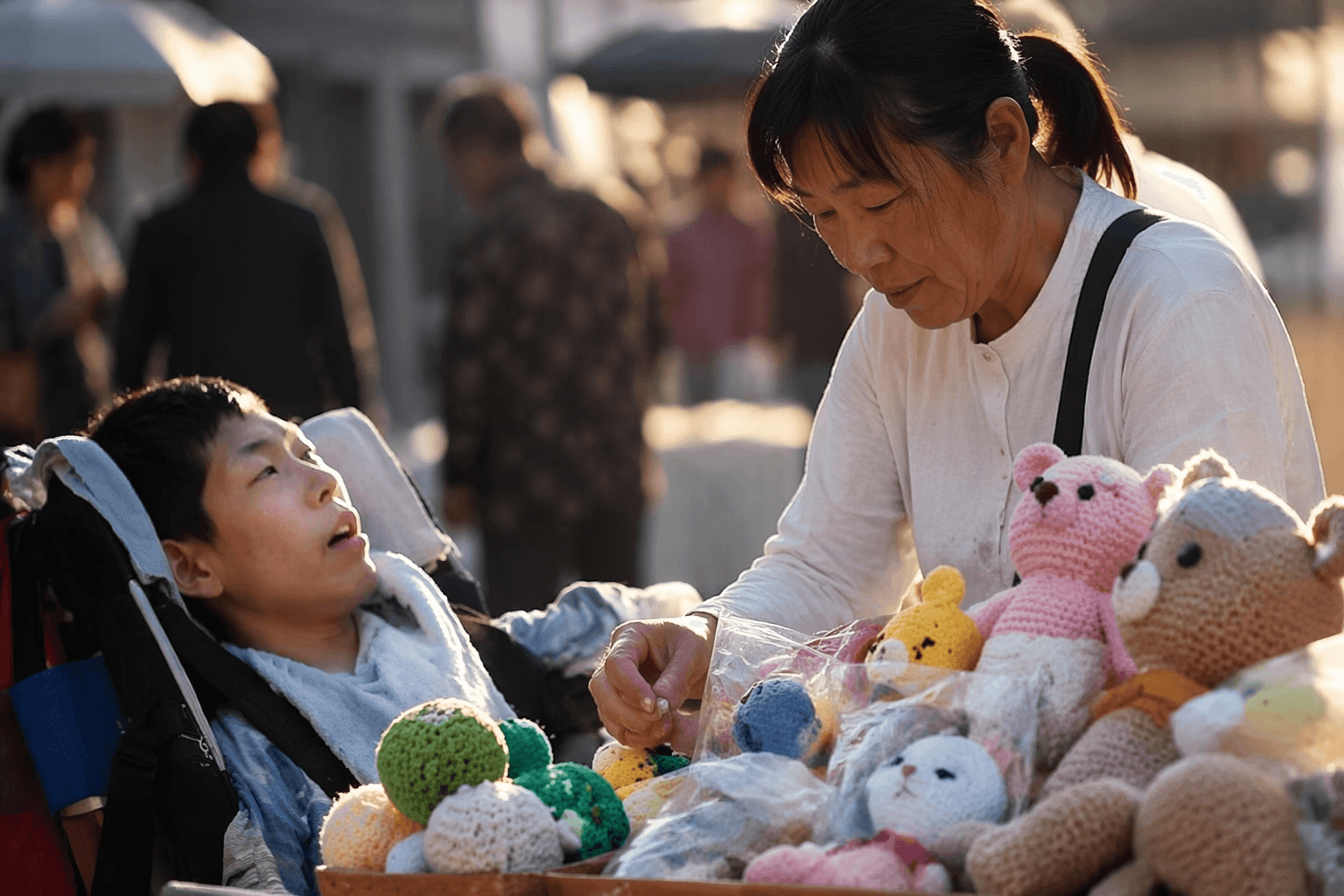
Her crochet table in Foshan carried more than handmade goods. It carried the cost of a son’s care, as a single mother sold small crocheted pieces on the street beside the wheelchair her child used while fighting a rare genetic disease.
The scene was plain and direct: a mother working in public, a son sitting close by, and a craft that had to pull double duty as income and survival. In a family medical crisis, crochet became one of the few flexible ways to earn money while still staying close enough to provide care.
After the story spread, more local people came to support her. Some customers did not just buy a piece at the listed price, they paid far more, turning a roadside sale into a shared act of help. For a maker selling by hand, that kind of response can mean far more than a single transaction. It can mean another week covered, another treatment paid for, another day kept steady.
The larger picture is just as stark. Rare-disease families often carry heavy caregiving and financial burdens, and the need reaches far beyond one street in Foshan. China has built a collaborative rare-disease hospital network covering all provincial-level regions, with 419 hospitals taking part in case referrals, telemedicine and data sharing. That system has been described as cutting the average diagnostic time for rare diseases from four years to less than four weeks, while slashing costs by 90 percent. Worldwide, an estimated 300 million people live with a rare disease, along with their families and carers.
That is why the small details in Foshan mattered so much: a wheelchair parked beside a mother’s sale, a handful of crocheted goods, and neighbors who chose to pay more than asked. The craft was never just craft. It was the margin that kept a family going, one sale at a time.
This article was produced by Prism’s automated news system from verified source data, official records, and press releases, then run through automated quality and moderation checks before publishing. The system is built and supervised by the people who set the standards it runs under. Read our full AI policy.
Did this article answer your question?