Free Beginner Octopus Keychain Pattern Crochets Up in Under 30 Minutes
Built for scrap yarn and a spare half-hour, Amigurumi.Today's free octopus keychain is the sub-30-minute stash-buster your project queue has been waiting for.
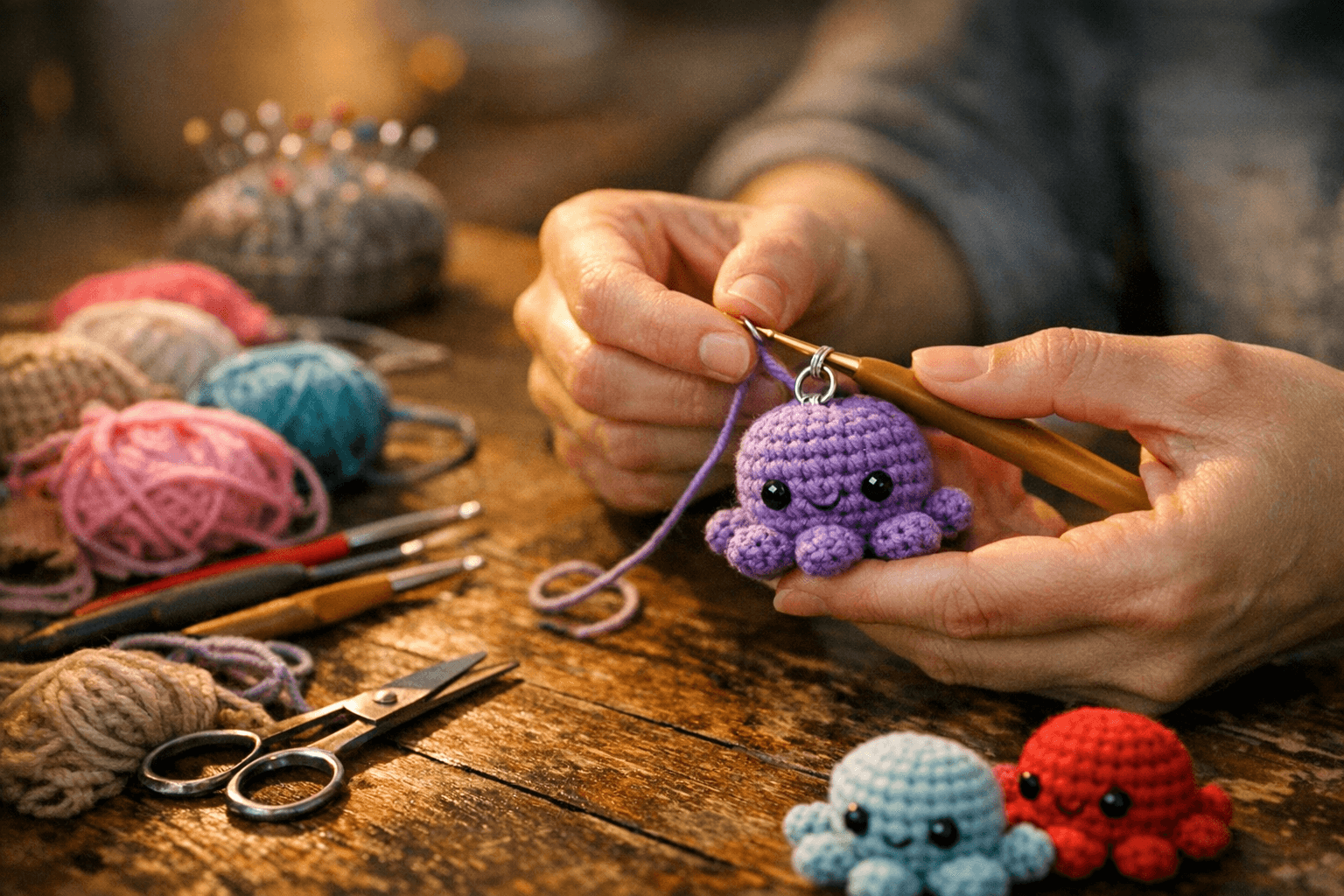
There are weekend-long blanket commitments, and then there are the small, satisfying makes that fit inside a lunch break. Amigurumi.Today's free beginner octopus keychain pattern lands squarely in the second category. Published on March 31, 2026, the pattern promises a fully finished, 8 cm (3-inch) amigurumi octopus keychain in under 30 minutes, making it one of the most genuinely quick wins in the toy-crochet world right now.
The Pattern at a Glance
Amigurumi.Today functions as an aggregator and host for free amigurumi patterns, and this octopus keychain fits the site's core appeal: well-specified, beginner-accessible designs that don't demand a deep materials investment. The pattern is rated explicitly for beginners, and the 30-minute time estimate isn't marketing fluff; it's backed by the material choices and construction scope. The finished octopus stands approximately 8 cm tall using the recommended yarn, compact enough to dangle from a bag or keys without bulk, large enough to be genuinely satisfying to make.
The pattern is also pitched as a scrap-buster, which is one of the most useful designations a short amigurumi project can have. If you've been staring at leftover skeins from a larger plush project, this is the make that clears the shelf.
Materials You'll Need
The materials list is tight and purposeful. Here's what the pattern specifies:
- Bulky (weight 5) plush yarn, with Himalaya Dolphin Baby listed as the recommended brand
- A 4.0 mm crochet hook
- 10 mm safety eyes
- White felt
- Fiberfill stuffing
- Black embroidery floss
- Fabric glue
- A tapestry needle and scissors
The choice of Himalaya Dolphin Baby is worth noting. It's a chenille-style plush yarn that works up quickly at bulky weight, gives amigurumi a soft, tactile finish, and is widely available in dozens of colorways; perfect for a project where your leftover scraps might include half a ball in any color. The 4.0 mm hook pairs with that yarn weight to produce a tight, stuffing-concealing fabric without being difficult to maneuver for newer makers.
The white felt and fabric glue suggest some surface detailing on the face or tentacles, while the black embroidery floss handles any stitched features. It's a practical, low-cost toolkit that most crocheters with a small stash will already have on hand, or can source cheaply.
Construction Notes
At 8 cm tall, this octopus is built to be small and efficient. The pattern page includes a finished-size estimate based on the recommended materials, so if you substitute a different plush yarn or hook size, expect some variation in the final dimensions. Beginners should stick close to the specified materials on a first pass to hit that sub-30-minute window; once you know the construction, swapping yarn weights for a chunkier or more miniature version becomes a natural next experiment.
The amigurumi construction approach, working in continuous rounds with safety eye placement and fiberfill stuffing, is the foundational technique for anyone new to toy crochet. This pattern uses that standard method in a compact form: a body with integrated or attached tentacles, surface embellishments using the felt and floss, and a keychain attachment to finish. It's structured to teach core amigurumi skills without overwhelming a beginner with complex shaping.
Accessing the Pattern
The free online pattern is available on Amigurumi.Today's website, but it requires creating a free account to access the full instructions. This is a standard setup for pattern-aggregator platforms, which use account registration to manage their free-and-premium library model. If you've used similar sites before, the sign-in step is a one-time, low-friction process.
For makers who prefer working from a printed sheet or an ad-free digital file, Amigurumi.Today also sells a paid PDF version through their shop. The PDF option is ideal for craft-fair prep, where you might be working away from a screen, or for anyone who likes to annotate a pattern with row counters and stitch markers in the margins.
Why This Pattern Matters to Your Makes
Quick amigurumi patterns with a defined scrap-yarn use case occupy a specific and genuinely valuable niche in the toy-crochet ecosystem. For makers building craft-fair stock, a sub-30-minute keychain is a high-volume, low-overhead product that fills display space and offers a low price-point impulse buy for shoppers. For hobbyists at a social stitching circle, it's the kind of project you can start and finish in one sitting and hold up at the end of the evening with something to show.
The portability factor compounds this. A small ball of plush yarn, a 4.0 mm hook, and your phone screen is everything you need; this pattern travels well to waiting rooms, commutes, and any other interstitial time you'd otherwise lose. Amigurumi.Today also points makers to their Instagram account for community examples and colorway variations, which means there's a living gallery of how other crocheters have interpreted the pattern, a useful reference when you're deciding which scraps to pull from your stash.
For newer crocheters especially, fast projects like this one serve a function beyond the object itself. Finishing something completely, including the embellishment details and the final keychain attachment, builds the muscle memory and confidence that longer projects demand. An octopus keychain that takes under 30 minutes delivers that full arc of a project, cast-on to finished object, in a single session.
At 8 cm and under half an hour, it's small in scale but not in usefulness.
This article was produced by Prism’s automated news system from verified source data, official records, and press releases, then run through automated quality and moderation checks before publishing. The system is built and supervised by the people who set the standards it runs under. Read our full AI policy.
Did this article answer your question?