Free crochet wrap and shawl patterns for every season
Wraps and shawls are the easiest entry into crochet garments, teaching gauge, drape, and shaping without the pressure of a fitted sweater.

Lion Brand Yarn’s free wrap collection includes patterns called the Beginner’s Triangle Shawl and the Easy Triangle Shawl, alongside more textured, season-spanning layers. Wraps and shawls are often the first garment that lets you learn in public without feeling exposed. They are forgiving enough to feel approachable, but they still teach the real mechanics of clothing: how fabric falls, where shaping happens, and whether a piece actually stays put on the shoulders. Free pattern libraries from Lion Brand Yarn and Yarnspirations show how broad that category can be.
Why wraps make such a good first garment
A wrap gives you garment construction without the anxiety of sleeve caps, waist shaping, or precise bust fit. The same project can feel airy and open in summer, then warm and insulating when worked in denser yarn for cooler weather. A shawl can look simple on paper, but the way it sits on the body depends on stitch consistency, shaping, and the balance between width and length.
Interweave treats rectangles, asymmetrical triangles, symmetrical triangles, circular shawls, and semi-circular shawls as distinct construction choices.
Start with gauge, because drape starts there
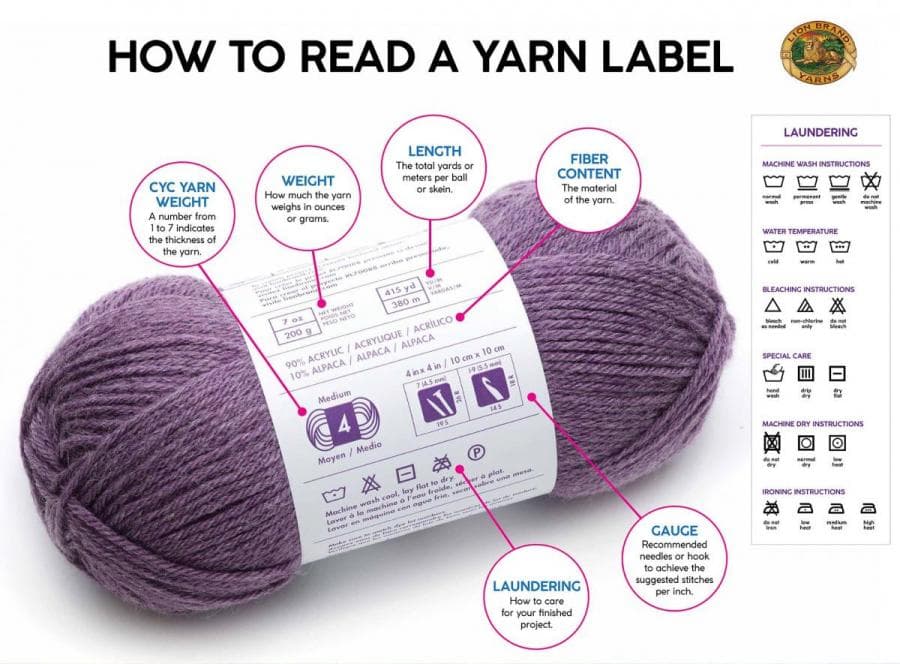
The biggest beginner mistake with a shawl is thinking that because it is loose, gauge does not matter. The Craft Yarn Council recommends a gauge swatch before beginning a project, and exact gauge is essential for proper size or fit. Its general rule is a 4-inch by 4-inch swatch unless the pattern says otherwise, which gives you a simple checkpoint before you commit to yards of fabric.
That matters even more with wraps than with many other accessories. A slight shift in gauge can change how the fabric hangs, whether it settles across the shoulders, and how comfortably it layers over a shirt or coat. Yarnspirations’ free shawl patterns list gauge swatches and finished measurements, the kind of detail that keeps a project from turning into a beautiful but awkward rectangle.
Choose yarn for the fabric you want, not just the color you love
The Craft Yarn Council’s standard yarn weight system gives crocheters a common language for yarn, with weights numbered from 0 through 7, where 0 is the finest and 7 is the thickest. Its labeling system also uses standardized symbols to keep yarn, hook, and pattern information uniform, which is especially helpful when you are matching a free pattern to whatever is already in your stash. That framework makes it easier to compare yarns across brands without guessing.
For a standard wrap, smoother medium-weight yarns usually give the cleanest fabric and the clearest stitch definition. For chunkier designs, larger hooks help the stitches open up so the finished piece does not feel stiff or heavy. Fiber choice changes the feel just as much: wool brings warmth, cotton breathes, and blends can strike a balance between softness and structure. Yarns with a subtle drape and sheen make comfortable shawls.
Read the shape before you cast on
Shawl design comes down to geometry. A rectangle is the most straightforward place to begin, because the shaping is simple and the fabric teaches you how stitch consistency affects width and edge behavior. Triangles, especially symmetrical triangles, introduce increase placement in a way that is easy to see as you work.
Asymmetrical triangles are especially useful if you want to understand how off-center shaping changes the way a shawl falls around the neck and front body. Circular and semi-circular shawls add another layer, since they teach you how shape can create a softer wrap around the shoulders without the sharp point of a triangle. Those shapes change how the garment falls once it is worn.
Free pattern collections give you room to match skill to season
The free shawl and wrap collections at Lion Brand Yarn include both crochet and knit designs, but the crochet side is especially helpful for newer makers because some patterns are clearly labeled beginner or easy. That kind of labeling is valuable when you are trying to decide whether you want a calm first project or something with a little more texture and pace.
Yarnspirations takes a similar approach, with beginner-level shawl patterns that emphasize the practical details that affect the final result. Finished measurements and gauge swatches keep the focus on fit and drape rather than only on stitch pattern. The range runs from summer layers and winter wraps to simple learning shapes and patterns for lace, stripes, and color play.
A craft with deep roots, and a modern on-ramp
The origins of crochet are murky, and extant pieces are nearly nonexistent before the nineteenth century. Irish crochet developed rapidly in 1845 during the Irish famine as a cottage industry tied to lace making.
The Crochet Guild of America bills itself as the only national nonprofit organization dedicated to crochet and as setting a national standard for the craft. Its beginner tutorials and basic stitch instruction, offered for both left-handed and right-handed crocheters, give newer makers a place to build confidence before they take on more complex garments.
This article was produced by Prism’s automated news system from verified source data, official records, and press releases, then run through automated quality and moderation checks before publishing. The system is built and supervised by the people who set the standards it runs under. Read our full AI policy.
Did this article answer your question?