Koniaków lace, Poland's unique crochet tradition, finds new fashion life
Koniaków lace is moving from mountain kitchens to fashion collections, raising new questions about who stewards a craft found nowhere else on earth.

Koniaków’s lace is no longer staying quietly in mountain homes. In the Beskid Śląski hills of southern Poland, near the Czech and Slovak borders, a hand-crocheted tradition that has lasted more than 140 years is now appearing in modern fashion, drawing outside designers into a craft rooted in local women’s labor, patience, and pride.
A lace tradition with no duplicate
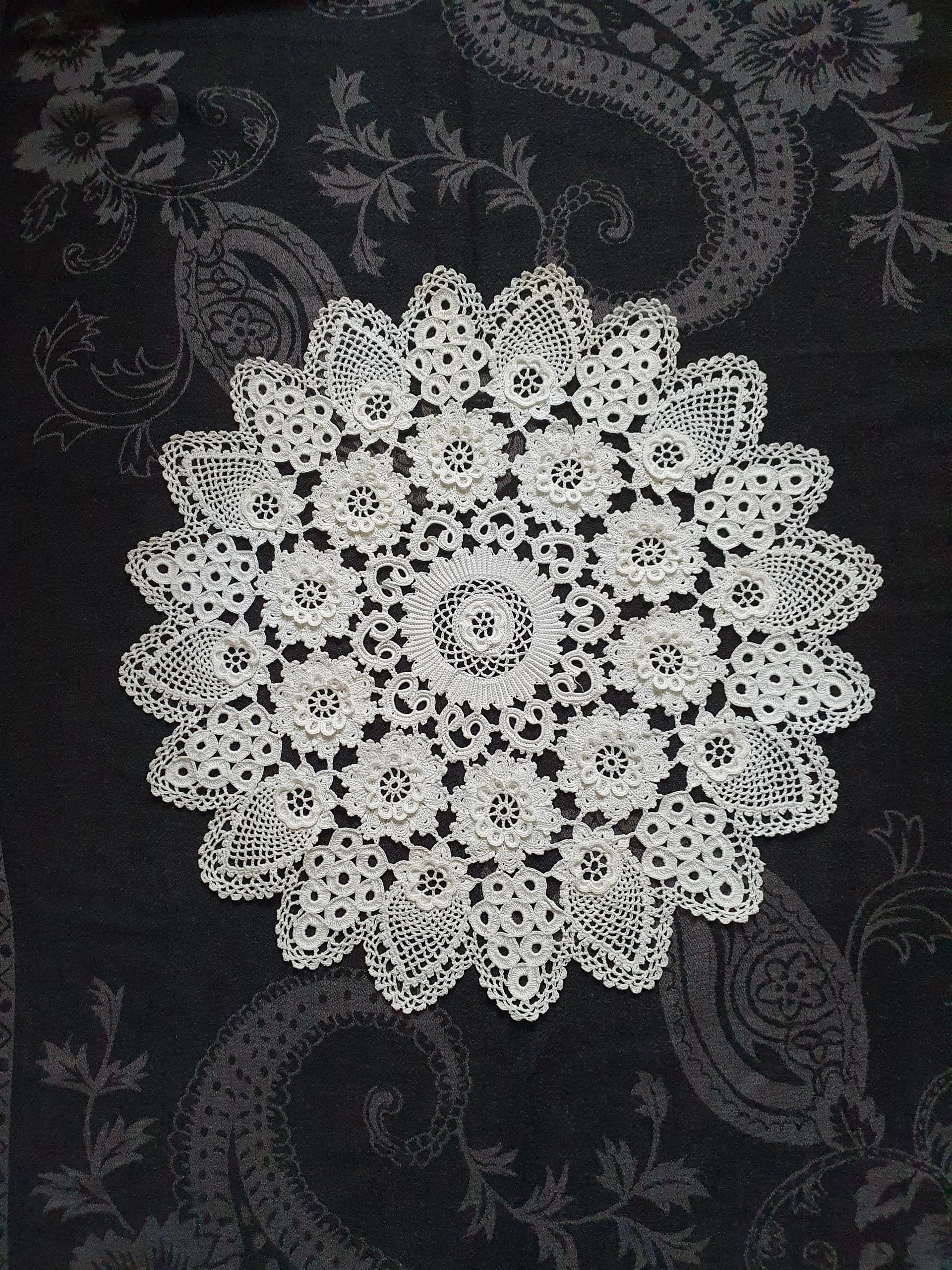
Koronka koniakowska, also called heklowanie, is made by hand with very fine cotton thread known as kordonek. The technique belongs to Koniaków alone: it is not made in any other region of Poland, and not in any other place in the world. That singularity is part of why the lace has become so closely tied to the identity of the village itself, where generations of women have kept the work alive in homes, kitchens, and workshops.
The lace’s reputation was built through objects that traveled well beyond the village. Tablecloths, altar cloths, and clothing elements carried Koniaków’s name into churches, households, and collections, giving the lace a life far beyond its original setting. What began as a local craft in a mountain community became a recognizable mark of place, skill, and inheritance.
The women behind the stitches
This is a women’s tradition in the most literal sense: the making, passing down, and safeguarding of the lace has depended on women in Koniaków. Their work has preserved not just a technique, but a social rhythm, one in which knowledge moves from one generation to the next through making rather than manuals. The phrase “from generation to generation” is not a slogan here, but the logic that has carried the craft for well over a century.
The tradition is also visible in the names now associated with its public face. Lucyna Ligocka Kohut founded the Koniaków Lace Foundation and later opened the Koniaków Lace Museum and Cultural Center. Other key figures connected to the tradition include Jan Kukuczka, Beata Legierska, Maria Gwarek, Piotr Gliński, Wanda Zwinogrodzka, and Agnieszka Komar-Morawska, all tied in different ways to the preservation, recognition, and presentation of the lace.
From domestic craft to cultural institution
The Koniaków Lace Museum and Cultural Center opened on April 15, 2019, giving the tradition a permanent home beyond private households. The center now works as a museum, exhibition space, learning environment, and community hub for artisans of all ages, which matters in a craft where continuity depends on practice, not display alone.
That shift changes the way the lace is seen. A tablecloth or altar cloth can hang in a home or church for years, but a museum setting places the same work into public view as heritage, technique, and living skill. The center’s role is not only to preserve finished pieces, but to keep the making visible, teachable, and socially shared.
Recognition came before the fashion moment
The Polish state has already treated koronka koniakowska as more than a decorative specialty. In 2017, it was entered on the Republic of Poland National List of Intangible Cultural Heritage, a formal acknowledgment that the practice belongs among the country’s living traditions. Then in 2022, it received a geographical indication from the Polish Patent Office, the only such designation in Poland for this craft.
Those protections matter because they name the lace as rooted in Koniaków itself, not as a generic style that can be detached from place. That is especially important now that the lace is drawing interest from the fashion world, where local forms often become global style references quickly, sometimes without the same attention to origin or continuity.
Fashion has entered the frame
International fashion designers have begun incorporating Koniaków lace into modern collections, a development that has given the tradition a new audience and a new set of pressures. The appeal is obvious: the lace is delicate, intricate, and immediately recognizable, with the kind of handwork that can stop a clothing rack cold. But once it enters fashion, the question changes from how to admire it to how to sustain it.
The village’s makers now sit at the center of a familiar tension in craft culture. Wider visibility can bring income, recognition, and stronger pride in a local practice. It can also flatten the meaning of the work if the lace becomes only a visual effect, detached from the women and the mountain community that produced it.
Why this tradition keeps traveling
Koniaków lace keeps moving because it has always lived between use and display. It was made for households and churches before it was made for museums, and it now appears in workshops, exhibitions, fashion shows, lectures, and conferences that connect local makers with broader audiences. That range is part of its resilience: the craft is not frozen in one form, but continually reintroduced in new settings.
What makes the tradition especially striking is that its modern visibility has not changed its basic material logic. It is still hand-crocheted, still made with kordonek, still tied to Koniaków, and still carried by the women who learned it as family knowledge rather than as a trend. The village may now be speaking to the global fashion world, but the lace still begins where it always has, with a hook, a thread, and a maker in the Beskid Mountains.
This article was produced by Prism’s automated news system from verified source data, official records, and press releases, then run through automated quality and moderation checks before publishing. The system is built and supervised by the people who set the standards it runs under. Read our full AI policy.
Did this article answer your question?