Michelle Moore shows how to change crochet colours cleanly
Michelle Moore’s colour-change lesson takes the guesswork out of neat stripes, showing exactly when to swap yarn, carry it, and keep the back of the work tidy.
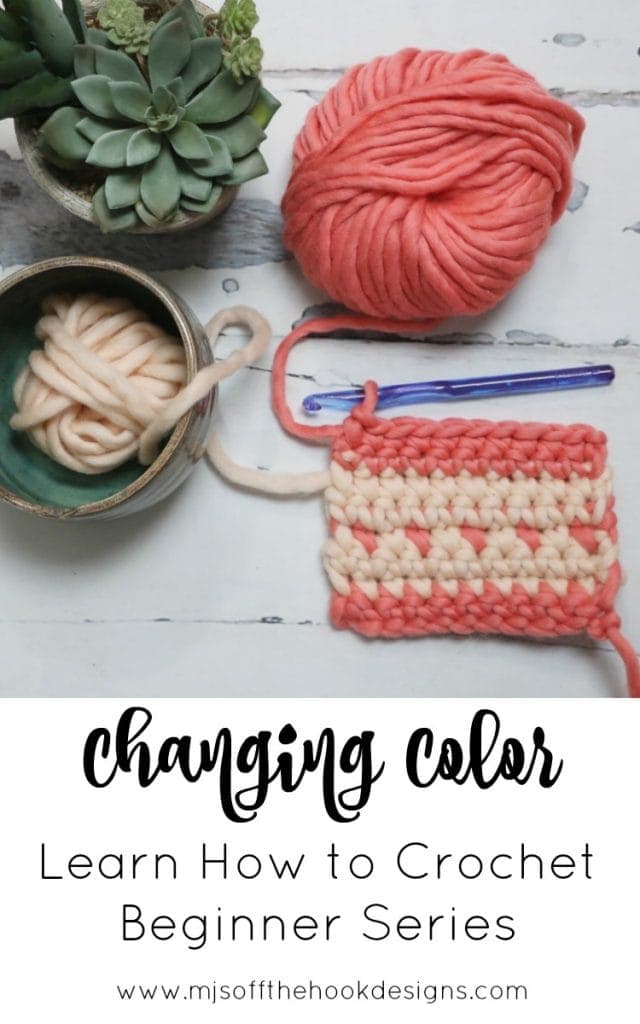
Michelle Moore turns one of crochet’s messiest-looking moments into a simple, repeatable habit: change the colour at the point where the join can disappear, then keep the tension steady enough that the back of the fabric still behaves. Her Learn to Crochet lesson on MJ’s Off The Hook Designs is built for beginners, but it also speaks directly to makers chasing cleaner stripes, smoother colourwork, and fewer ends to deal with later. The tutorial includes a step-by-step video and a practical materials list: worsted-weight yarn, a 5.5 mm hook, scissors, and a yarn needle.
Start where the join is least likely to show
The cleanest swap usually happens at the edge of a row, not in the middle of the fabric. The Craft Yarn Council says the best time to add new yarn is at the beginning of a row because the join is less visible, and Moore uses that logic to keep transitions neat from the start. That timing matters because a colour change can look obvious when it lands in the wrong place, especially in a striped piece where every wobble catches the eye.
The basic handoff is straightforward. Work the stitch until only the final two loops remain on the hook, drop the old yarn, and draw up the new colour to finish the stitch. That is the moment where the new shade becomes part of the fabric without leaving a bulky interruption, and it is the same final-step logic Moore shows when she switches colours on the last yarn over.
The cleanest method, step by step
Moore’s approach is useful because it breaks the swap into a few exact moments that are easy to repeat on real projects. If you can keep these steps consistent, the result looks deliberate rather than improvised.
1. Work across the row until you reach the last stitch or the point where the pattern calls for the change.
2. Leave the final two loops on the hook.
3. Drop the old yarn and draw up the new colour through those loops.
4. Keep the tension even so the stitch does not pinch or gape.
That same rhythm applies when you change colour through the centre of a row, not just at the edge. Moore shows both the middle-row change and the end-of-row switch, which matters because many beginner patterns eventually ask for colour changes in places where the timing feels less obvious. Once the movement becomes familiar, the swap stops feeling like a risk and starts feeling like another part of stitch control.
Carry yarn with control, not guesswork
Moore also leans on a time-saving trick that experienced crocheters use constantly: carrying yarn up the side of the work so the back stays manageable. That is especially helpful in multicolour fabric where the same shades repeat close together, because the Craft Yarn Council says carried yarn can be used when the repeat is fairly close. The catch is tension. If the carried yarn is pulled too tight, the side of the work can pucker; if it is left too loose, it leaves a messy loop that snags or shows.
There is a benchmark that makes the decision easier. The Craft Yarn Council says that if yarn is carried more than 3 or 4 stitches, it should be caught into the work every 2 or 3 stitches. That gives you a concrete rule for keeping floats and carries under control instead of relying on instinct alone. Moore’s warning about loose or tight carried yarn fits neatly with that advice, because the back of the project is where many beautiful colour changes first start to go wrong.

Even the tail matters. When joining a new ball or skein in the same colour, the Craft Yarn Council recommends a 6-inch tail. That extra length gives you enough material to secure the join cleanly instead of fighting a short end that slips before it is woven in.
Why colour changes can make or break the fabric
The reason this technique matters goes beyond one tidy join. Clean colour changes are the foundation for stripes, graphghans, and the kind of colourwork that looks polished from the front and under control from the back. The Crochet Crowd’s graph-afghan series, which covers reading crochet graphs, preparing for colour changes, and designing your own graphs, shows how central this skill is to logo-style blankets and other patterned pieces.
Interweave places that same skill inside a broader map of crochet colourwork. It identifies four major approaches: stranded, tapestry, mosaic, and intarsia. In stranded colourwork, multiple colours are worked in the same row and the unused yarn runs along the back as a strand, so float control is essential if you want to avoid puckering. Tapestry crochet is often one of the easiest colourwork methods for geometric designs because the unused yarn is carried across the row and worked over. Intarsia, by contrast, suits larger, isolated colour blocks because it avoids carrying yarn across the whole row, and the yarn flip helps keep the wrong side from developing the vertical stranding seen in other methods.
That is why Moore’s lesson is more than a single technique demo. It gives you the clean swap that every one of those methods depends on, whether you are adding a stripe, shaping a charted motif, or simplifying a pattern so the back of the work stays neat.
What to watch as you practice
The most common mistakes are still the simplest ones, which is why this lesson feels so practical. Keep an eye on these trouble spots:
- Pulling carried yarn too tightly and distorting the edge
- Leaving carried yarn too loose so it loops or catches
- Forgetting to keep tails on the correct side of the work
- Changing colours too often when the pattern could be simplified
Those are the moments where confidence usually slips, and they are exactly the moments Moore’s tutorial helps you control. Once the swap feels automatic, the rest of the project gets easier, because stripes sit straighter, colour blocks read more clearly, and the back of the fabric stops demanding constant rescue.
A clean colour change is one of those small skills that changes the look of everything around it. Moore’s lesson shows that the trick is not forcing the yarn to behave, but meeting it at the right point in the stitch so the join fades away and the fabric can do the rest.
This article was produced by Prism’s automated news system from verified source data, official records, and press releases, then run through automated quality and moderation checks before publishing. The system is built and supervised by the people who set the standards it runs under. Read our full AI policy.
Did this article answer your question?