Phoenix Brand Krojay Launches Kickstarter for Luxury Handmade Crochet Sneakers
Krojay founder Jayson Lang says his luxury handmade crochet sneaker idea was born in a federal prison hallway, and he's now taking it to Kickstarter.
Jayson Lang didn't find his big idea in a design studio. He found it walking down a prison hallway.
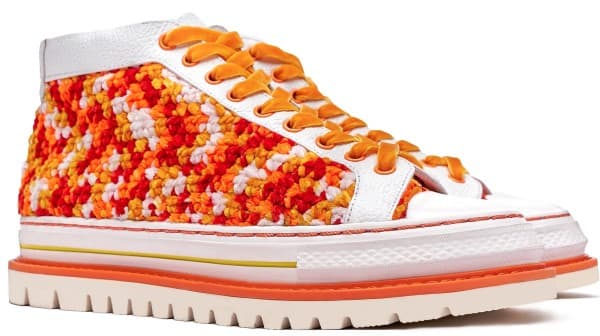
Lang is the founder of Krojay, a Phoenix-based brand that launched a Kickstarter campaign this past week positioning itself as the world's first luxury handmade crochet sneaker label. The campaign, announced April 3, aims to scale production and push the brand into new markets after early local success.
The product itself is a hybrid that crochet makers will immediately recognize as technically ambitious: a fully handmade crocheted upper bonded to a recycled-rubber sole, with a memory-foam insole underneath. The uppers are machine washable, the polyester components are made from recycled materials, and the construction includes leather accents and velvet laces. Two years of prototyping went into balancing those elements before Krojay moved toward a public campaign.
Lang's origin story is as unconventional as the product. "While walking down the hall of a federal prison where all the colors are drab and boring, I saw a bright-colored adult-sized crochet booty attached to a prison flip-flop sole, and Krojay was born." That moment of color in a colorless environment apparently sparked two years of iteration to turn a scrappy improvised shoe into something positioned at the luxury end of the handmade market.
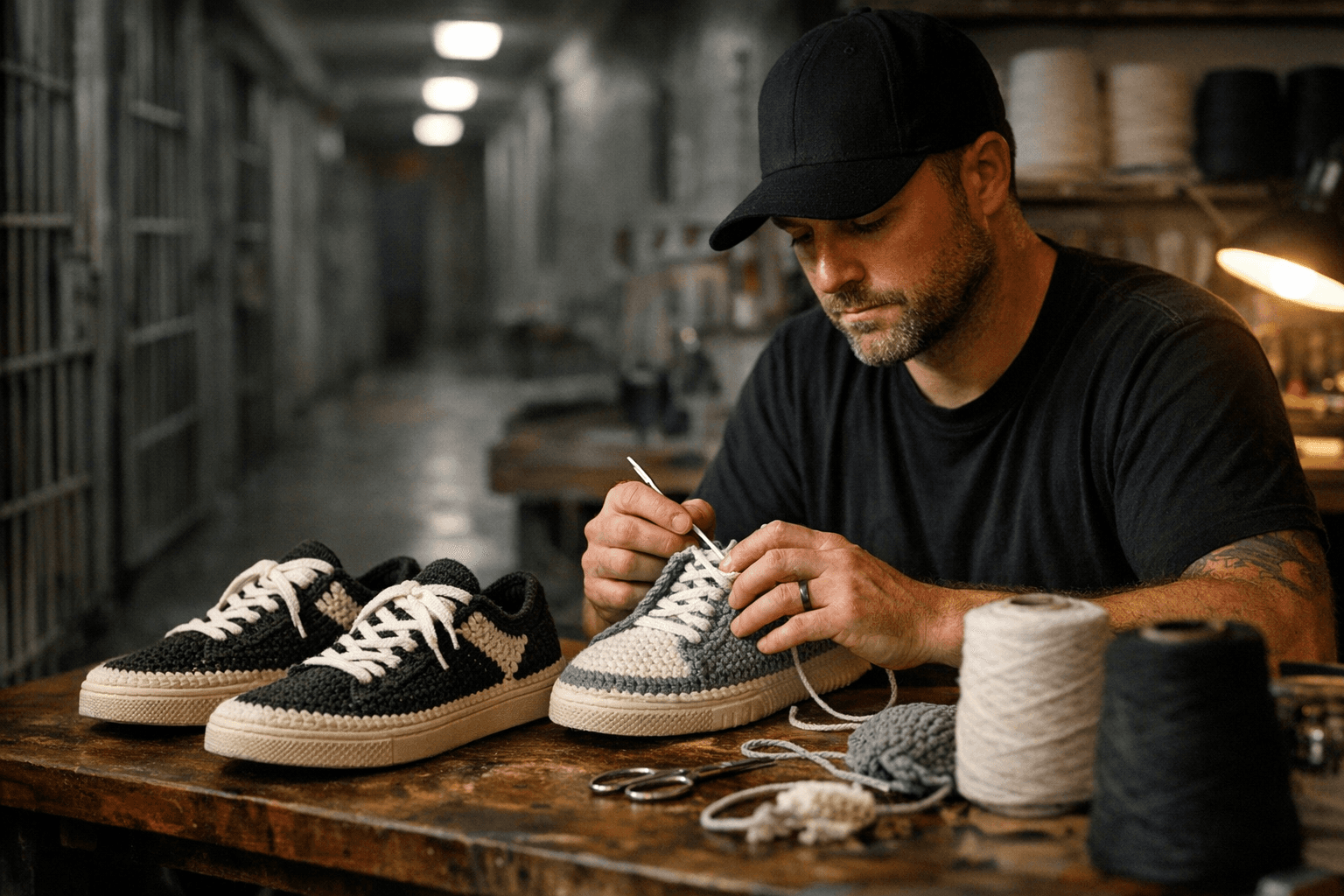
For crochet makers, the technical questions Krojay raises are as interesting as the business angle. Adapting crochet into a product-grade wearable means solving problems that don't come up in blankets or amigurumi: stitch density under lateral stress, sole attachment methods that survive repeated wear, and reinforcement strategies that preserve shape without stiffening the upper. The machine-washable claim in particular is worth watching, since many crochet constructions degrade with repeated washing depending on fiber content and construction method.
The Kickstarter model is a smart fit for this kind of artisanal product. Handmade crochet at scale is labor-intensive almost by definition, and a campaign allows Lang to gauge real demand before committing to production volume. If the campaign gains traction, it could signal genuine consumer appetite for higher-ticket handmade crochet apparel, opening up licensing and collaboration angles for makers combining crochet skill with product design in categories like bags, sandals, and textile-laminate accessories.
Whether the sustainability positioning, recycled rubber soles, recycled-material polyester, is enough to move buyers past the novelty factor and into repeat purchases is the real test ahead.
This article was produced by Prism’s automated news system from verified source data, official records, and press releases, then run through automated quality and moderation checks before publishing. The system is built and supervised by the people who set the standards it runs under. Read our full AI policy.
Did this article answer your question?