Rainbow whale crochet pattern shapes a sculptural shelf toy
This whale pattern nails the hardest amigurumi trick, a seamless head-to-body silhouette that still reads as a whale, then turns it into a rainbow shelf piece.
The silhouette is the whole game
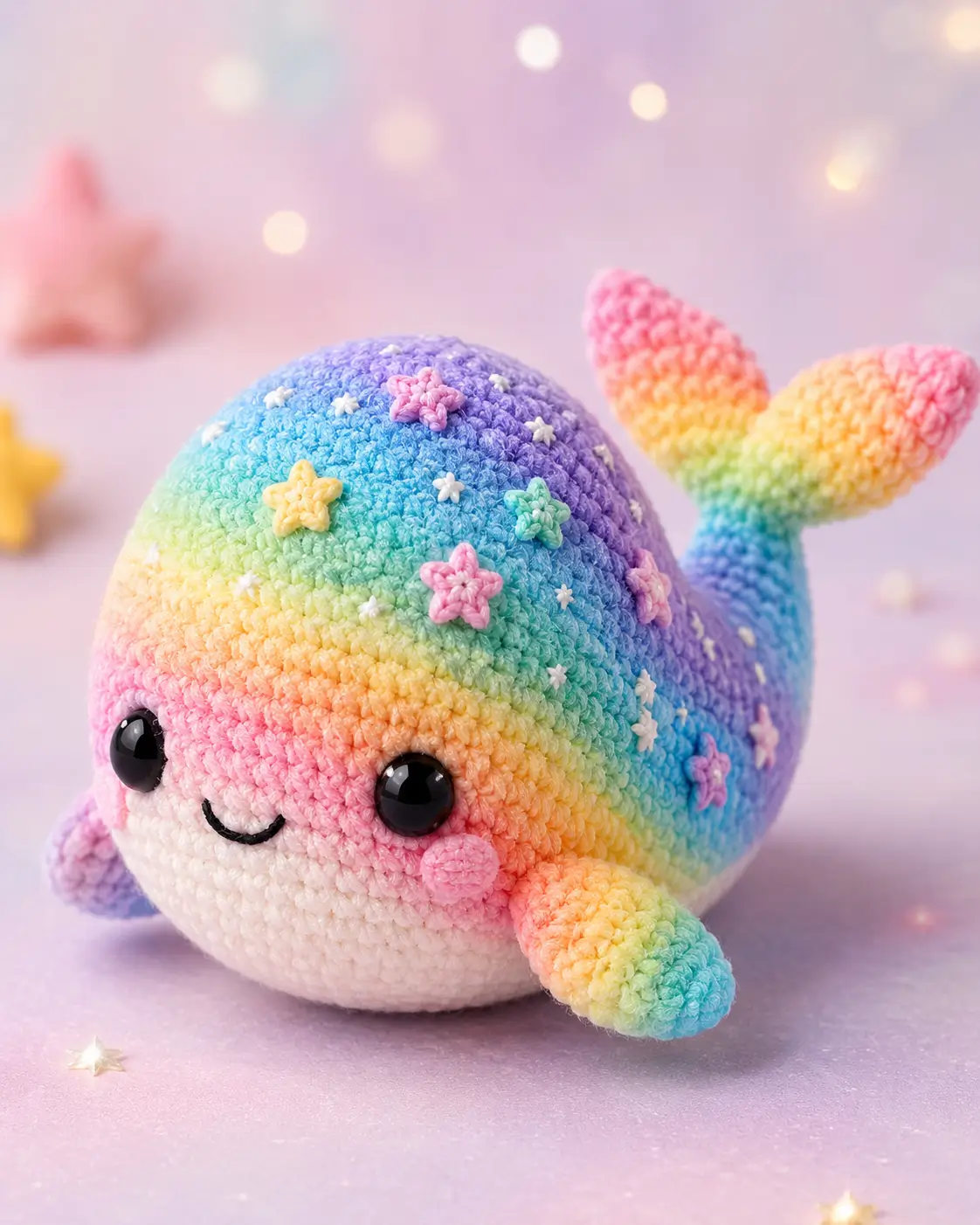
The smartest thing about this rainbow whale is that it solves the one problem that trips up a lot of whale amigurumi: whales do not have a visible neck, but they still need to read as whales and not soft little balls. This pattern gets there by separating the front dome from the rear taper, so the face stays rounded while the back end lifts into the body and tail line.
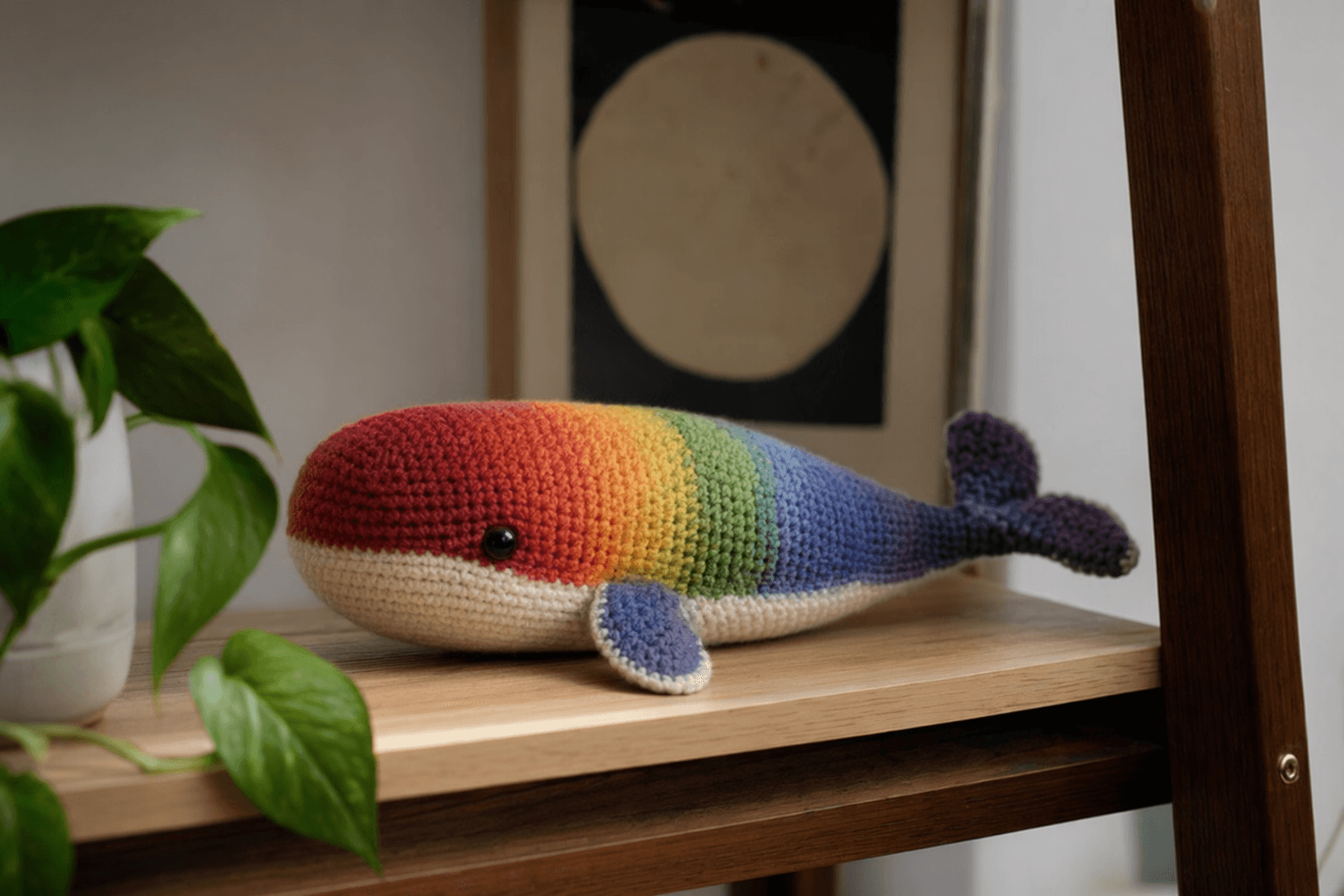
That sculptural choice is what makes the finished piece feel deliberate instead of generic. The result is a shelf-size whale, about 15 cm long, built for nursery decor or an ocean-themed display, and it has enough shape discipline to stand out even if you already have a drawer full of sea creatures.
Why the construction works
The pattern is labeled advanced beginner, and that feels right. The shaping itself is manageable if you already know your way around basic amigurumi increases and decreases, but the placement work is what gives it polish. There is enough structure here to reward careful stitching, not so much that it turns into a marathon.
One of the best construction choices is the white belly. Instead of forcing the underside through colorwork, the belly is sewn on as a flat circle, which keeps the front clean and lets the face sit neatly under the eyes. That simple move makes the whale read more like a whale and less like a round plush with fins attached.
The other detail that makes the silhouette hold together is the tail and fin treatment. The side fins angle forward rather than lying flat, which keeps the body profile lively, and the tail stalk needs enough length for the flukes to clear the body. Those are the kinds of decisions that separate a toy that vaguely resembles its subject from one that looks designed.
Materials and size
Krochify calls for worsted rainbow yarn, white belly yarn, 12 mm eyes, and a 3.5 mm hook. That combination lands the whale in a very practical display range, large enough to show off the shaping and the star appliqués, but still compact enough to sit on a shelf without swallowing the space around it.
At about 15 cm long, this is firmly in shelf-sitter territory, not giant toy territory. That matters, because the scale is part of the appeal: it is small enough to make quickly, but large enough that the sculpted head and color changes actually register from across a room.
Other whale patterns in the same orbit reinforce that scale. Amigurinos softies uses a 3.5 mm hook on a whale that comes out around 11 cm long and 6 cm tall, while Maggie Haskell’s mini whale also uses a 3.5 mm hook and 12 mm safety eyes. Loops and Love Crochet uses worsted weight yarn, a 3.5 mm hook, and 10 mm safety eyes, which puts this rainbow whale right in the sweet spot of familiar materials and proven proportions.
Rainbow placement without chaos
The rainbow effect is what pushes this from cute to display-worthy, but only because the color plan is controlled. If you are using separate colors instead of a variegated yarn, the guidance is specific: pink belongs low on the face, yellow and mint sit through the middle, aqua and blue move higher up, and purple shifts toward the rear.
That placement matters because the whale still has to read as a single body, not a striped rectangle rolled into shape. The front dome carries the face, so the warmer tones stay lower and forward, while the cooler tones stretch toward the back and help the taper feel intentional. It is a good reminder that rainbow work in amigurumi looks best when the color flow follows the sculpture, not the other way around.
The stars and small details do the heavy lifting
The star appliqués are not just decoration, they are part of the design logic. They are kept deliberately shallow because raised stars on a curved head can dent the surface if they are stitched too tightly, and that is the kind of mistake that can flatten all the careful shaping underneath.
That same attention shows up in the face treatment. The white belly creates a clean boundary under the eyes, and the 12 mm eyes give the whale a friendly, readable expression without overpowering the head. The whole toy stays photogenic because each feature is sized to the body instead of fighting it.
There is also a common whale-amigurumi lesson tucked into this pattern: a flat belly and a big domed head are what make a whale read correctly as a shelf sitter. Hooked by Robin says it plainly with a whale built around that exact silhouette, and that idea echoes here in a more colorful, more decorative form.
Where this pattern fits in a whale lineup
Whale patterns have been leaning into quick-gift and nursery-decor appeal for a while, and this one fits that lane neatly. The Yarn Bowl’s no-sew whale also uses a white section and safety eyes, which reinforces how standard the white-belly approach has become, while still leaving room for different construction styles and finishing choices.
What makes this rainbow version stand apart is not novelty for its own sake. It is the combination of a carefully controlled silhouette, a rainbow palette that follows the body, and star appliqués that stay subtle enough to preserve the shape. That is why it feels more like a small sculptural object than just another cute plush.
The best part is that the pattern knows exactly what it is trying to do. It takes a familiar whale shape, keeps the anatomy clean, then uses color and appliqué to make the whole thing pop on a shelf, which is exactly how a simple amigurumi turns into a piece worth making twice.
This article was produced by Prism’s automated news system from verified source data, official records, and press releases, then run through automated quality and moderation checks before publishing. The system is built and supervised by the people who set the standards it runs under. Read our full AI policy.
Did this article answer your question?