Sandra Stitches shares easy crochet poncho for polished comfort
A one-rectangle poncho gives beginners a polished layer without sleeve drama. Sandra Stitches pairs simple construction with a lacy drape that reads instantly styled.
A poncho that looks finished before it gets complicated
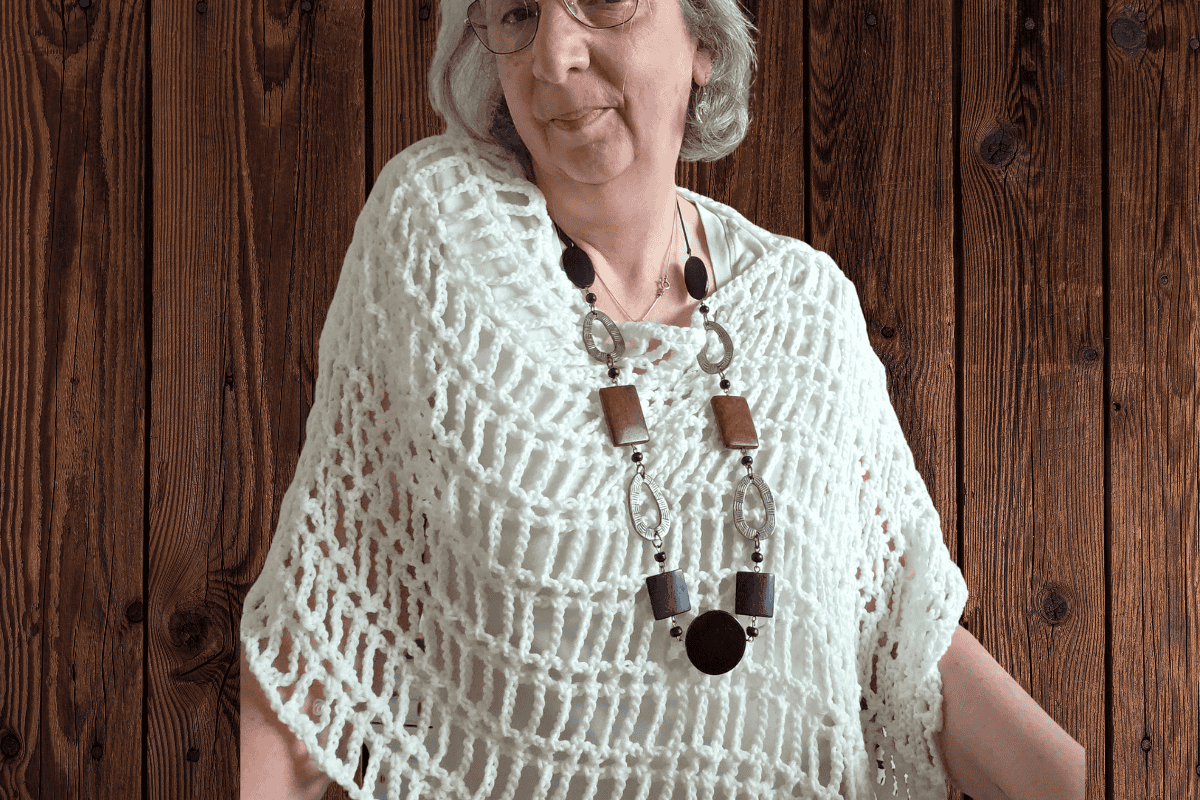
Sandra Stitches has tapped into a very specific crochet sweet spot: the project that looks polished on the body while staying simple on the hook. Her new poncho tutorial, published May 20, 2026, is pitched as the answer to those mornings when comfort wins, but looking put together still matters. That promise lands because the design does something clever with very little effort, turning a single rectangle into a wearable layer with an airy, elevated finish.
The appeal is not just that it is easy. It is that the poncho gives back visually in a way beginners can actually see. Sandra says she slipped it on over a plain black top and got the kind of compliment that tells you the garment is doing its job: “Oh, you look nice today.” She even notes that her husband noticed the finished effect, which says a lot about how the piece reads in everyday wear.
Why the construction feels approachable
The big reason this poncho works for newer crocheters is the construction itself. Instead of shaping armholes, managing sleeves, or keeping track of repeated increases, Sandra builds the garment from one rectangle and then folds and joins it. That keeps the process direct and removes a lot of the tension that usually comes with making wearables.
Just as important, the stitch texture carries the style load. The lacy open stitch creates an elegant drape, so the project does not need complex architecture to look intentional. That is the core of the “looks harder than it is” appeal here: the poncho reads as a designed garment because the fabric is doing the decorative work.
The payoff equation: simple build, polished silhouette
What makes this pattern especially satisfying is the balance between effort and result. A one-piece rectangle feels almost disarmingly plain on the table, but once it is folded and joined, it becomes a light layer with shape, movement, and instant outfit value. For beginners who want to make clothing without fighting the process, that is a powerful trade-off.
Sandra’s own framing makes that clear. She positions the poncho as a solution for a wardrobe gap that comes up all the time: you want comfort, but you do not want to look unfinished. The lacy openwork helps the garment skim rather than cling, which is exactly why it can look stylish without advanced technique.

Materials that support drape instead of stiffness
The material list is practical and beginner-friendly. Sandra suggests about 230 to 250 grams of DK or light worsted yarn, a 5.5 mm hook, and the usual finishing tools. She also recommends cotton or a cotton blend, which makes sense here because this kind of poncho relies on drape rather than bulk.
Tension matters, but not in the same demanding way it would in a fitted cardigan or sweater. Sandra points out that the fabric should stay open and relaxed, and if it starts to feel stiff, she recommends moving up a hook size. That advice is useful because it tells you what to look for in the fabric itself: not tightness, but flow.
Quick material cues that help the finished piece sing
- About 230 to 250 grams of DK or light worsted yarn
- Cotton or a cotton blend for better drape
- A 5.5 mm hook
- Usual finishing tools
- A slightly looser fabric if your first swatch feels rigid
These choices all serve the same goal: keep the poncho light enough to layer and loose enough to move well over a top. That is what gives the finished piece its easy, polished look instead of a heavy, boxy one.
How to access the pattern and follow along
Sandra makes the tutorial easy to use in more than one format. The pattern is free on the blog, with a video tutorial above the written instructions and an ad-free PDF available in the shop. That setup gives crocheters options depending on how they like to work, whether they prefer to watch first, read as they go, or keep a cleaner printable version nearby.

That accessibility fits the rest of Sandra Stitches’ approach. Her site is built around free crochet patterns, step-by-step tutorials, and new patterns every week, so this poncho arrives as part of a steady stream of practical, approachable projects. It is the kind of release that is meant to be usable right away, not just admired.
Where this poncho fits in real life
The styling range is one of the reasons this pattern feels so useful. Sandra says the poncho works for summer evenings, travel, garden wear, or any time you want a light layer with a polished silhouette. That versatility matters because a good beginner wearable should do more than teach construction; it should actually earn a place in the wardrobe.
The shape also has a longer lineage than the pattern itself. Britannica describes the poncho as an ancient garment of Latin American origin, made from a square or rectangle of cloth with a head opening. Sandra’s rectangle-based version feels like a modern crochet echo of that same straightforward logic, which is part of why it makes intuitive sense even before you pick up the hook.
A familiar shape, reworked for modern crochet
Sandra has been here before with other beginner-friendly outerwear. Her earlier one-rectangle V-stitch poncho leaned on the same no-stress approach, with no complicated shaping and no stressful counting. Her Grey Day Poncho also framed ponchos as easy, quick, and cozy, while her Gardenia vest used rectangles joined together with no increasing or decreasing.
That pattern history matters because it shows the new poncho is not a one-off trick. It belongs to a broader design language in Sandra Stitches’ work, where simple construction and strong drape turn basic geometry into wearables people actually want to reach for. The result is a poncho that feels accessible on the hook and convincing on the body, which is exactly why it stands out.
This article was produced by Prism’s automated news system from verified source data, official records, and press releases, then run through automated quality and moderation checks before publishing. The system is built and supervised by the people who set the standards it runs under. Read our full AI policy.
Did this article answer your question?