Turtle amigurumi roundup spotlights quick stash-buster patterns
A whole turtle family turns this roundup into a stash-busting menu, from a 1-to-2-hour mini for beginners to plush, floral, and seasonal shells.
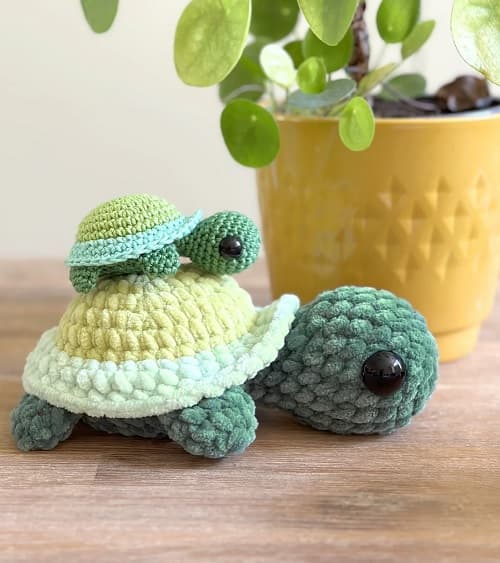
A turtle family, not a single pattern
Crocht’s turtle roundup works because it gives crocheters the one thing a good amigurumi post should deliver fast: a clear reason to queue it now. Instead of leading with a lone cute animal, it gathers a whole turtle family, which instantly makes the post useful for different kinds of makers, from the person hunting a first amigurumi to the one looking for a nursery shelf accent or a last-minute gift.
That variety is the real appeal. The list moves through mini turtles, a turtle stack, a rose turtle, customizable shell turtles, watermelon turtles, sunflower turtles, and a mother-and-baby turtle set. Seen together, they feel less like random cuteness and more like a themed project board, with each design offering a different lane for color, texture, and purpose.
The quick win: Mariska Vos-Bolman’s mini turtle
The standout stash-buster is Mariska Vos-Bolman’s mini turtle pattern, which is framed as an almost no-sew beginner make that can be finished in about 1 to 2 hours. That matters in amigurumi, where a pattern that delivers a finished object quickly often earns a permanent place in the queue. It also uses leftover yarn, which gives it a practical edge for anyone trying to tame the yarn basket without committing to a large project.
The flexibility is part of the charm. Vos-Bolman’s pattern page and Ravelry listing both say the turtle can be made in any yarn, including sport-weight cotton for a keychain version and chenille super-bulky yarn for a larger plush take. That means the same base pattern can move from tiny bag charm to squishy shelf pal without losing the turtle identity, and that kind of adaptability is exactly what makes a small amigurumi pattern feel worth returning to.
Why shells are the whole story
If the mini turtle is the speed project, the shell is where the roundup gets inventive. Turtle bodies are already friendly and recognizable, but the shell gives designers a built-in canvas for personality, and this collection leans into that with confidence. A rose turtle can read as delicate and decorative, a sunflower turtle adds cheerful seasonal energy, and watermelon turtles push the idea into playful, color-driven novelty.
That shell-first thinking is also what makes customizable designs so appealing. Love. Life. Yarn describes its crochet turtle with a removable shell as a fast-working, customizable plush, which sums up the whole logic of the roundup neatly. Once you have the base turtle, the shell becomes a place to play with color changes, motifs, and nursery-friendly palettes without starting over from scratch.
From sweet gift to display piece
Some of these turtles are built for quick gifting, while others feel like little collectibles that reward extra detail. The mother-and-baby watermelon turtles from Amigurumi Today sit squarely in the sentimental camp, and the site’s description makes that clear by calling them sweet mother-and-baby turtles that are meant to make you smile. That kind of paired design has obvious nursery appeal, but it also gives crocheters a way to make one project feel like a tiny story.
The turtle stack, meanwhile, pushes the theme into display territory. A stacked design naturally suggests height, balance, and a slightly more whimsical silhouette, so it reads differently from the single mini turtle even when the stitches stay approachable. Together with the rose and sunflower variations, the roundup shows how far one animal can travel once the shell becomes a design feature instead of just a functional top piece.
Amigurumi’s bigger ecosystem
The roundup also lands inside a much larger amigurumi world, and that matters because turtle patterns rarely exist in isolation anymore. Amigurumi Today notes that amigurumi is a Japanese term for small knitted or crocheted stuffed toys, and explains that the tradition originated in Japan before spreading globally through the internet. That background helps explain why the category keeps generating new twists on familiar creatures: the base form is recognizable, but the surface treatment can change endlessly.
Amigurumi Today’s current site underlines that range. It still maintains a turtles category, includes a Dreamy Turtle Amigurumi Pattern in its shop, and presents a broader library of 220+ free amigurumi patterns alongside 1,138 patterns in its shop. In other words, turtle projects are part of an actively updated ecosystem, not a one-off novelty, and the roundup benefits from that depth by showing just how many directions the motif can go.
A pattern set with maker-friendly payoff
There’s also a quietly useful practical note tucked into the amigurumi landscape here: Amigurumi Today says makers may sell finished toys made from its patterns in limited quantities, as long as credit is given to the site. For crocheters who think beyond the hook and into small-batch selling, that kind of permission is part of what makes a pattern feel viable, not just adorable.
Taken together, the roundup reads like a smart little map of what turtle amigurumi does best. It offers the beginner-friendly mini for a fast finish, the stash-busting angle for leftover yarn, the customizable shell ideas for makers who like to tweak, and the mother-and-baby or seasonal versions for anyone after a more giftable result. That is why this kind of themed roundup works: it does not just say turtles are cute, it shows you exactly which turtle to make first.
This article was produced by Prism’s automated news system from verified source data, official records, and press releases, then run through automated quality and moderation checks before publishing. The system is built and supervised by the people who set the standards it runs under. Read our full AI policy.
Know something we missed? Have a correction or additional information?
Submit a Tip