Vintage pennant afghan pattern brings retro charm to modern crochet
A bold 55-by-68-inch pennant afghan turns a simple double-crochet repeat into a statement throw that works hard on a sofa, guest bed, or chilly night.
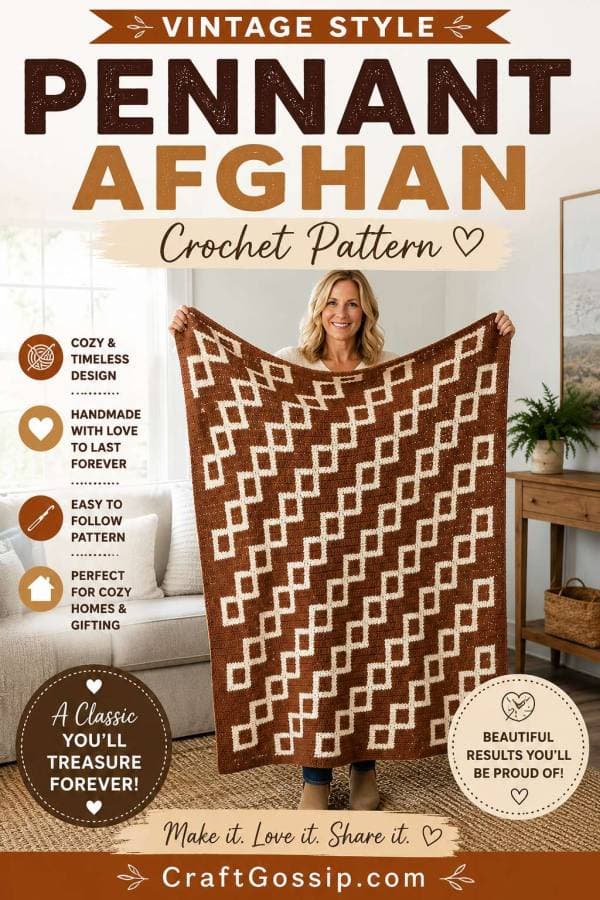
A big blanket has to earn its space, and this one does it fast. The brown-and-white pennant afghan delivers a strong graphic hit at a true throw size, about 55 by 68 inches, so it reads as real decor rather than a small accent.
A throw with presence
What makes this pattern stand out is the scale of the design itself. The pennant motif gives the blanket a clear geometric rhythm, and the brown-and-white palette pushes it toward a clean, modern look even while it keeps its vintage personality intact. That makes it an easy fit for a sofa back, the end of a guest bed, or any corner that needs a blanket that looks intentional when it is folded and still impressive when it is spread out.
The modern PDF release keeps that vintage character in place instead of sanding it off. You are getting an updated format, but the visual identity is still anchored in the original idea, which is exactly why the pattern feels relevant now. It offers the kind of visual impact that many home-decor projects promise and few actually deliver.
How the pattern works
Technically, this is not a fussy stitch showcase. The afghan is worked in double crochet, with color changes doing the heavy lifting to build the repeated pennant shape. That is good news if you want a project that feels approachable stitch by stitch, even though the finished effect looks much more complex than the stitch count suggests.
The catch is that the color placement matters just as much as the crochet itself. You will get the most out of it if you are comfortable following a chart or a written sequence closely, because the geometry depends on keeping the changes aligned. Once you settle into the rhythm, though, the construction makes sense quickly and the motif starts to take shape in a satisfying, almost architectural way.
For yarn, the pattern points toward a washable worsted-weight yarn or acrylic blend, which is the sensible move for a blanket meant to live in a real house and get used often. That recommendation lines up with the project’s practical side: this is a throw that should be able to handle sofa duty, guest-room use, and regular washing without becoming precious.
What the vintage record shows
The archived version gives useful context for just how substantial this blanket has always been. The original source appears to be Pennant Afghan Pattern #696 from The Spool Cotton Company’s Book No. 140, and that record confirms the same approximate 55 by 68 inch size. In other words, the new PDF is part of a pattern-revival line, not a brand-new stitch invention.
The materials list from the vintage record is equally revealing. It calls for Chadwick’s Red Heart Afghan Wool in 28 skeins of Antique Blue and 18 skeins of Pearl Grey, along with a Milward’s Steel Crochet Hook No. 2/0. The gauge is listed as 9 stitches to 2 inches and 3 rows to 1 1/4 inches, which underlines how much yarn, consistency, and patience the original large-format afghan expected from the maker.
That old materials list also helps explain the blanket’s staying power. It was designed as a serious home piece, not a quick decorative sample, and the construction reflects that. The original pattern’s scale and yarn demand tell you exactly why the finished afghan has so much presence when you see it in a room.
Why the motif still feels current
The appeal of this design goes beyond nostalgia. FreeVintageCrochet describes Book No. 140 as a collection that encourages afghan designs in crisp bright colors or darker tones, with richness, subtle shaded colors, dramatic texture, and simplicity of design. That framing fits the pennant afghan perfectly, because the motif is graphic enough to make a statement without requiring advanced shaping or lacework.
That balance is what gives the pattern such modern flexibility. The brown-and-cream version leans old-school in the best way, but the same layout could move in several different directions depending on color choice.
- Charcoal and ivory would sharpen the geometry.
- Sage and oatmeal would soften the whole look into a calmer, contemporary neutral.
- Rust and cream would bring warmth and a little more energy.
- A farmhouse-neutral blend would keep the pattern bold without making it loud.
Because the structure stays the same, the palette becomes the real design decision. That gives you room to make the blanket feel vintage, modern, understated, or dramatic without changing the motif that makes it special in the first place.
Who this afghan suits best
This is the right project if you want a throw with a defined silhouette and a clear payoff. It suits a crocheter who is comfortable with color changes, likes reading a sequence or chart carefully, and does not mind investing in a blanket that is meant to be substantial. If you enjoy seeing a room shift the moment a handmade afghan is added, this pattern offers that kind of transformation.
It is less of a casual one-skein pastime and more of a deliberate home project, which is part of the appeal. The finished blanket has enough size and graphic weight to hold its own in a modern room, while still feeling cozy enough to pull over your lap on a cold evening. That combination of utility and visual punch is what makes the pennant afghan worth the commitment.
In the end, this pattern works because it knows exactly what it is: a bold, usable throw with vintage bones and modern styling potential. If you want a blanket that brings strong geometry to a sofa or guest bed without losing its handmade warmth, this pennant design has the scale and the character to make the space feel finished.
This article was produced by Prism’s automated news system from verified source data, official records, and press releases, then run through automated quality and moderation checks before publishing. The system is built and supervised by the people who set the standards it runs under. Read our full AI policy.
Did this article answer your question?