Vintage striped afghan stitch dress pattern brings tailored crochet style
This striped Afghan stitch dress is all about shape, with vintage tailoring that rewards patience and swatching more than speed.
What makes this dress stand out
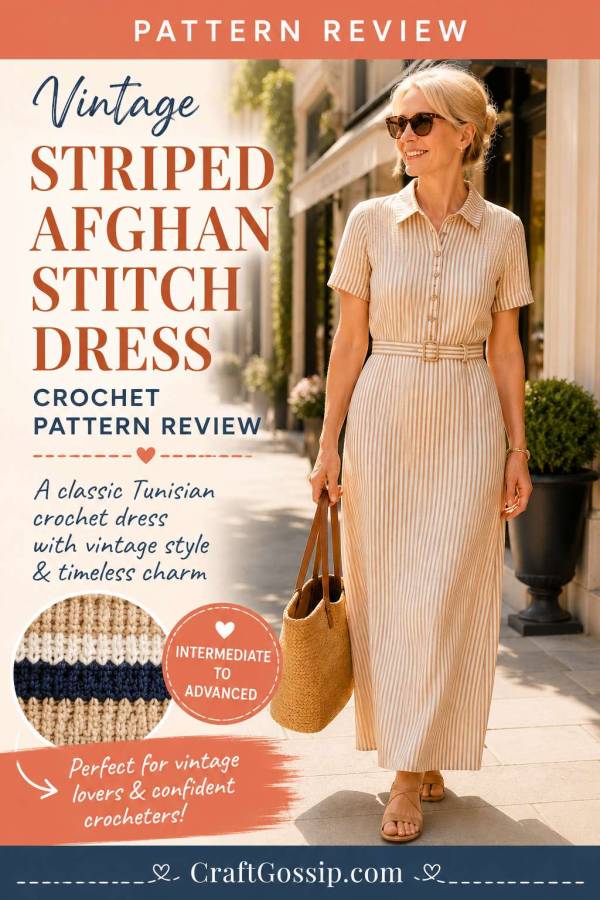
The surprise in this pattern is not the stripes. It is the structure. Shellie Wilson calls out the dress for its old-fashioned, tailored feel, and the details back that up: a shaped yoke, front button band, collar, sleeves, skirt, elastic waist casing, and a matching belt. That is a lot of garment engineering for crochet, which is exactly why the piece feels more like clothing than a novelty project.
The pattern is based on a vintage dress design that has been rewritten into a printable PDF, and that cleanup matters. Older crochet instructions can be hard to parse, especially when shaping and finishing details carry most of the design. Here, the modern presentation makes the pattern feel less like a rescue mission and more like a usable blueprint for a real dress.
Why Afghan stitch is the whole point
Afghan stitch, which many crocheters know as Tunisian simple stitch, is doing the heavy lifting here. It creates a firm, woven-looking fabric that holds its shape, which is why it works so well for a garment with a defined waist, collar, and sleeves. In crochet history, the technique has also been used for shawls, waistcoats, and children’s dresses, all projects that benefit from a stable textile rather than soft collapse.
The terminology can be slippery, too. Afghan stitch, Afghan crochet, Tunisian simple stitch, Tunisian crochet, and even tricot crochet have all been used in different contexts, which can make old references feel like a tangle. The tool itself is part of the story, since Tunisian crochet uses an elongated hook with a stopper, and that longer working surface helps build the dense, structured fabric that gives this dress its tailored line.
That density is why the stitch still has a place in modern crochet fashion. Interweave has noted that Tunisian fabric brings a sturdy thickness with a measured, almost rhythmic feel, and that balance is exactly what a garment like this needs. It is firm enough to support shape, but not so rigid that it turns the dress into costume armor.
Fit, silhouette, and whether it reads wearable
The big question is not whether the dress is interesting. It is whether the shape will flatter enough people to justify the work. The answer depends on whether the maker wants a garment with presence. This pattern is not trying to float, drape, or disappear into a layered outfit. It wants a defined waist, visible construction, and a silhouette that reads as intentional from the first glance.

The color story helps with that. Wilson notes that the original dress used beige and navy, while the updated mockup shifts to a softer tan and white. That change matters because it softens the vintage energy and makes the design feel less costume-like and more compatible with a modern wardrobe. The stripe treatment also keeps the dress from reading as a single heavy block of fabric, which is important when the stitch itself already carries visual weight.
For styling, the strongest appeal is in the dress’s built-in polish. The belt and elastic waist casing give it a finished line, while the collar and button band push it toward tailored dressing rather than casual beachwear. It feels like the sort of handmade piece that works best when the rest of the outfit steps back and lets the garment do the talking.
Who this pattern is really for
This is not a quick morale-boost make. The pattern asks for patience, precision, and a willingness to work through fit details instead of skipping straight to the fun part. The review’s advice to slow down and swatch properly is a clue to the kind of project this is: one where gauge and fabric behavior are part of the design, not side notes.
- Best for crocheters who enjoy garments with shaping and finish work
- Best for makers who like vintage details but want a cleaned-up PDF instead of deciphering old instructions
- Best for anyone who wants a structured dress that looks deliberate, not floppy
It is less appealing for makers who want fast gratification, loose silhouettes, or a project that can hide a few compromises. If a crocheter prefers drape over structure, or wants a dress that feels airy and casual, this is probably not the one. The whole design is built around presence, and that means the skill commitment is real.
What makes the pattern compelling is the same thing that makes it demanding. The dress does not ask to be light and easy, it asks to be shaped. For the crocheter who wants a garment with architectural lines, Afghan stitch makes that ambition believable, and the result is a vintage-style dress that actually knows how to stand up and be worn.
This article was produced by Prism’s automated news system from verified source data, official records, and press releases, then run through automated quality and moderation checks before publishing. The system is built and supervised by the people who set the standards it runs under. Read our full AI policy.
Did this article answer your question?