4.9 aftershock rattles western Cuba a week after major quake
A 4.9 aftershock off western Cuba kept the June 8 quake sequence alive, with Florida residents feeling it and no tsunami advisory issued.

A 4.9 aftershock off the coast of Cuba kept western Cuba rattling a week after the region’s stronger earthquake, and this time the tremor was still strong enough for some people in Florida to notice. The offshore shake did not trigger a tsunami advisory from the National Tsunami Warning Center, but it underscored how closely the island’s seismic activity was being watched beyond Cuba’s shores.
The aftershock followed the June 8 magnitude 6.1 earthquake near the west coast of Cuba, a quake the U.S. Geological Survey placed 106 kilometers west-northwest of Mantua at a depth of 26.0 kilometers. USGS said the earlier event involved reverse faulting on a shallow fault, carried a low likelihood of causing damage, and still had room to produce more shaking. Its forecast gave a 34 percent chance of at least one magnitude 4 or larger aftershock within a week, a mark the June 15 event fit squarely into.
That larger quake had already sent light shaking into parts of Florida, with reports stretching from South Florida up to Jacksonville. CBS Miami reported no major injuries, significant damage or tsunami threat after the June 8 event, but the June 15 aftershock kept the question of what comes next alive for residents on both sides of the Florida Straits. Some Floridians reported feeling the later tremor as well, even as no official National Weather Service reports came in.
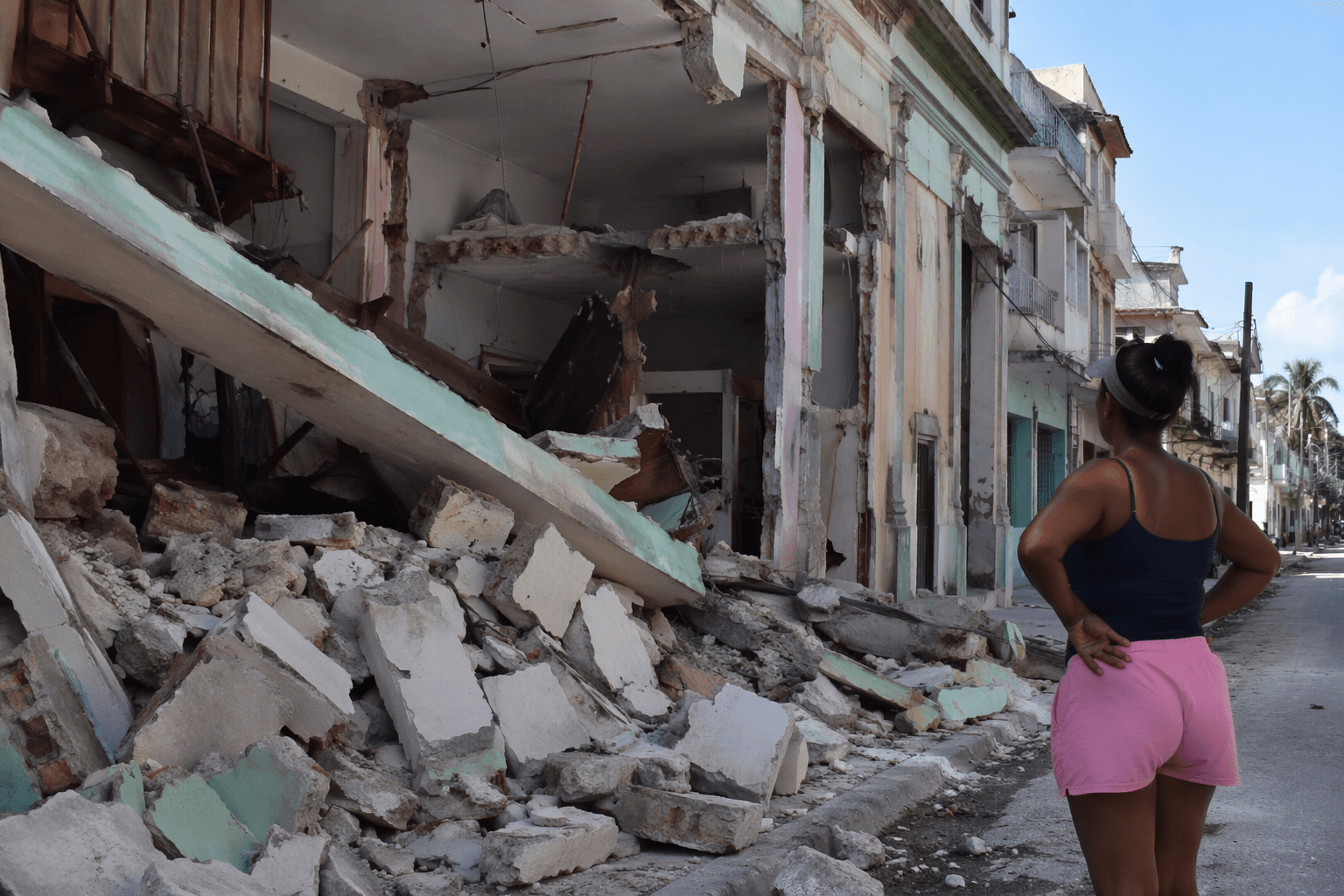
For Cuba, the concern is bigger than one more jolt. The island is already living with an unstable electrical grid, prolonged outages and the kind of infrastructure strain that turns a modest quake into a wider disruption, hitting water supply, lighting, refrigeration, communications and transportation at once. In that setting, even a 4.9 aftershock is not just a seismology note, it is another stress test for systems that are already brittle.
USGS has history on its side, too. It notes that a roughly magnitude 6.0 earthquake near San Cristobal in 1880 was felt in Florida and brought building damage and fatalities in Cuba, a reminder that western Cuba’s seismic risk has long extended beyond the island itself. A week after the first big rupture, the ground is still settling, and the region is still waiting to see whether this sequence fades quietly or exposes deeper preparedness gaps for Cuba’s coastal communities.
This article was produced by Prism’s automated news system from verified source data, official records, and press releases, then run through automated quality and moderation checks before publishing. The system is built and supervised by the people who set the standards it runs under. Read our full AI policy.
Did this article answer your question?