Brazil, Spain and Mexico pledge coordinated aid for crisis-hit Cuba
Brazil, Spain and Mexico promised more aid for Cuba, but no cash or delivery date came with the pledge as blackouts, shortages and fuel strain hit daily life.
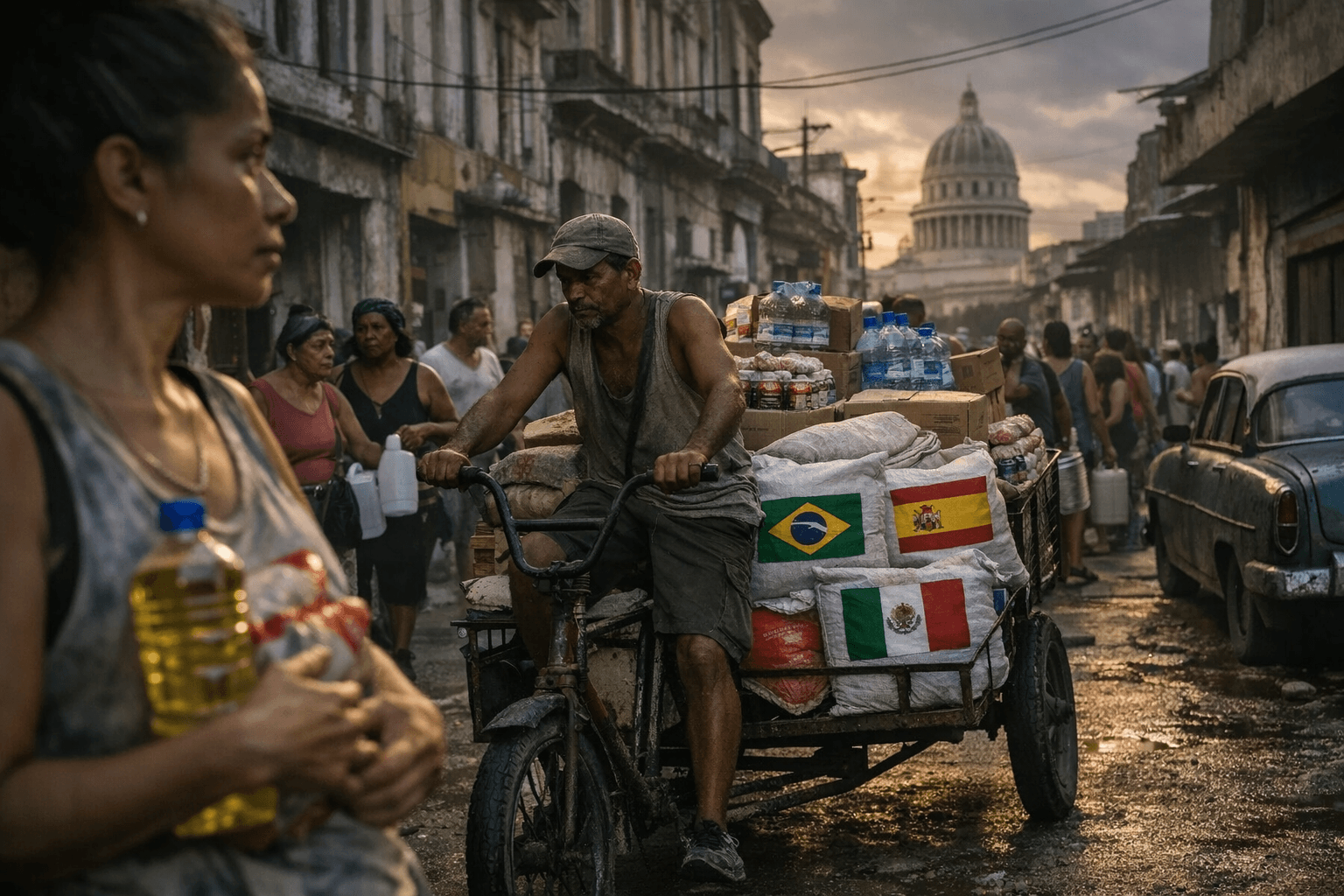
Food, medicine and electricity are the real test of the new aid pledge for Cuba, even though Brazil, Spain and Mexico stopped short of naming a dollar amount or delivery date. The three governments said they would coordinate more assistance after describing the island’s situation as a humanitarian crisis, with Spain’s foreign ministry saying they expressed “deep concern” over the serious crisis facing the Cuban people.
Their joint statement came after a Barcelona summit with Pedro Sanchez, Luiz Inacio Lula da Silva and Claudia Sheinbaum. It called for measures to alleviate the situation and avoid actions that worsen living conditions or violate international law. The text also stressed Cuba’s territorial integrity, sovereign equality and peaceful resolution of disputes, giving the announcement more diplomatic weight than a routine gesture of solidarity.
For Cubans, the immediate question is whether the pledge can reach kitchens, clinics and the power grid. Daily life has been strained by shortages, prolonged power outages, transport problems and a sharp fall in tourism. The United Nations said on April 6 that Cuba faces a worsening humanitarian crisis tied to fuel shortages and the devastation caused by Hurricane Melissa, which struck in late October 2025.
The fuel picture shows why any relief will have to be practical, not symbolic. ReliefWeb reported that in 2025 Venezuela supplied 61% of Cuba’s oil imports, Mexico 25%, and Russia and Algeria 10% and 4%, while domestic production covered only around 40% of an estimated daily need of 100,000 barrels. That dependence feeds the blackouts, interrupts transport and leaves hospitals and neighborhood services exposed whenever deliveries slow.
If the new aid effort turns into concrete shipments, the first relief is likely to show up in medicine, food and energy support. Those are the sectors where shortages are felt fastest, from pharmacy counters to food distribution and hospital backup power. For now, though, the pledge is still a political signal more than a delivery schedule.
The announcement also landed while Washington kept up pressure on Havana. Reuters reported on April 18 that U.S. officials had visited Havana to press for economic and political changes, underscoring how Cuba is being squeezed from several directions at once. That makes the coordinated offer from Brazil, Spain and Mexico important, but only follow-through will decide whether it changes daily life on the island.
This article was produced by Prism’s automated news system from verified source data, official records, and press releases, then run through automated quality and moderation checks before publishing. The system is built and supervised by the people who set the standards it runs under. Read our full AI policy.
Did this article answer your question?