CSIS lays out US pressure scenarios for Cuba, warns of no clear outcome
CSIS maps five U.S. pressure paths for Cuba, but none looks like a clean fix. For Cuban families, the real story is more strain on fuel, money and movement.
The newest CSIS reading of Cuba policy is less a forecast than a warning label. It lays out five ways Washington could apply pressure, from grinding economic coercion to air strikes and even a decapitation strike against political leadership, then argues that none of them offers a dependable path to a politically workable result.
Five scenarios, one stubborn problem
What makes the analysis worth reading from a Cuba angle is not the Washington jargon, it is the lived consequence behind each option. Continued pressure without direct intervention means more of what Cuban families already know too well: tighter money, weaker supplies, and a government forced to improvise. Air strikes or a targeted leadership operation would raise the stakes dramatically, but they would not guarantee the kind of orderly transition that policymakers like to imagine in briefing rooms.
CSIS also says the United States has stepped up economic, political, and military pressure while keeping lines of touch-and-go negotiation open. That contradiction matters on the island. It means Cubans are not living under one clean policy line, but under a moving target, with pressure increasing even as officials in Washington still float the possibility of talks and deals.
What the fuel squeeze means in real life
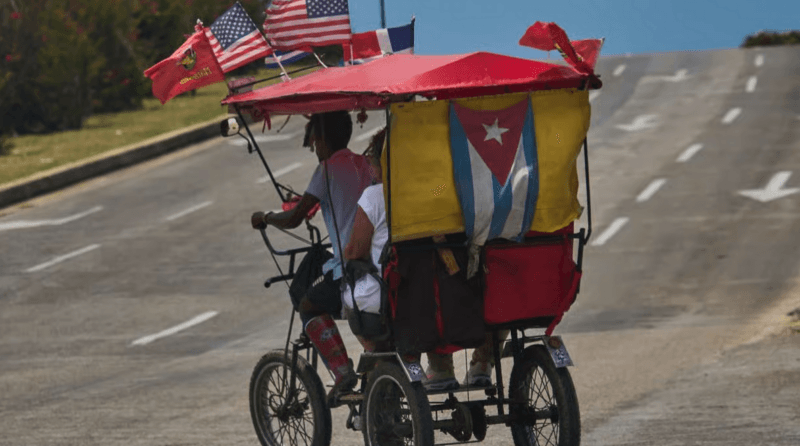
The harshest part of the strategy is the one that works slowly: attrition through fuel disruption. CSIS describes the logic clearly, as a way to weaken the Cuban economy until internal change becomes unavoidable. In plain terms, that is not an abstract sanctions debate. It is buses that do not run, generators that sputter, food deliveries that arrive late, and blackouts that turn ordinary life into a daily scramble.
A related CSIS discussion of collapse on the island points to the earlier Venezuela-Cuba precedent, when Washington pushed oil pressure by stopping Venezuelan shipments and threatening other suppliers with tariffs if they sent fuel to Cuba. That history matters because it shows how central energy has become to U.S. pressure thinking. It also explains why the island’s fuel shortage is never just a domestic failure story. It is tied to a broader contest over who can keep Cuba supplied, and at what political price.
The numbers behind the squeeze are not subtle. Reuters reported in 2025 that Cuba’s crude and fuel imports in the first 10 months of that year fell by more than a third compared with the same period in 2024. By 2026, reporting from the United Nations and other outlets described blackouts, transport disruptions, and worsening hardship linked to those shortages. For everyday Cubans, that means less mobility, more lost work time, and a constant calculation over whether electricity, cooking, and transport will all hold out on the same day.
Washington is sending mixed signals
The pressure story is not just about punishment. CSIS says U.S. officials have also signaled a possible $100 million aid package in exchange for “meaningful reforms.” That kind of offer is classic Washington: coercion on one side, conditional relief on the other. For Cuban households, though, the distinction can blur fast. What matters is whether food arrives, whether remittances move, whether fuel is available, and whether any policy change reaches the kitchen table.
The mixed signals have only sharpened. The Congressional Research Service said President Joe Biden issued Cuba policy changes on January 14, 2025, and then Donald Trump reversed course six days later on the first day of his second term. That kind of whiplash leaves families, travelers, and people managing cross-border money transfers with little confidence that any rule will last long enough to plan around it. In Cuba, policy instability in Washington is not an academic concern. It changes what people can count on from one week to the next.
The White House has also defended sanctions by saying they target leaders and entities that sustain the regime, not ordinary people. But the U.N. human rights chief, Volker Türk, warned on June 8, 2026, that U.S. sanctions were causing widespread harm and endangering lives. That split captures the core problem CSIS is circling: Washington says it is aiming at the system, while the consequences land across the wider population.
Why Cuba looks to China and Russia, but not as a rescue line
CSIS argues that Cuba’s external lifelines are thin. Russia and China are not positioned to rescue Havana decisively, and that leaves Cuban authorities with fewer real options than they let on. The result, according to the analysis, is likely to be symbolic gestures or temporary concessions designed to buy time rather than solve the underlying crisis.
China’s role matters here, especially because CSIS said in December 2024 that it had identified four sites in Cuba likely supporting Chinese intelligence collection. A separate June 2025 report said China was quietly supplanting Russia as Cuba’s main benefactor. That does not mean a sudden Chinese bailout is coming, but it does show where Havana may be looking as it searches for leverage, money, and strategic cover.
For Cubans, this great-power shuffle is not just about intelligence sites or diplomatic posture. It shapes the island’s room to breathe. If outside support is limited and unstable, the pressure lands harder at home, and ordinary people are left to absorb the shock through shortages, delays, and rising uncertainty.
Migration, remittances, and the family line that keeps getting strained
This is where the policy debate leaves the briefing room and enters the family group chat. The World Bank’s migration data shows Cuba’s net migration remained negative through 2025, and the International Organization for Migration reported shifting Cuban migration dynamics across Latin America and the Caribbean in 2025 and 2026. That fits what families already know: more people keep trying to move, route by route, because life on the island has become harder to sustain.
When pressure tightens, remittances and cross-border support usually become even more important, not less. Yet the same policy environment that claims to pressure the government can also make money transfers, travel plans, and family reunions harder to manage. The result is a squeeze that is both economic and emotional, because it reaches from state policy into the daily mechanics of keeping a household connected across borders.
That is why the CSIS scenarios matter beyond the defense crowd. A Cuba policy built on escalation can still fail to deliver a political outcome, while doing real damage in the meantime. The island is already dealing with severe energy shortages, heavy migration, and a fragile external lifeline. Add more pressure, and the most likely result is not a clean break, but more of the same misery with a higher risk of something worse.
This article was produced by Prism’s automated news system from verified source data, official records, and press releases, then run through automated quality and moderation checks before publishing. The system is built and supervised by the people who set the standards it runs under. Read our full AI policy.
Did this article answer your question?