Cuba creates new institute to oversee state enterprises and reforms
Havana put a new state-enterprise watchdog under the Council of Ministers just as 176 reforms start moving. The target is a slower, more useful bureaucracy.
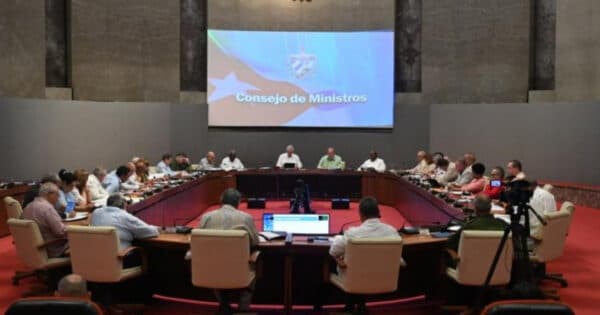
Cuba formally created the Instituto Nacional de Activos Empresariales Estatales, a new body under the Council of Ministers that will supervise state firms as Havana tries to make its reform push actually work. Decree 144 of 2026, published in Gaceta Oficial No. 54 Ordinaria de 2026, gives the institute authority to advise, propose, implement and monitor policy for the state enterprise system, and it raises the practical question inside Cuba’s economy right now: is this tighter central control, a cleanup of failing companies, or an effort to make state firms efficient enough to ease shortages, prices and job pressure?
The decree is not cosmetic. It takes effect 30 days after publication and gives the new institute a role in redesigning how state enterprises are structured and managed, including modernization, restructuring and handling crisis situations. It can also propose economic associations between state and private firms, including ventures with foreign capital and new branches or subsidiaries aimed at foreign trade. That makes it look less like another office on paper and more like a new intermediary between ministries, company boards and the rest of the economy.

The institute landed in the middle of a larger overhaul built around 176 economic measures approved in urgent extraordinary sessions of the Communist Party and the National Assembly. Those changes include possible private banking under Central Bank supervision, direct investment by Cuban residents abroad on equal terms with foreign capital and state firms, and procedures for bankruptcy, liquidation and restructuring. The package also opens the door to converting state enterprises into joint-stock or shareholding companies, a sign that Havana is trying to redraw the legal shape of the state sector rather than just shuffle managers around.
Timing matters because the reforms were rolled out after six years of deep economic crisis and under the pressure of U.S. sanctions and a fuel shortage that has pushed the island’s system into repeated breakdowns. Miguel Díaz-Canel convened a five-person core group of experts, including Omar Everleny, Juan Triana, Julio Carranza, José Luis Rodríguez García and José Carlos del Toro Ríos, to keep pushing the reform agenda. Separately, the Central de Trabajadores de Cuba held its congress on June 27 with 759 delegates, 561 of them joining by videoconference because of the energy crisis.
Óscar Pérez-Oliva told union leaders the package was not neoliberal and not a return to capitalism. That line fits the new institute too: Havana is adding another layer of state oversight because the reform drive needs a mechanism that can push harder on enterprise restructuring without loosening the party’s grip on the system.
This article was produced by Prism’s automated news system from verified source data, official records, and press releases, then run through automated quality and moderation checks before publishing. The system is built and supervised by the people who set the standards it runs under. Read our full AI policy.
Did this article answer your question?