Cuba Projects 1% Growth in 2026, but Analysts Warn of 7.2% Contraction
Cuba's government claims 1% GDP growth this year; independent analysts project a 7.2% contraction. That 8.2-point gap could reshape daily life on the island before year's end.
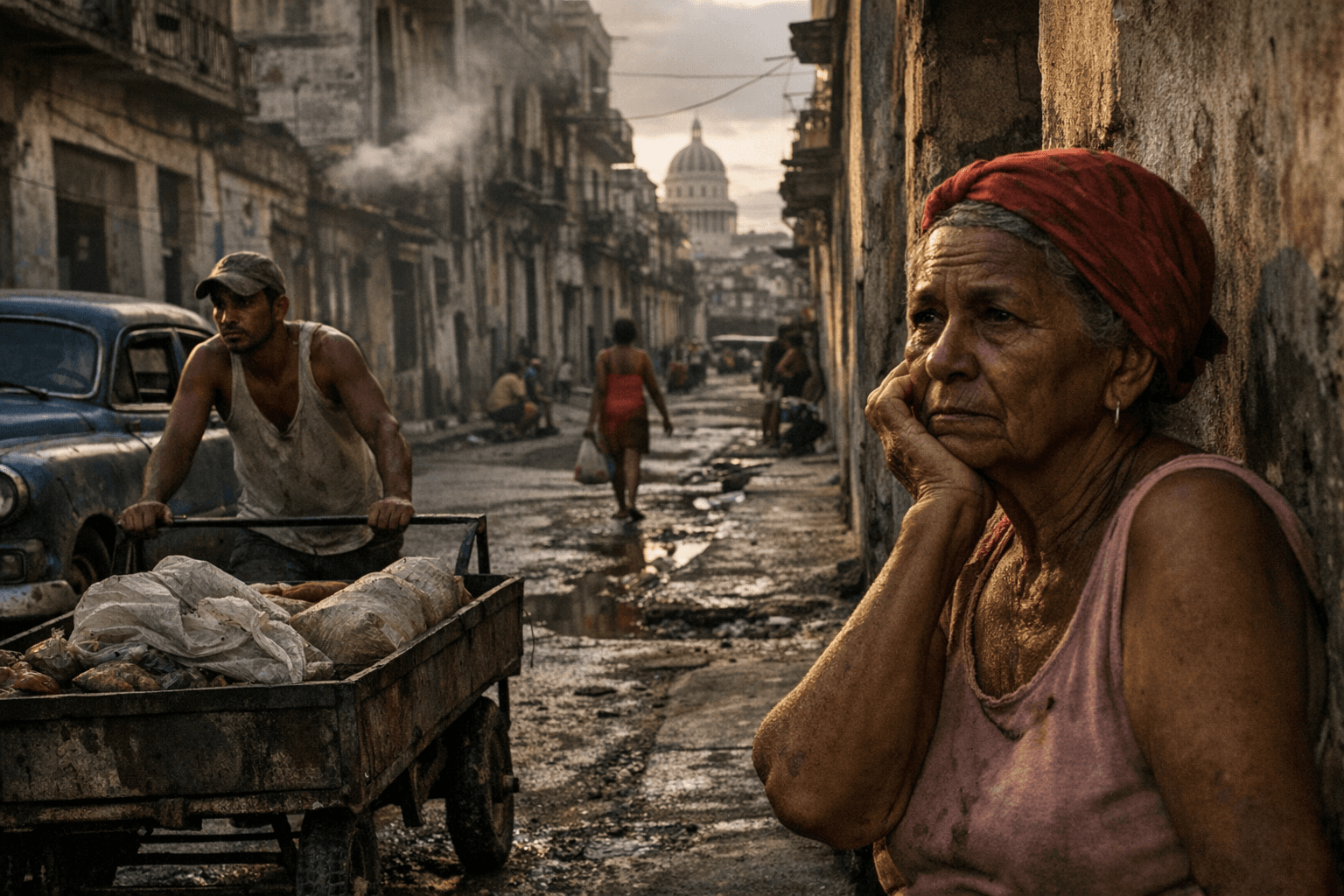
The distance between what Havana says will happen to Cuba's economy in 2026 and what independent economists believe will happen is 8.2 percentage points wide. That gap is not a rounding error; it is the difference between managed stabilization and a crisis that forces emergency measures.
Cuba's Economic and Social Program for 2026 is an architecturally ambitious document: 10 general objectives, 111 specific objectives, 505 actions, and 309 indicators and targets. Embedded in that framework is a projection of 1% GDP growth for the year. The program's accompanying budget set a fiscal deficit of 74.5 billion Cuban pesos, which officials characterized as an improvement over the 88.5 billion deficit projected for 2025.
The Center for the Study of the Cuban Economy and other independent organizations do not share that optimism. Their projections point toward a contraction of as much as 7.2% for 2026, a figure driven by conditions already visible on the ground: blackouts lasting 25 to 30 hours have swept across large parts of the country, imported-fuel shortages have strangled transport and logistics, and tourism arrivals have collapsed.
The government's upward forecast appears linked, at least in part, to a political calculation. Measures aimed at opening investment to Cubans abroad and signaling confidence to foreign capital have been positioned as potential stabilizers for the economy. Independent market actors have responded with skepticism, citing the absence of concrete legal guarantees, including non-retroactivity protections and functioning arbitration mechanisms, alongside a persistent lack of transparent financial rules.
If the 1% projection proves as optimistic as independent analysts fear, late-year emergency responses become likely: deeper austerity, renewed rationing, or fresh concessions to external partners. Each of those carries its own political risk. If the government somehow stabilizes energy supply and foreign-exchange flows, the 1% figure would represent a narrow but genuine holding of the line.
The credibility gap between state forecasts and independent projections is already the primary risk variable for anyone weighing capital exposure to Cuba. Key indicators to watch include official monthly GDP and industrial output figures, central-bank foreign-exchange reserve data, tourism arrival statistics, and whether Havana quietly revises its forecast before the fourth quarter.
For Cubans living through 25-hour blackouts today, the debate is not abstract. A genuine 7.2% contraction means job losses, deepening food and medicine shortages, and sustained downward pressure on purchasing power at a moment when the informal dollar rate is already climbing.
This article was produced by Prism’s automated news system from verified source data, official records, and press releases, then run through automated quality and moderation checks before publishing. The system is built and supervised by the people who set the standards it runs under. Read our full AI policy.
Did this article answer your question?