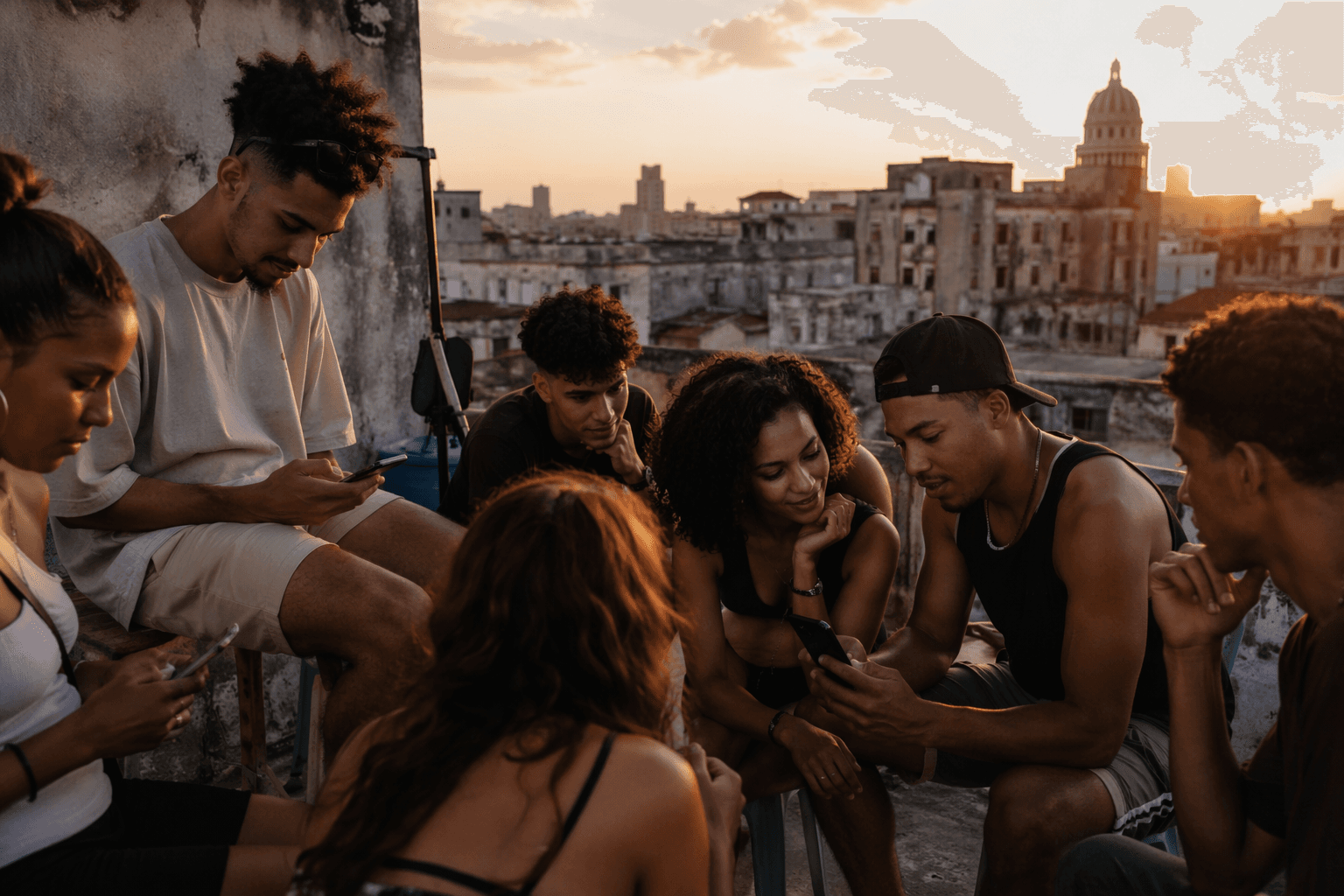
Informal CiberCuba Poll
Only 116 out of 2,154 votes went to Russia when CiberCuba's 350,000-follower WhatsApp channel asked Cubans what they prefer for Cuba's future.
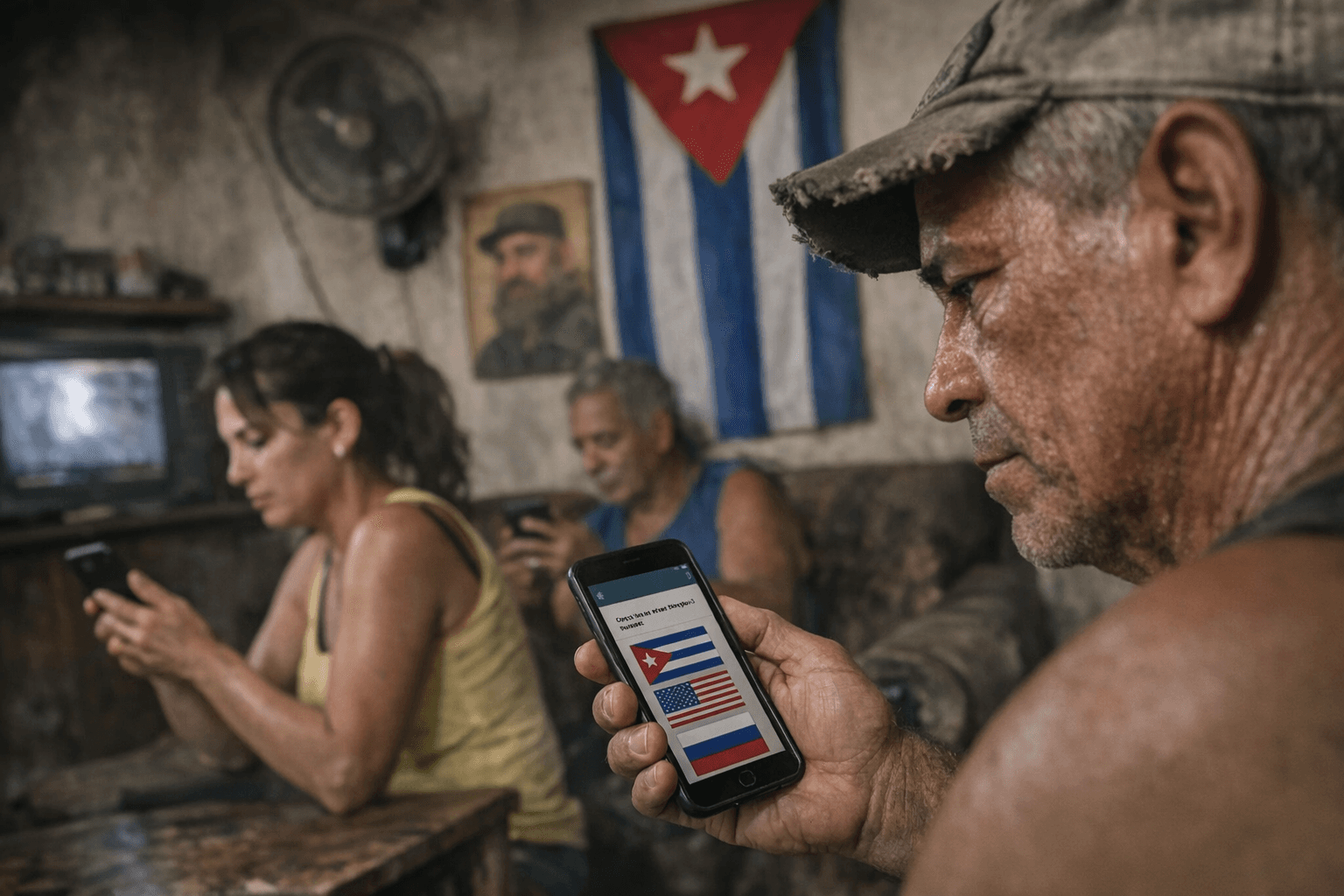
Seventy-four percent of participants in a CiberCuba WhatsApp poll published April 1 chose U.S. support as their preferred external alignment for Cuba, compared to just 5% who selected Russia, a gap that exposed the sharp disconnect between Cuban public sentiment and the government's ongoing courtship of Moscow as an alternative patron.
The channel that hosted the poll carries nearly 350,000 followers, many of them Cubans living on the island, making it one of the larger informal barometers of Cuban opinion outside state-controlled media. Participants were asked a single question: "What do you prefer for Cuba?" with three options: support from the United States, support from Russia, or an independent, sovereign Cuba without external alignments.
The raw tallies showed 1,600 votes for U.S. support, 438 for sovereignty, and 116 for Russia. CiberCuba was explicit that the survey is informal and opt-in, with a self-selecting sample drawn from its own readership. No representative, government-sanctioned opinion polling of this kind is permitted on the island, which makes WhatsApp-channel data one of the few available windows into Cuban sentiment at any meaningful scale.
The poll landed amid an acute energy crisis keeping Cuban households navigating blackouts, fuel scarcity, and chronic supply shortages through late March and into April. Those material pressures have sharpened the appetite for the remittance channels, market openings, and household-level assistance historically associated with closer U.S. ties. Russia, meanwhile, has positioned itself as an alternative supplier of fuel and finance to the Cuban government, but the 116 votes it received suggest that offer carries almost no popular appeal among this sample.
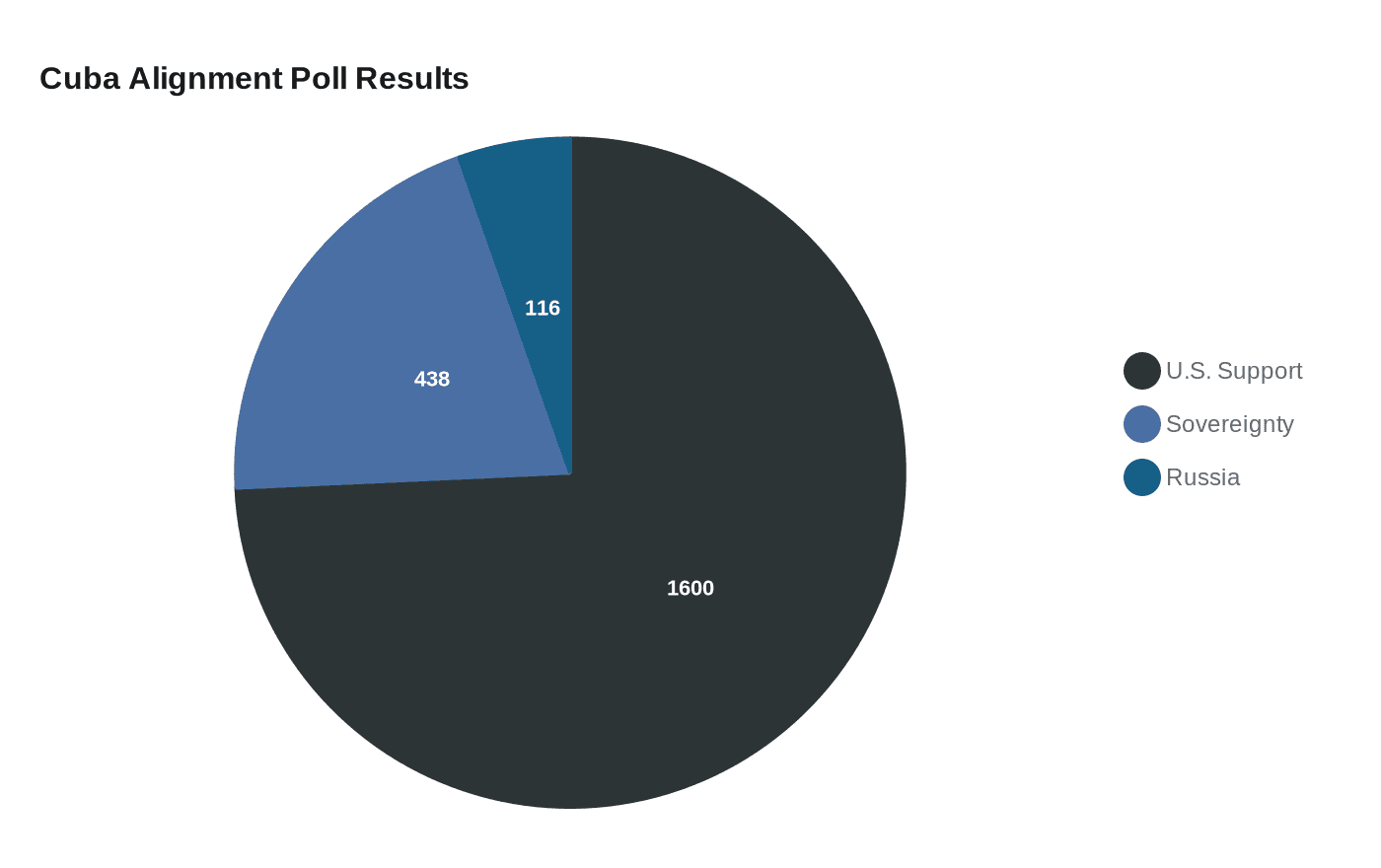
CiberCuba noted the poll follows a pattern of similar surveys on the same platform showing high disapproval of the Díaz-Canel government and widespread expectation of change in 2026. The 438 participants who chose sovereignty represent a distinct constituency that rejects both external options entirely: a minority, but not an insignificant one.
For U.S. policymakers, the 74% figure offers tangible political cover. Any humanitarian or diplomatic overture toward Cuba can be framed as responding to stated popular preference. The harder question is whether that preference holds beyond a self-selecting WhatsApp audience, and whether diaspora-run or civil-society surveys can reach broader segments of the population. What this poll makes difficult to dismiss is that among 2,154 participants on one of Cuba's most-followed informal channels, Moscow is not the answer most are looking for.
This article was produced by Prism’s automated news system from verified source data, official records, and press releases, then run through automated quality and moderation checks before publishing. The system is built and supervised by the people who set the standards it runs under. Read our full AI policy.
Did this article answer your question?